Plumbing in Lakeville, the short answer
PlumbTek plumbs homes in Lakeville, MN 55044, from older streets near Lake Marion to the newest subdivisions on the south and west edges of the city. Typical calls involve ejector pumps under finished basement bathrooms, softeners losing their capacity and sump pumps that run hard each spring. Someone picks up the phone at any hour, and the price is laid out for you before a plumber reaches for a tool.
What sits under the floor of a finished Lakeville lower level
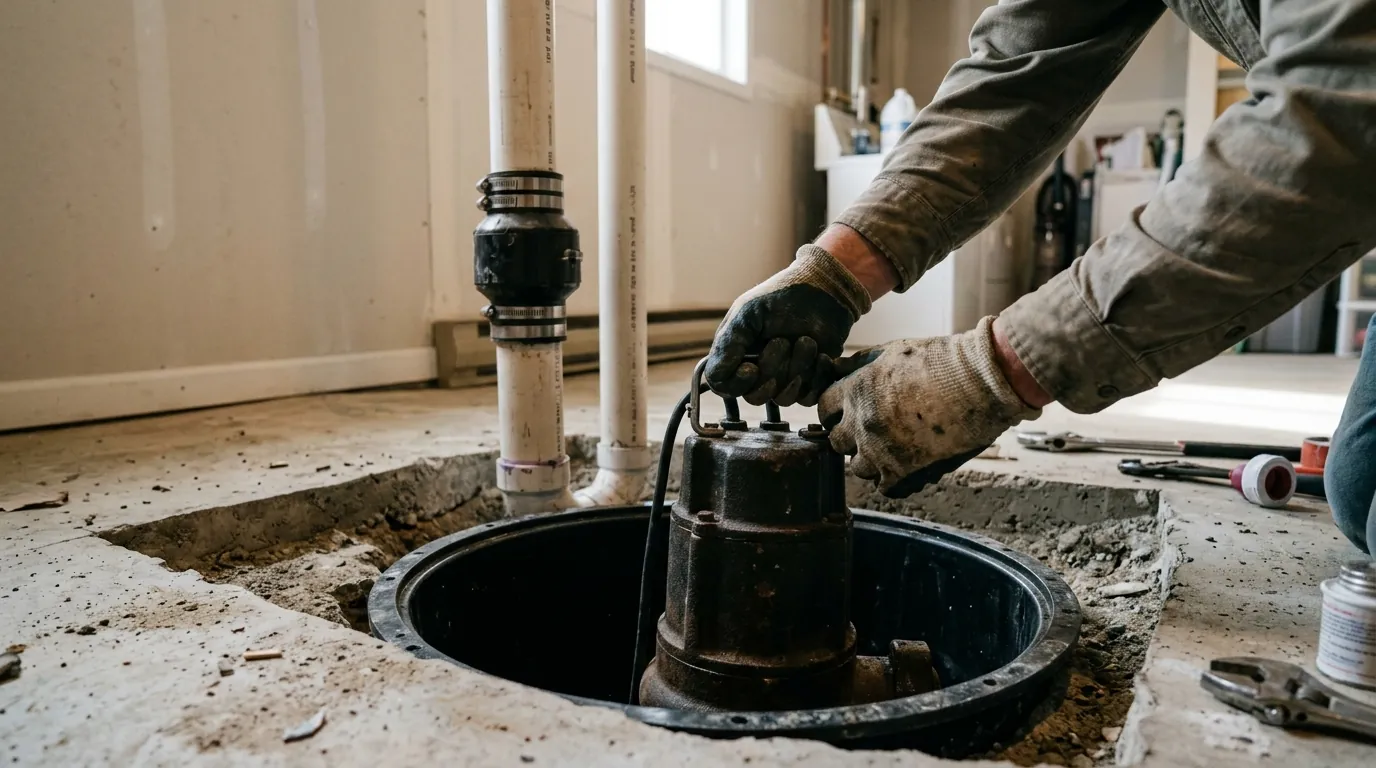
A basement bathroom in a newer Lakeville house usually sits below the main sewer line, so waste can't simply fall toward the street. Instead it drains into a sealed basin under the floor, and an ejector pump lifts it up into the building drain. The basin has a gasketed lid, a vent pipe and a check valve on the discharge.
These pumps fail quietly until they don't. A float tangled on a cord, a worn check valve that lets waste drop back, or wipes wrapped around the impeller will set off the high water alarm or flood the bathroom floor. When PlumbTek services an ejector, the plumber pulls the pump, cleans the basin and tests the float and alarm before sealing the lid.

Why Lakeville softeners wear out sooner than people expect
Suburban water in the south metro runs hard, so most Lakeville homes put a softener in the mechanical room the year they were built. Many of those units have now run through two decades of regeneration cycles. Resin breaks down, control valves stick and brine tanks grow a crust of salt that never dissolves.
The first sign is usually spotty glassware or a crusty showerhead, followed by a water heater that starts to pop and rumble. Dipping a hardness strip into a glass of cold tap water shows in seconds whether the softener still earns its salt. Sometimes a rebuild kit or a new control valve brings it back, but older tanks are often better replaced.
Small habits for a newer Lakeville house
- Press the ejector alarm test button. Most ejector alarm boxes have a test button. Press it a few times a year so you know the horn works before a stuck float floods the basement bathroom.
- Break up salt bridges. If the brine tank looks full but the water feels hard, a crust of salt may be hanging above the water. Push a broom handle down gently to break it apart.
- Photograph the rough-ins. Before framing a lower level, take pictures of the floor stubs and note their distance from the walls. It saves guesswork and concrete cutting when the bathroom finally goes in.