Water pressure repair in Minneapolis, the short answer
Water pressure repair in Minneapolis diagnoses and corrects pressure that's too low or too high in a home's plumbing. Low pressure usually comes from rusted galvanized pipe, a failing pressure reducing valve, a partly closed valve or clogged aerators. High pressure comes from city supply or a dead reducing valve. A plumber tests with a gauge, then replaces the valve, pipe or part causing it.
Low pressure everywhere or at one fixture?
Start by narrowing the problem down. If one faucet runs weak and the rest are fine, the cause is local: a clogged aerator, a worn cartridge, a kinked supply hose or a stop valve that's partly closed. Those are quick fixes. If one bathroom is weak, look at the branch feeding it.
If every fixture is weak, the cause sits between the street and your first branch. In older Minneapolis homes, the most common culprit is galvanized pipe narrowed by rust. Others include a main valve that was never fully reopened after a repair, a failing pressure reducing valve, or a corroded service line from the street.
When the problem is too much pressure
High pressure doesn't get noticed until something breaks. Faucets that spray when opened, toilets that keep running, washing machine hoses that burst, and pipes that bang when a valve closes are all signs. The Minnesota plumbing code caps house pressure at 80 psi, and many plumbers aim lower, around 50 to 60.
A pressure reducing valve, the bell-shaped brass fitting after the meter, controls this. Over time its spring and diaphragm wear out, and it either lets full street pressure through or chokes flow. Homes in low-lying parts of a city often see higher street pressure than those on hills, so reducing valves matter more there.
Pressure on a private well
Homes on wells in Sherburne and Wright counties, around Big Lake, Elk River and similar areas, get their pressure from a pump and a pressure tank, not a city main. Pressure that cycles up and down, sputters, or drops quickly when two fixtures run usually points to a waterlogged pressure tank, a bad pressure switch, or a clogged sediment filter.
Iron and hard water add to it, coating switch contacts and plugging filters. When PlumbTek checks a well system, the plumber tests the tank air charge with the pump off, inspects the switch contacts, and checks the cut-in and cut-out pressures before replacing anything.
Symptoms that point to a pressure problem
Pressure issues show up in different ways depending on the cause.
- Shower weakens when a toilet flushesA big pressure drop when another fixture runs means the supply pipes are too narrow or restricted to feed both at once.
- Faucets spit or spray hardWater that bursts out when a faucet opens points to pressure above a safe level, often from a failed reducing valve.
- Banging pipesA loud knock when a valve closes quickly is water hammer, worse with high pressure and loose pipe straps.
- Pressure fading over yearsA slow decline in pressure across the house is typical of galvanized pipe filling with rust and scale.
- Toilets refilling on their ownHigh pressure can push past fill valves and flappers, making toilets cycle without anyone using them.
- Well pressure cyclingOn a well, pressure that rises and falls quickly while water runs suggests a waterlogged tank or a failing switch.
How we diagnose and fix water pressure
Gauge at the meter
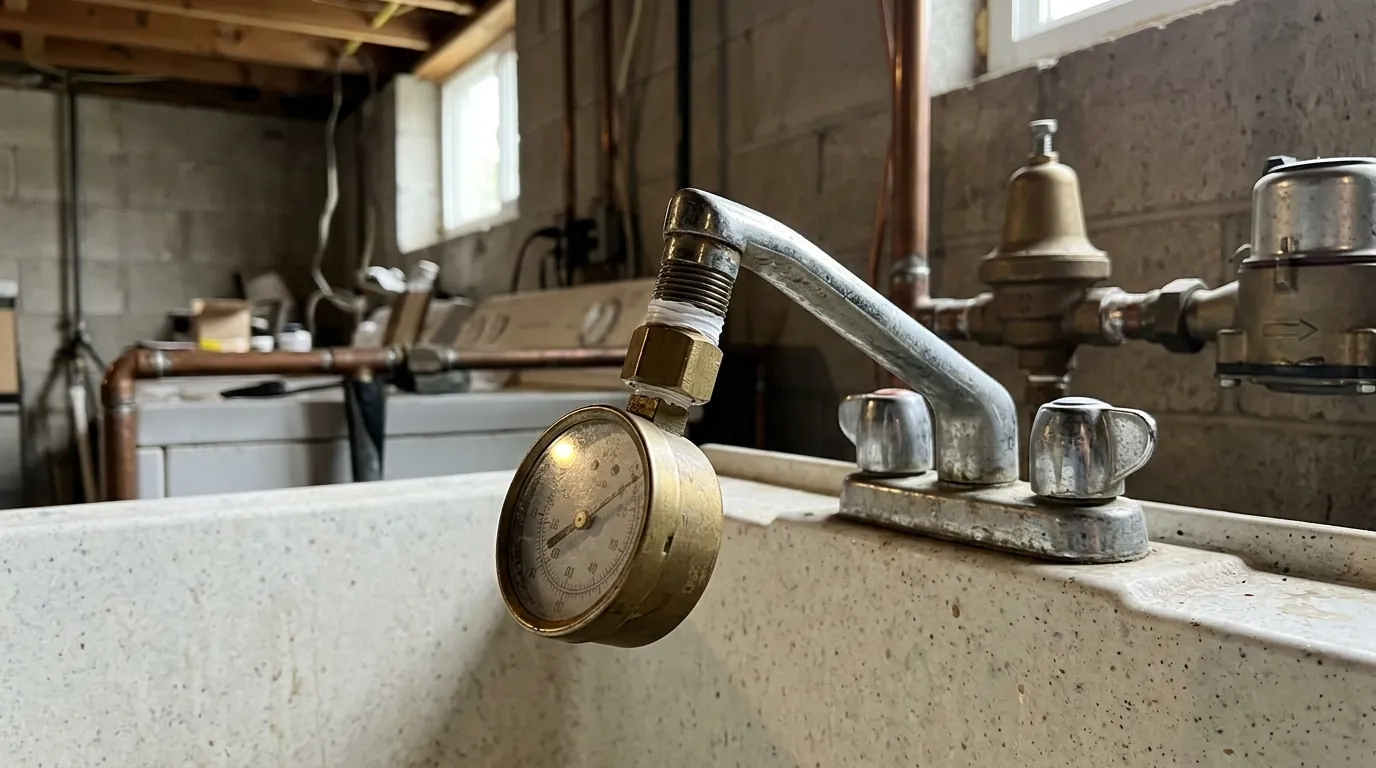
A pressure gauge on a basement faucet near the meter shows static pressure coming in and whether the reducing valve is working.
Check flow at fixtures
The plumber runs fixtures one at a time and together to see where flow drops and how much.
Inspect valves and pipe
The main valve, branch valves and reducing valve are checked, and pipe material at key points is identified.
Fix the cause
Repairs range from cleaning aerators and replacing cartridges to installing a new reducing valve or replacing a section of corroded pipe.
Retest and set
Pressure is measured again, the reducing valve set to a safe range, and you get the before and after numbers.
Water pressure repair costs in Minneapolis homes
The fix ranges from small parts to pipe replacement. The final price depends on access and the condition of the pipe, and it is explained up front.
| Job | Typical range | What moves the price |
|---|---|---|
| Pressure diagnosis with gauge testing | $146 to $267 | House size and number of fixtures and branches checked |
| Pressure reducing valve replacement | $387 to $746 | Valve size, pipe type, and space near the meter |
| Well pressure tank or switch replacement | $427 to $1,368 | Tank size, switch type, and fittings at the tank tee |
| Replace a restricted galvanized section | $468 to $1,293 | Length replaced and wall or ceiling access |
What changes the number
- Aerator, cartridge and supply hose fixes are inexpensive; valve and pipe work cost more.
- Reducing valves sit near the meter, where space and old piping can complicate the swap.
- If many galvanized sections are restricted, repiping may be a better value than patches.
- Well systems add pressure tank, switch and filter parts to the possible fixes.
- Adding a thermal expansion tank is often recommended with a new reducing valve.
Ranges reflect typical Twin Cities jobs in 2026. Your price is explained before work starts. Compare other jobs in the PlumbTek price guide.
Quick pressure checks you can do before calling
These simple checks rule out the easy causes before a plumber visit.
- Unscrew and rinse the aerator on the weak faucet
- Soak the showerhead in vinegar overnight to dissolve scale
- Make sure the main valve is fully open
- Check that stop valves under sinks and toilets are open all the way
- Ask a neighbor if their pressure dropped too
- Check whether a water softener or filter is in bypass or clogged
- Buy a hose-thread gauge and test at a laundry tub or hose bib
Pressure problems common in Twin Cities homes
In older Minneapolis and Saint Paul houses, low pressure almost always traces back to galvanized steel, either in the service line or the interior supply. A 1920s house in Field or Regina might have copper to the kitchen and galvanized to the upstairs bath, which explains why one floor showers fine and the other doesn't.
Suburban homes have the opposite problem more often. Newer developments in Lakeville, Rosemount or Blaine can see high street pressure, and without a working reducing valve, supply hoses, fill valves and water heaters wear out early. Homes on hard, iron-rich well water also clog aerators and showerheads fast, which reads as low pressure until they're cleaned.