Plumbing in East Harriet, the short answer
PlumbTek plumbs homes in East Harriet, ZIP 55409, the early 1900s blocks east of Lake Harriet near the Rose Garden. Most calls involve galvanized supply pipe that has rusted shut inside, clay laterals cracked by boulevard tree roots, and cast iron drain stacks with leaking joints. A walk-through of the basement usually shows where the house stands, and the cost is explained up front.
Signs your East Harriet water lines are rusting shut
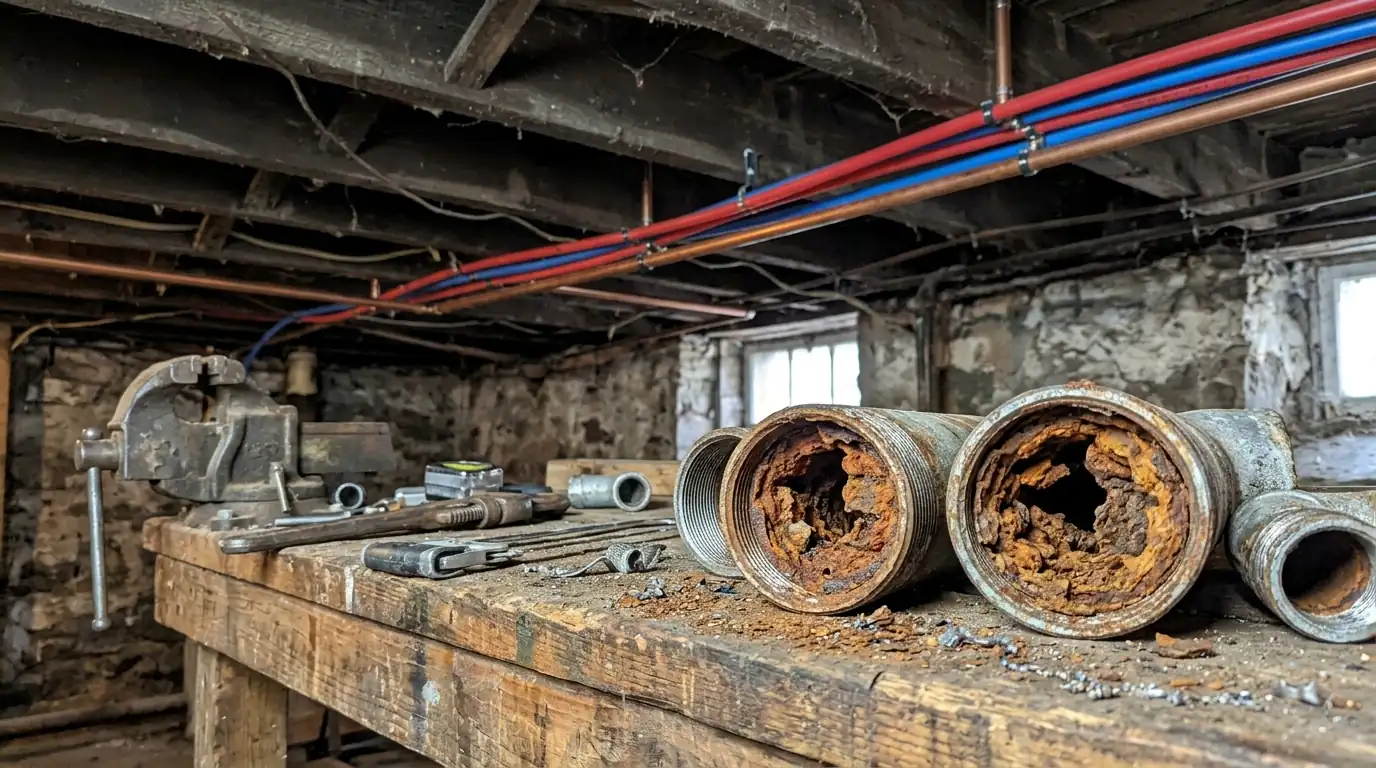
Galvanized steel was the standard supply pipe when most East Harriet homes went up. The zinc coating wears away from the inside, and the bare steel underneath slowly builds rust scale. Over a century, that scale can shrink a three-quarter-inch pipe down to a pencil-width opening, especially at threaded fittings and elbows.
Look for brown water after the taps sit unused, a second-floor shower that trickles when someone flushes downstairs, and drips at threaded joints in the basement. Mixed repairs are common too: copper spliced into galvanized during an old kitchen update. Those splices corrode quickly where the two metals meet, so a dielectric fitting or a full repipe is the lasting fix.
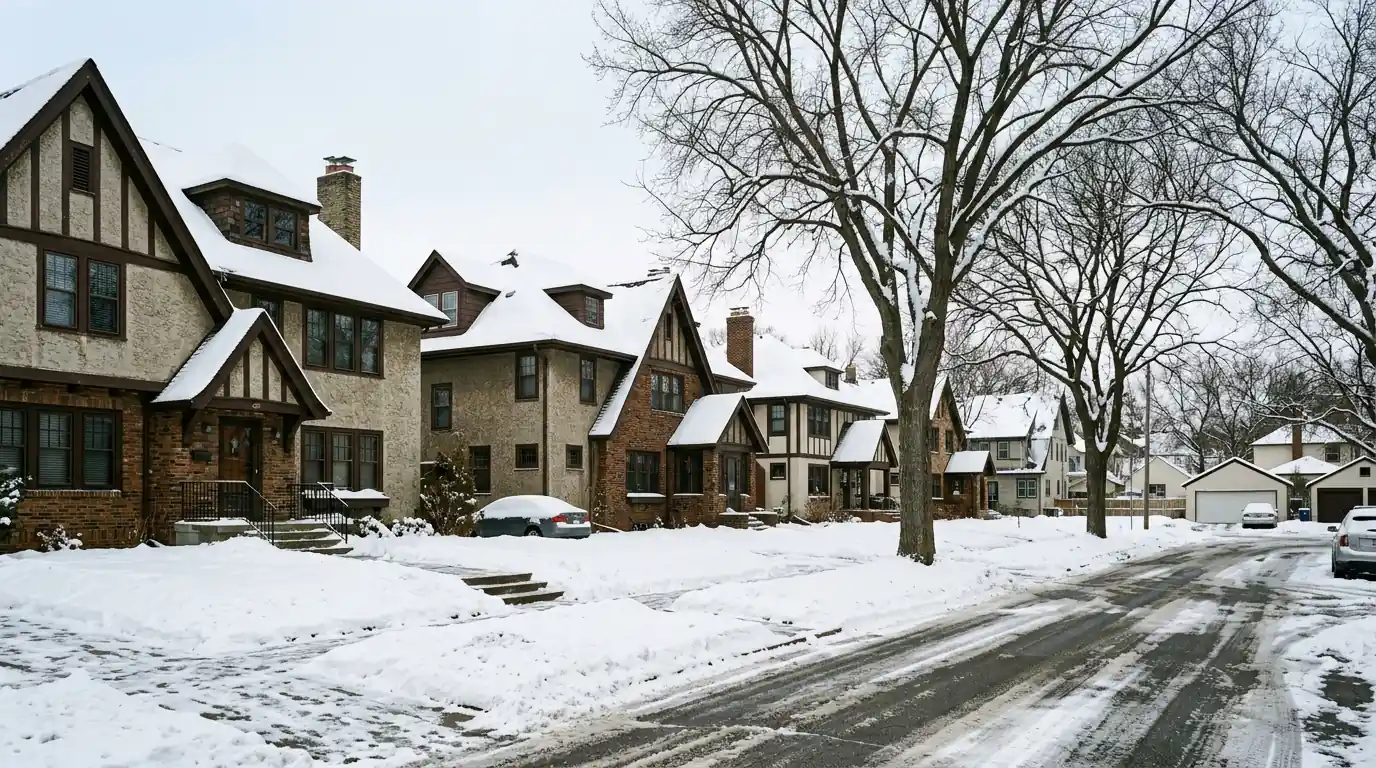
What sits under the boulevard in front of an East Harriet house
The sewer lateral from an East Harriet home runs under the front yard and the boulevard to the city main in the street. Most are original clay tile, and the big boulevard trees that make these blocks so pleasant grow right above them. Roots enter at the joints, and over the years some sections crack or settle out of line.
Because the homeowner owns that lateral all the way to the main, repair falls to you. PlumbTek starts with a camera run to find the trouble spots and measure their distance from the house. Depending on what shows up, the answer may be root cutting, a spot repair, or lining the pipe so the tree and the boulevard stay undisturbed.
Practical advice for East Harriet owners of older homes
- Check the city lead service lookup. Minneapolis keeps service line records by address. Looking yours up tells you whether lead is suspected and whether the city replacement program applies before you plan other water line work.
- Pair a repipe with a remodel. If you're opening walls for a kitchen or bath, replacing nearby galvanized pipe at the same time saves a second round of plaster work later.
- Watch for rust at the stack base. Look where the cast iron stack meets the basement floor. Rust bloom, damp concrete or a sewer smell there usually means the joint or the pipe is starting to give.
- Ask before planting on the boulevard. Thinking about a new boulevard tree or raised garden? Have the lateral located first so new roots and new beds stay clear of the sewer path.