Sink installation in Minneapolis, the short answer
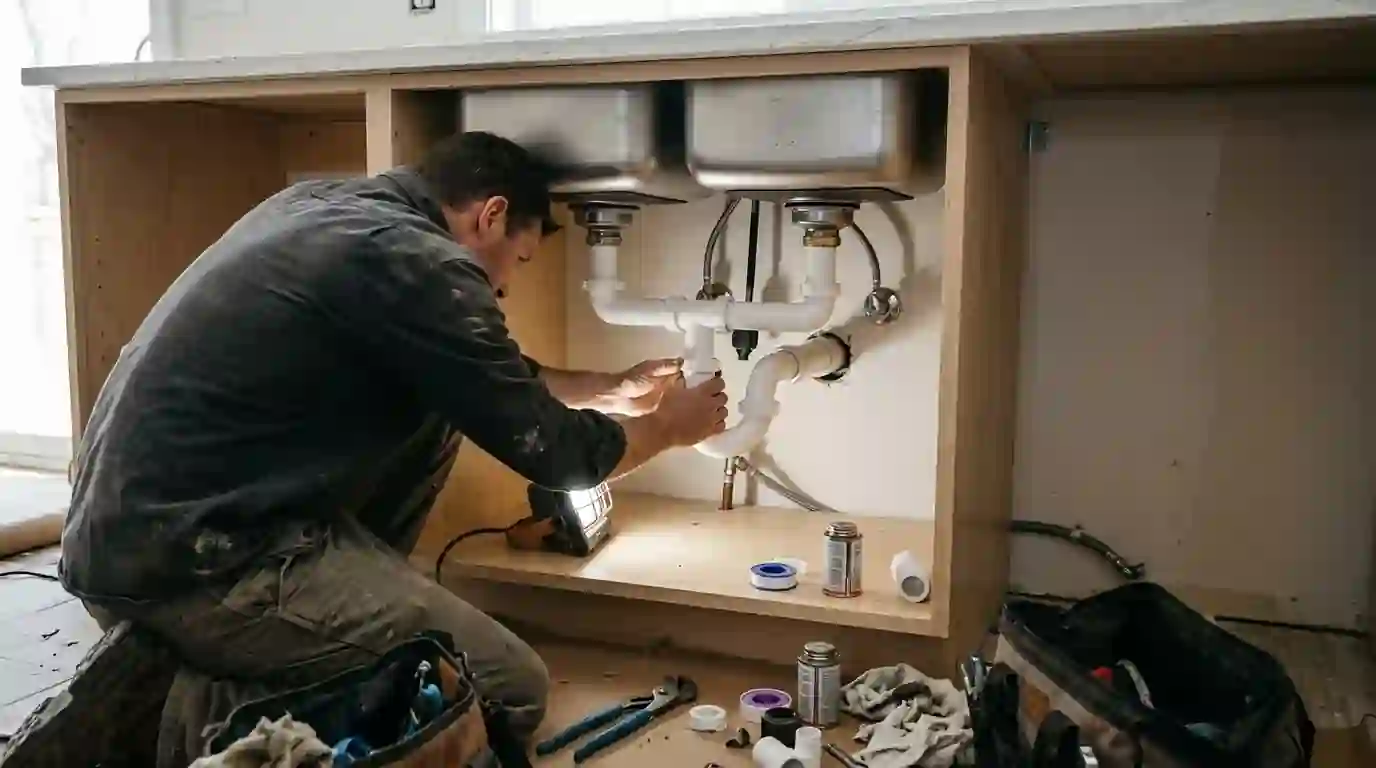
Sink installation in Minneapolis covers setting a new kitchen, bathroom, utility or bar sink and connecting its drain, P-trap, tailpieces and water supply. You need it during a countertop replacement, a kitchen or bath remodel, when an old sink cracks or chips, or when adding a sink in a basement or laundry room. The plumber checks the drain height and venting before anything is set.
What happens below the sink matters most
Under every sink is a P-trap, the curved section of pipe that holds a little water to block sewer gas. It has to line up with the drain stub in the wall at the right height, with enough slope on the trap arm to drain but not so much that the trap siphons dry. When a new sink sits deeper or wider than the old one, the drain often no longer lines up.
Deeper sinks are the classic case. A new single-bowl kitchen sink can drop the outlet several inches lower, putting the trap below the wall drain. That has to be fixed by lowering the drain stub inside the wall, not by running the trap uphill, which leaves standing water and smells. PlumbTek checks those heights before the countertop is cut.
Is there a vent behind your sink?
Every trap needs a vent so draining water doesn't suck the trap dry. In older Minneapolis homes, sinks that were added during a remodel decades ago sometimes have no proper vent at all, or a vent that was cut off when a wall was moved. Signs include gurgling, slow draining and a sewer smell after the dishwasher empties.
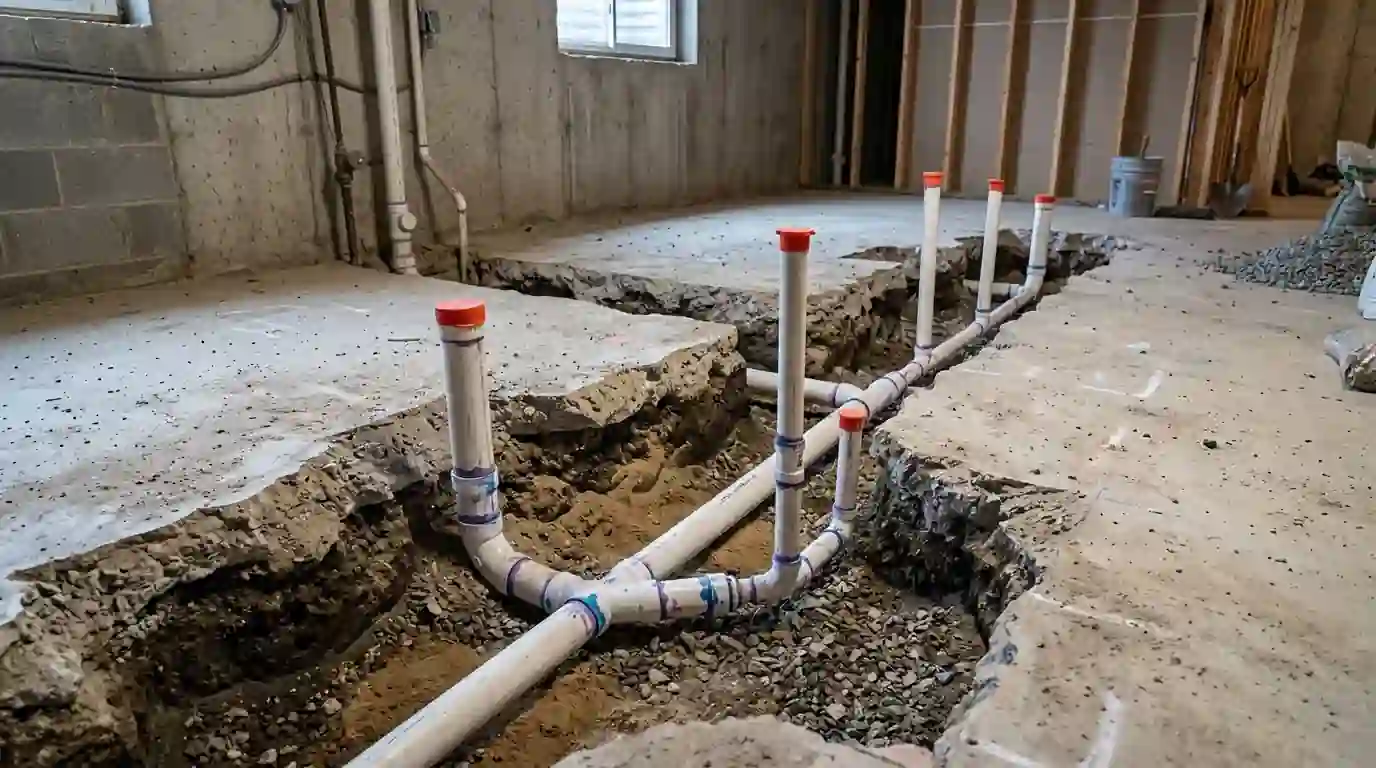
When a sink moves to an island or a new wall, venting becomes the main design question. Options include tying into an existing vent in the wall, running a loop vent for island sinks, or using an air admittance valve where code allows. The plumber explains which fits your layout and what it involves before work starts.
Undermount, drop-in, vessel and utility sinks each set differently
Drop-in sinks rest on the counter with a rim sealed by caulk or putty, so they're the most forgiving. Undermount sinks hang from clips or brackets under stone, and they must be fully supported with the right adhesive and clips, because a heavy cast iron or fireclay bowl full of water puts real weight on those fasteners.
Vessel sinks need a taller faucet and a drain with no overflow, or a grid drain matched to the bowl. Basement utility sinks and laundry tubs often drain into a floor-level line or a pump, which changes how they're plumbed. Each setup gets the right tailpiece, strainer and trap, rather than a one-size kit.
Signs it's time for a new sink
A sink often outlasts its looks, but some problems mean replacement is the better call.
- Cracks or deep chipsCracked porcelain or chipped enamel on cast iron lets water reach the metal underneath, which rusts and stains.
- Rim leaks into the cabinetWater seeping under a drop-in rim rots the countertop substrate and cabinet base, especially on laminate counters.
- Rusted drain basketA corroded strainer on an old stainless sink can leak at the gasket no matter how often it's tightened.
- Undermount sink pulling looseA gap between stone and sink edge means clips or adhesive have failed and the sink is starting to sag.
- Bowl too small for your useShallow old kitchen sinks that can't hold a stockpot make a new deeper basin a practical upgrade.
- New countertop going inCountertop replacement is the right moment to change sinks, since templating the counter depends on the sink chosen.
How a sink gets set and plumbed
Check drain height and vent
Before the counter is cut or the sink set, the plumber measures the outlet depth against the wall drain and looks at how the sink is vented.
Disconnect and remove
Water is shut off, the old trap, tailpieces and supplies are disconnected, and the old sink is lifted out without damaging the counter.
Set and seal the sink
Drop-ins are sealed at the rim, undermounts are clipped and glued in place, and strainers or drain assemblies are installed with fresh putty or gaskets.
Build the trap and supplies
A new P-trap and tailpieces are cut to fit, any drain adjustment in the wall is made, and the faucet is connected to stop valves.
Fill and drain test
Each bowl is filled to the overflow and released at once, while every slip joint and supply connection is checked for drips.
Sink installation prices around the Twin Cities
These are typical 2026 labor ranges for Minneapolis and nearby suburbs. Your actual price depends on the sink type and the drain behind it, and it's explained before work starts.
| Job | Typical range | What moves the price |
|---|---|---|
| Drop-in bathroom or kitchen sink swap | $247 to $463 | Includes new trap, tailpieces and strainer |
| Undermount sink set and plumbed | $338 to $617 | Heavy cast iron or fireclay bowls cost more |
| Basement utility sink or laundry tub | $412 to $867 | Pumped drains or new supply lines add work |
| Drain stub lowered for a deeper sink | $287 to $591 | Opening plaster or tile walls adds time |
| Island sink with new drain and vent | $1,438 to $3,267 | Floor trenching or joist work drives the range |
What changes the number
- A drain stub at the wrong height for the new sink has to be moved inside the wall.
- Missing or inadequate venting adds a vent run or an approved air admittance valve.
- Cast iron drain lines behind the sink may need a transition fitting or short replacement.
- Heavy sinks and undermount setups need more hands and more careful support.
- New sink locations generally need a permit and inspection, which PlumbTek pulls.
Ranges reflect typical Twin Cities jobs in 2026. Your price is explained before work starts. Compare other jobs in the PlumbTek price guide.
Undermount or drop-in: which sink suits your counter?
| Point | Undermount sink | Drop-in sink |
|---|---|---|
| Countertop material | Needs stone, solid surface or quartz | Works with laminate, butcher block and stone |
| Cleaning the counter | Crumbs wipe straight into the bowl | Rim edge catches grime and needs scrubbing |
| Installation | Clips and adhesive, set with the counter | Rests on the counter and seals at the rim |
| Replacing it later | Harder, may involve the countertop | Simpler to lift out and swap |
| Typical cost | Higher labor and support hardware | Lower labor, faster to install |
Sink swaps in Twin Cities kitchens old and new
In older Minneapolis homes around Lake Harriet, Bryn Mawr and the Wedge, kitchen sinks often drain into galvanized steel pipe that has narrowed inside from decades of grease and scale. Replacing the sink is a good time to cut back that galvanized stub and transition to PVC, so the new trap drains freely instead of inheriting a half-clogged line.
Basement utility sinks are a common request in these houses too. Many older basements have a floor drain but no sink, and when the laundry moves or the basement is finished, homeowners want a tub near the washer. Depending on the drain depth, that may tie into the existing line by gravity or need a small pump.