Water softener repair in Minneapolis, the short answer
Water softener repair in Minneapolis homes fixes units that stop removing hardness, fail to draw brine, overflow, or run constantly. Typical repairs include breaking up salt bridges, cleaning a clogged injector and venturi, replacing the control valve seals or motor, and cleaning or rebedding fouled resin, especially on iron-heavy well water.
Why a softener stops softening even with salt in the tank
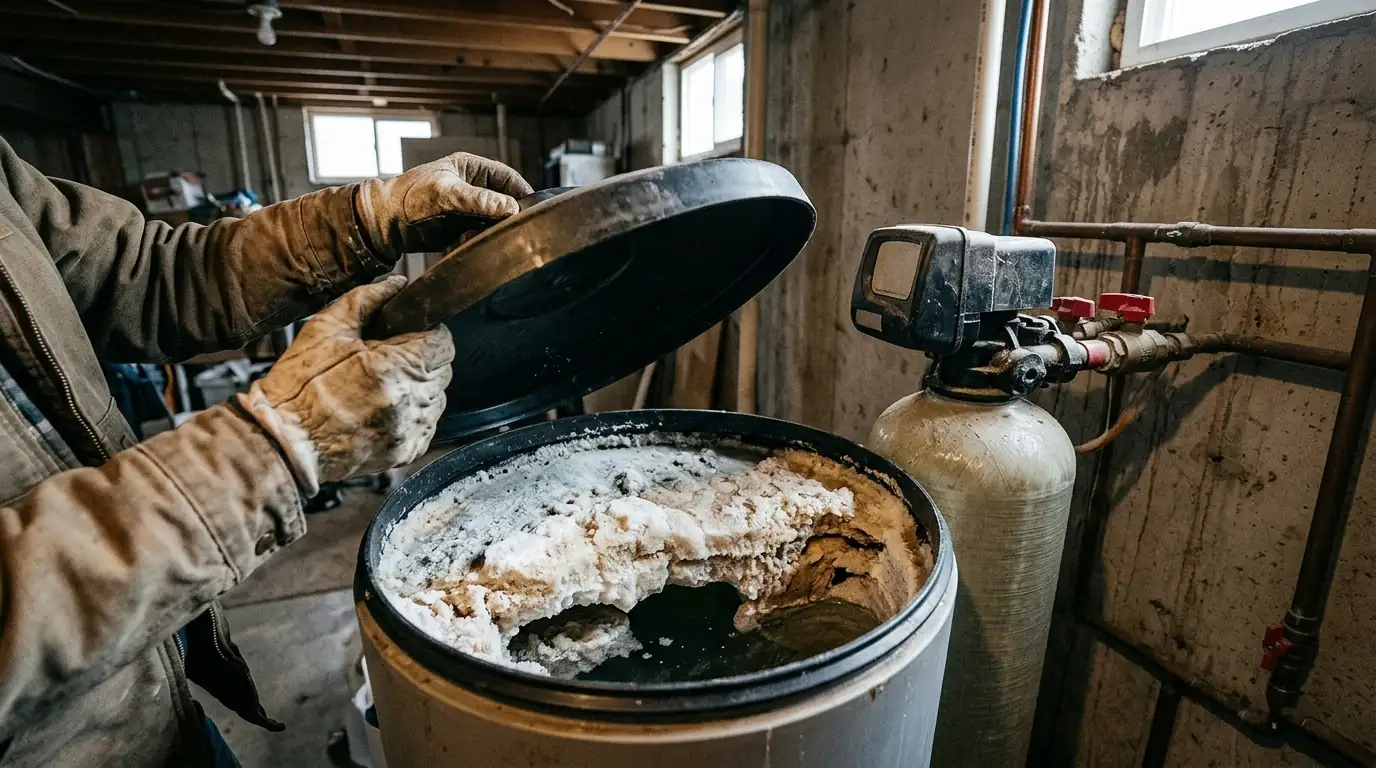
A full brine tank doesn't always mean the softener is working. The most common culprit is a salt bridge, a hard crust that forms across the tank while the salt underneath dissolves away. The softener draws water from below the crust, which has no salt left to make brine, so the resin never recharges.
Humidity in Minnesota basements makes bridging more likely in late summer. Pushing a broom handle gently down through the salt usually breaks it up. If the salt level still won't drop after a few days, the problem is mechanical, usually in the injector, the brine line, or the control valve that runs each regeneration step.
Injector, brine line and float: the small parts that cause big trouble
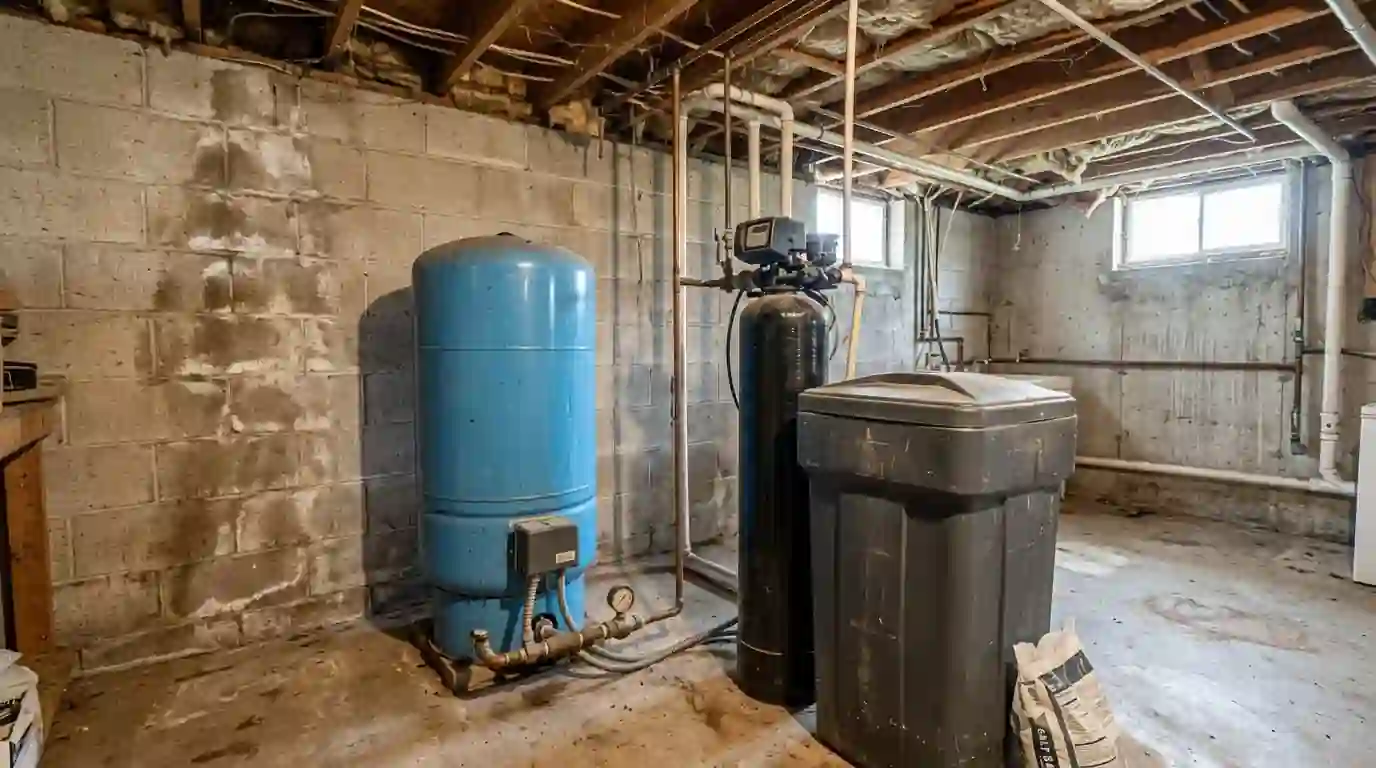
The injector, sometimes called the venturi, creates suction that pulls brine out of the salt tank and through the resin. Its tiny opening clogs easily with salt sediment or iron. When it's blocked, the softener can't draw brine, and the brine tank fills with water instead of emptying.
The brine line and the safety float in the brine well can also stick or leak air. A cracked brine line fitting lets air in, so the suction fails. A stuck float may let the brine tank overfill. PlumbTek pulls and cleans the injector screen, checks the brine line and float, and runs a manual regeneration to watch each stage.
Resin, control valve seals and motors on older units
The resin beads inside the tall tank do the actual softening. On iron-rich well water, those beads can get coated and lose capacity. A resin cleaner helps in milder cases. If the bed is badly fouled or the beads have broken down into fine particles, the resin may need replacing, which is done by removing the control valve and refilling the tank.
The control valve itself has seals, spacers and a piston that wear over years of cycling. Worn seals let hard water bypass the resin or let water run to drain constantly. The drive motor or timer can also fail. On a softener over about fifteen years old, we'll compare the repair cost against a new unit.
Warning signs your softener needs repair
These point to a softener that has stopped doing its job.
- Salt level never goes downEither a salt bridge has formed or the softener isn't drawing brine. Check for a crust before assuming a mechanical problem.
- Standing water in the brine tankA clogged injector, kinked brine line or failed float can stop brine from drawing, so water collects instead.
- Hard water spots returningScale on fixtures, spotty glasses or poor soap lather mean hardness is getting past the resin.
- Water running to drain nonstopWorn seals or a stuck piston in the control valve can leave the softener in a regeneration position.
- Brown or orange water after regenerationIron fouling of the resin bed, common on wells in Sherburne and Wright counties.
- Control display blank or clock wrongA power blip, failed transformer or bad board can stop regeneration or set it for the wrong time.
How we track down a softener problem
Phone in the symptoms
Call (612) 254-6294 and tell us what you're seeing at the brine tank and the taps, and the softener brand if you know it.
Hardness test at the tap
We test water after the softener to confirm how much hardness is getting through, which tells us how serious the problem is.
Brine tank and injector check
The brine tank is inspected for bridges and sludge, and the injector and screen are removed and cleaned.
Manual regeneration
We step the valve through backwash, brine draw, rinse and refill to see which stage fails.
Repair and reprogram
Seals, motor, float or resin are replaced as needed, and hardness and regeneration settings are updated to match your water.
Softener repair pricing around the Twin Cities in 2026
Most repairs fall in the lower rows. Your actual price depends on the fault and the softener model, and is explained before work starts.
| Job | Typical range | What moves the price |
|---|---|---|
| Clean injector, brine line and float | $162 to $287 | Sludge in the brine tank and part condition |
| Control valve seal and spacer kit | $273 to $468 | Valve brand and parts availability |
| Drive motor or circuit board replacement | $327 to $612 | Board type and whether the valve body is still sound |
| Resin bed replacement | $486 to $893 | Tank size and resin type for iron-bearing water |
What changes the number
- Older or discontinued softener brands can make parts harder to find.
- Heavy iron fouling may need resin replacement plus an added iron filter to prevent repeat damage.
- Brine tanks full of sludge need emptying and cleaning before the repair can be tested.
- Drain line or bypass valve leaks found during repair are priced separately.
- A very old unit with several failing parts may be better replaced than repaired.
Ranges reflect typical Twin Cities jobs in 2026. Your price is explained before work starts. Compare other jobs in the PlumbTek price guide.
Things to try before calling about your softener
A few minutes with these can solve the simpler problems.
- Push a broom handle gently into the salt to check for and break up a salt bridge.
- Confirm the bypass valve is set to service, not bypass.
- Check that the control head shows the correct time of day.
- Make sure the softener is plugged in and the outlet has power.
- Look at the brine line between the tanks for kinks or a loose fitting.
- Use clean pellet or crystal salt, not rock salt, to limit sludge.
- Start a manual regeneration and listen for water moving after a few minutes.
Softener trouble on Twin Cities wells and city lines
Most softener repair calls PlumbTek handles come from homes on private wells around Big Lake, Elk River, Zimmerman and Buffalo. Iron-rich water there fouls resin and clogs injectors faster than city water ever would. A softener that ran for years in Minneapolis may struggle within a season or two on a Sherburne County well.
In Minneapolis and the inner suburbs, softener trouble tends to look different. City water is already softened, so the units work less hard, but older models sitting in damp basements develop salt bridges and stuck floats. Those fixes are usually quick and inexpensive, and we'll check the bypass valve while we're there.