Plumbing in Saint Paul, the short answer
PlumbTek plumbs homes in Saint Paul, MN 55102 and the neighborhoods around it, from Victorian-era houses near downtown to mid-century ramblers farther out. Most calls here involve aging pipe: galvanized supply lines that have narrowed, cast iron stacks that weep at the joints, and lead service lines that Saint Paul Regional Water Services is working to replace. The phone is answered 24/7, and urgent leaks go to the front of the line.
What a century-old Saint Paul basement usually shows a plumber
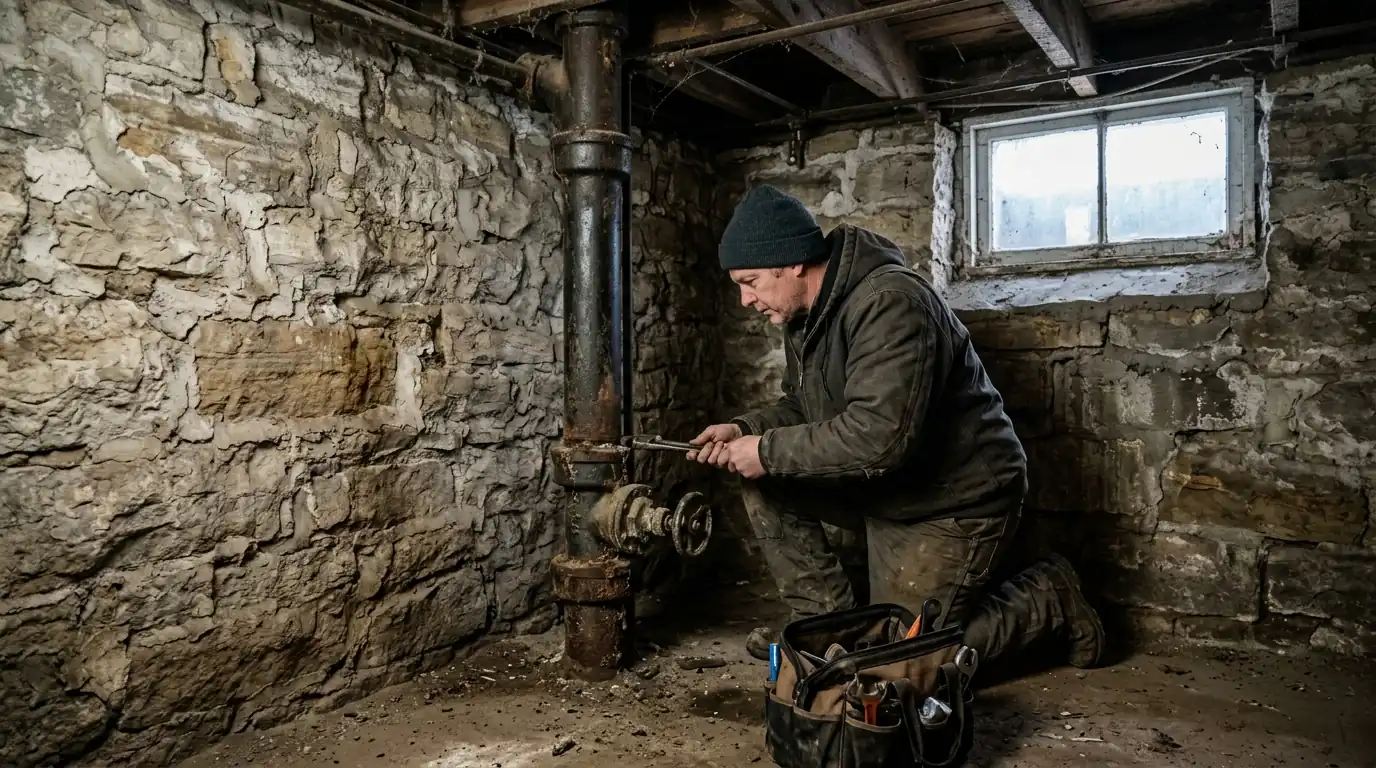
Walk down the stairs in a Summit Hill or Frogtown house and you'll often find every repair the past hundred years produced. There's a cast iron stack with a lead-and-oakum joint at the floor, a run of galvanized pipe teed into newer copper, and a gate valve on the main that hasn't turned in decades.
Each of those pieces has a typical failure. Galvanized pipe rusts from the inside until a kitchen faucet barely trickles. Cast iron cracks along the bottom where waste has run for generations. Old valves either won't close or start dripping at the stem the moment they're moved, which is why we test them gently and replace the ones that fight back.

How the lead service line program changes your plan
Saint Paul Regional Water Services runs its own lead service line replacement work, and it offers a way to look up whether your address is on record as lead. Homes built before 1950 are the likeliest candidates. If yours is one of them, the line usually enters through the front foundation wall and meets the meter in the basement.
Before any digging, check how the utility program applies to your property and which portion of the line falls to you. When PlumbTek replaces the private side, the crew sets a new service pipe, a fresh full-port main valve and a clean meter connection, then pulls the permits the job needs and schedules the inspection.
Why roots and spring storms hit Saint Paul sewer laterals hard
Many Saint Paul blocks are lined with mature boulevard trees, and their roots find the joints of clay tile laterals with real patience. A slow floor drain in October can turn into a full backup after the first big rain in April, when the roots have thickened and the system is also carrying storm runoff.
Remember that the lateral from your house to the city main is the homeowner's responsibility, even the stretch under the street. A camera run shows if the trouble is a root mass, an offset joint or a belly holding water. From there, the choice is between regular cleaning, a lined repair or replacing the worst section.
Small steps that spare Saint Paul homeowners a bad week
- Find your main valve now. Locate the shut-off near the meter, usually on the front basement wall, and turn it a quarter turn twice a year so it doesn't seize when you need it.
- Check the SPRWS lead records. Use the Saint Paul Regional Water Services lookup to see whether your address is listed as lead, then check the pipe where it enters the basement.
- Mind the porch and rim joists. Pipes running to back porches and along rim joists freeze first in January cold snaps. Insulate them and open sink cabinets on the coldest nights.