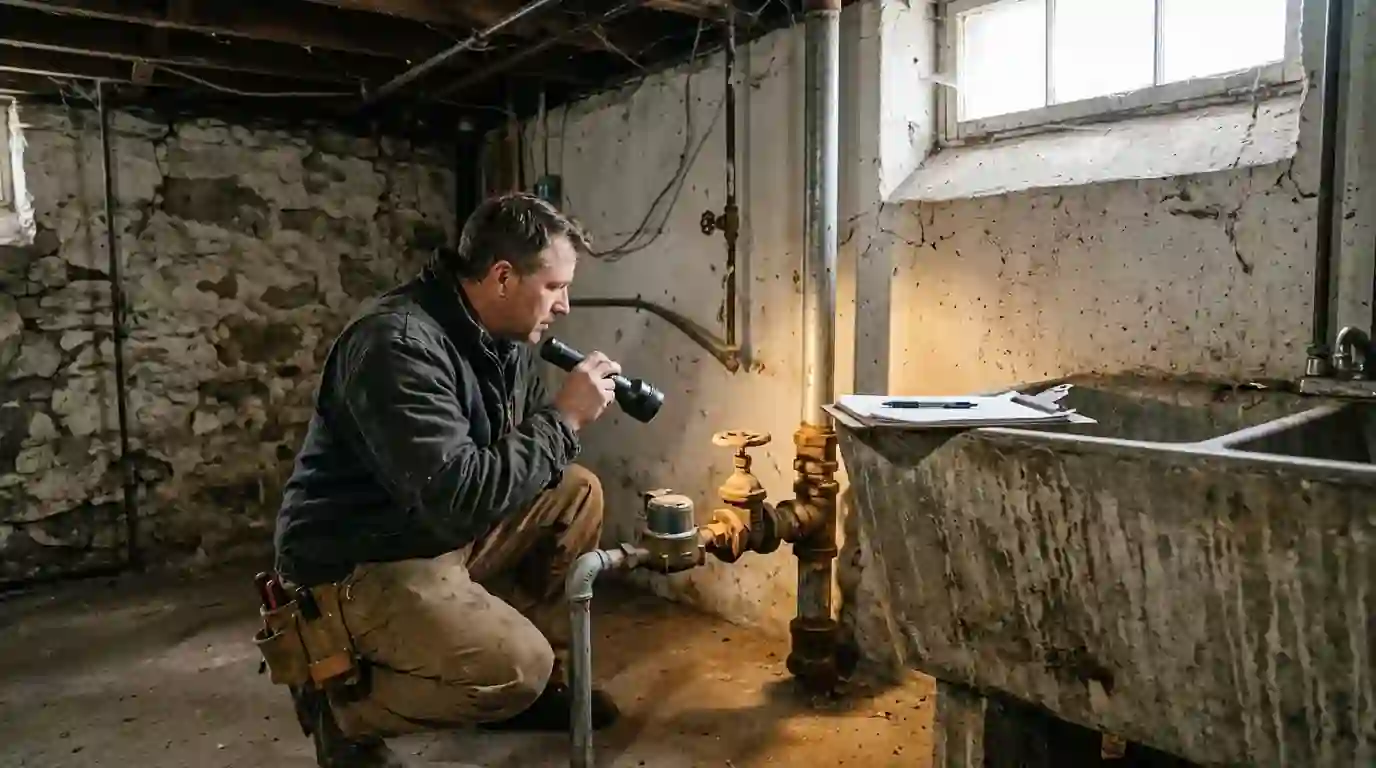
Plumbing inspection in Minneapolis, the short answer
A plumbing inspection in Minneapolis is a detailed check of a home's water supply, drains, venting, gas piping to appliances and water heater by a plumber. Buyers use it before closing on an older house, and sellers use it to correct plumbing items listed on a Truth in Sale of Housing evaluation. You get a written list of findings ranked by urgency, with price ranges for the repairs.
What a general home inspection misses in the plumbing
A general home inspector covers the whole house in a few hours, so plumbing gets a quick look: run a few faucets, flush toilets, note the water heater's age. That's useful, but it doesn't tell you whether the galvanized supply pipe is half closed with rust, whether the main shut-off actually closes, or whether the stack has a crack hidden behind the laundry tub.
A plumbing inspection goes deeper on one system. The plumber tests water pressure and flow at several fixtures at once, works every shut-off valve, looks at each drain trap and vent connection, checks the water heater's venting and relief valve, and examines exposed supply and drain pipe for material, age and condition. On older homes, a sewer camera run adds a look at the buried lateral.
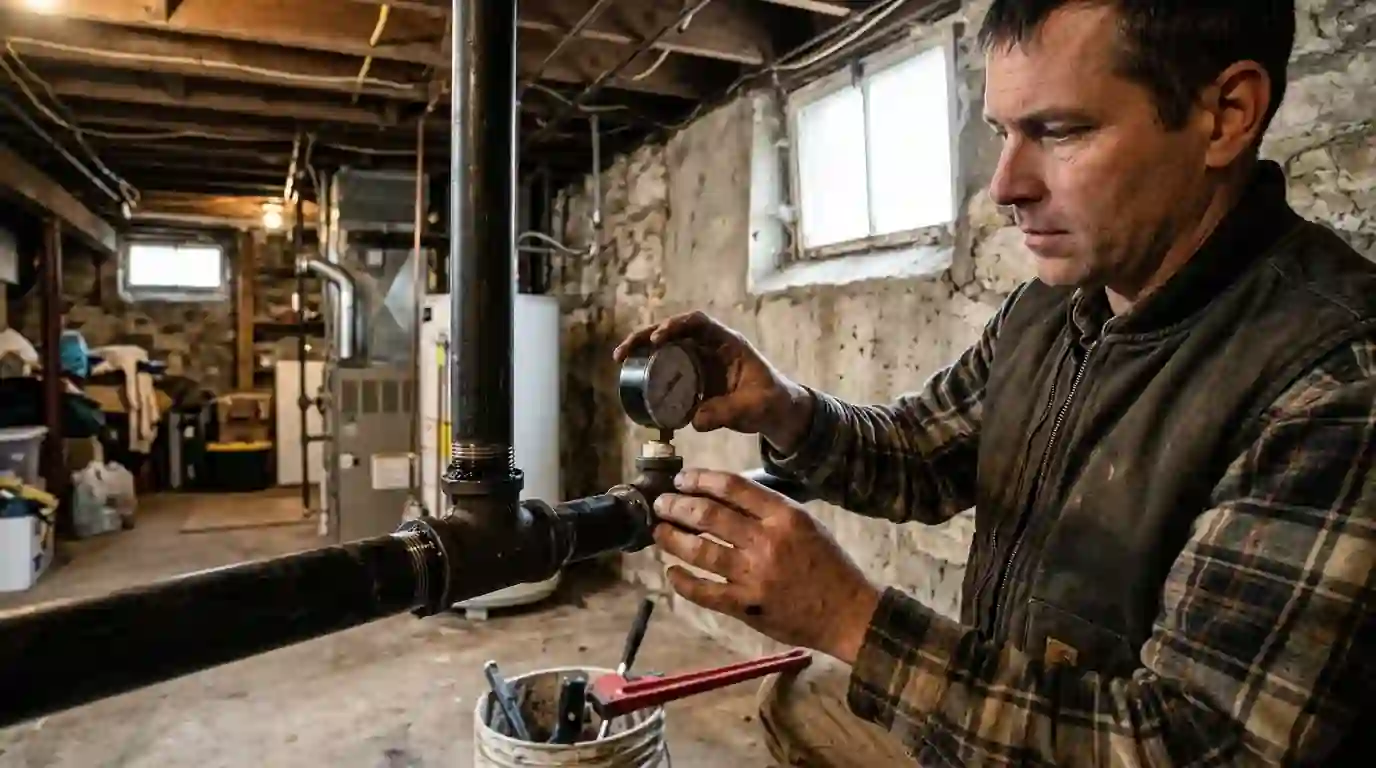
Fixing Truth in Sale of Housing plumbing items
Minneapolis and Saint Paul both require a Truth in Sale of Housing evaluation before a house is listed. The evaluator notes items that need repair, and some of them have to be corrected, with permits where required, before or after the sale depending on city rules. Plumbing items show up often on older houses.
Common TISH plumbing items include a water heater relief valve without a proper discharge pipe, a missing or wrong vent, an S-trap under a sink, a gas appliance connector that's outdated, or a laundry tub with no backflow protection on the faucet. PlumbTek reads the TISH report, prices each plumbing item separately and pulls the permits those repairs need, so the city can sign off.
Buyers and sellers often negotiate who fixes which items. A clear repair list with a price range for each one makes that conversation easier, and it keeps surprise costs out of the last week before closing, when there's little time left to get bids.
Pre-purchase checks that pay for themselves
The plumbing items that cost the most in older Twin Cities houses are usually buried or hidden: a clay tile sewer lateral full of roots, a lead or galvanized water service, a cast iron stack that's thinning from the inside. A pre-purchase inspection aims at those first, because they're the ones that can change your offer.
You'll get a written list grouped into three tiers: safety items that should be fixed right away, repairs likely needed within a few years, and things to watch. Each repair item comes with a realistic price range so you can decide whether to ask the seller for a credit, a repair or a lower price.
When a dedicated plumbing inspection makes sense
These situations call for more than the plumbing section of a general home inspection.
- House built before 1950Pre-war homes often have galvanized supply pipe, cast iron drains, clay sewer laterals and sometimes a lead service line, all of which deserve a closer look.
- TISH report lists plumbing itemsItems marked as needing repair on a Truth in Sale of Housing evaluation have to be corrected properly, often with a permit and city sign-off.
- Home inspector flagged concernsNotes like low pressure, slow drains or an aging water heater are worth a plumber's follow-up before your inspection contingency runs out.
- House sat empty over winterVacant homes and foreclosures may have frozen and cracked pipes that only show up when the water is turned back on.
- Signs of past water damageStained ceilings below bathrooms, new drywall patches or a fresh coat of basement paint can hide old leaks worth checking.
- Planning a remodel after closingIf you plan to add a bathroom or open up a kitchen, knowing the condition of the stack and supply lines helps you budget the project.
What happens during a pre-purchase plumbing check
Review the paperwork
The plumber goes over any home inspection or TISH report first, so flagged items get attention and nothing already noted gets missed.
Check supply and pressure
Static pressure and flow are tested, pipe materials are identified from meter to fixtures, and the main shut-off and fixture stops are operated.
Check drains and venting
Each fixture is run and drained, traps and vents are checked, and the main stack and floor drain are examined for cracks and slow flow.
Water heater and gas connections
The water heater's age, venting, relief valve and discharge pipe are checked, and gas appliance connectors are inspected for outdated types.
Written findings and prices
You get a list of findings ranked by urgency, with price ranges for each repair, ready for negotiation or the TISH correction process.
Plumbing inspection and TISH repair prices
Typical 2026 Twin Cities ranges. The age of your plumbing and how easy it is to reach set the final number, and you get the figure ahead of the work.
| Job | Typical range | What moves the price |
|---|---|---|
| Pre-purchase plumbing inspection | $247 to $418 | House size, number of bathrooms and access to piping |
| Inspection with sewer camera run | $412 to $689 | Cleanout access, lateral length and any roots blocking the camera |
| Water heater relief valve discharge pipe | $137 to $284 | Distance to floor drain and pipe material required |
| Replace S-trap with vented P-trap | $238 to $617 | Whether a new vent can be tied in without opening walls |
What changes the number
- Older homes with mixed pipe materials take longer to trace and document.
- Adding a sewer camera inspection depends on having a usable cleanout or pulling a toilet.
- Multi-unit and duplex homes have more fixtures and water heaters to check.
- TISH repairs that need permits include the permit fee in the price explained up front.
- Inspections timed tightly against a closing deadline may need an evening or weekend slot.
Ranges reflect typical Twin Cities jobs in 2026. Your price is explained before work starts. Compare other jobs in the PlumbTek price guide.
What to have ready before a plumbing inspection
A little prep helps the plumber see more in the time available.
- Copy of the home inspection or TISH report, if you have one
- Seller disclosure noting past leaks, sewer backups or repairs
- Clear access to the water meter, main shut-off and water heater
- Path cleared to the floor drain and laundry area
- Location of the sewer cleanout, if the seller knows it
- Water turned on and pilot lights lit in a vacant house
- A list of fixtures you plan to replace or add after closing
What turns up in Minneapolis and Saint Paul homes
In Longfellow bungalows, Powderhorn foursquares and Saint Paul's Hamline-Midway, the most common findings are galvanized supply pipe with poor flow at upstairs fixtures, a seized gate valve at the meter, cast iron drains with rust scale, and a clay sewer lateral with roots at the joints. Many of these houses also had plumbing added in the basement by past owners, sometimes without venting or permits.
In 1960s and 1970s ramblers in Richfield, Roseville and Bloomington, copper supply lines are usually in better shape, but original water heaters, rusty laundry tub faucets and undersized drain lines for added bathrooms show up often. On well-water homes around Big Lake and Elk River, the water softener, pressure tank and well pump get checked as part of the inspection.