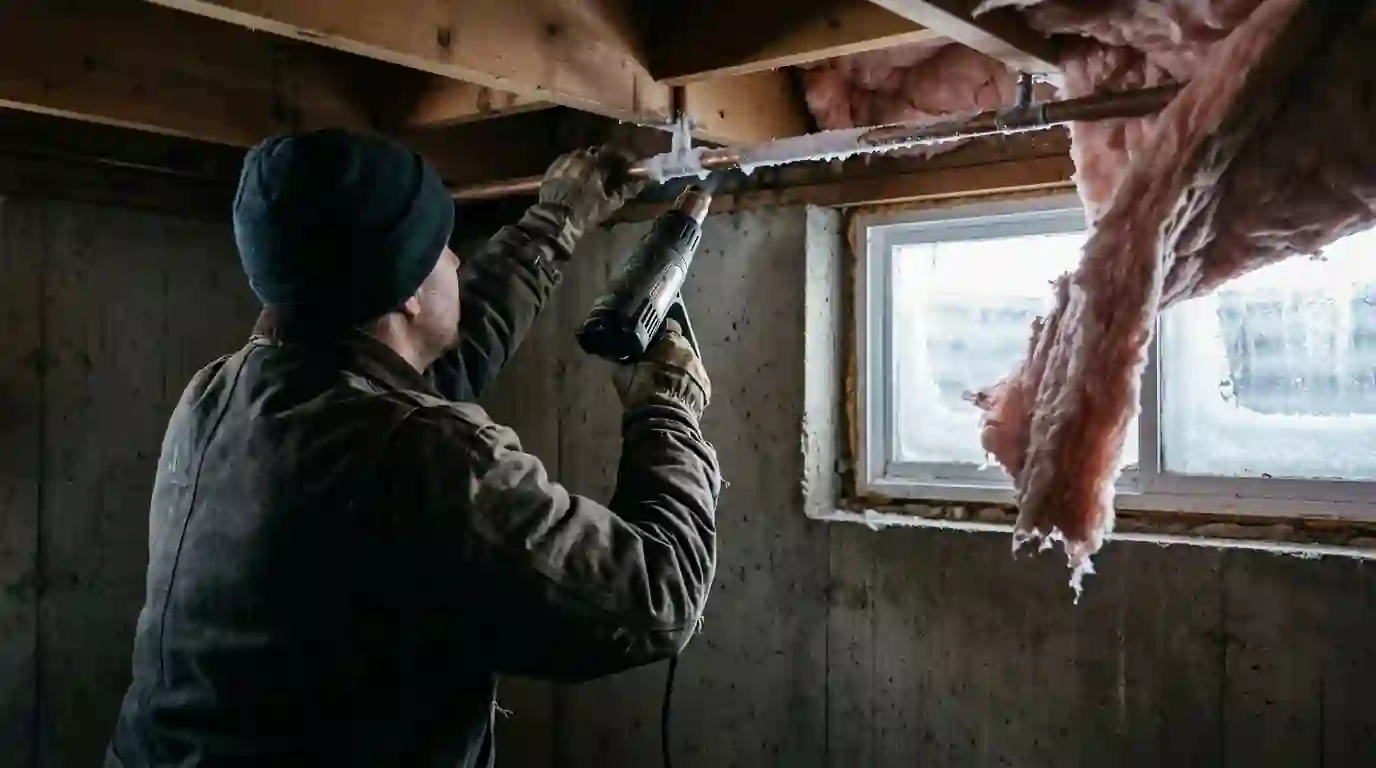
Frozen pipe thawing in Minneapolis, the short answer
Frozen pipe thawing in Minneapolis is the careful warming of an ice-blocked water pipe so water flows again without cracking the line or starting a fire. You need it when a faucet goes dry or trickles during a cold snap while others still work. A plumber locates the ice plug, thaws it with controlled heat, and checks for splits before the line is pressurized.
How to tell which pipe froze
Start with the pattern. If one sink is dry but the rest of the house has water, the freeze is in that sink's branch, usually inside the outside wall behind the cabinet. If the hot works and the cold doesn't, look at the cold line only. If the whole house is dry, the problem is near where the water enters, at the meter or along the service pipe.
Then follow the pipe from the dead fixture back toward the basement. The frozen spot is almost always where the line passes close to cold air: a rim joist pocket, a crawl space, a garage ceiling, or the wall of a porch. Frost on the outside of the pipe, or a section that's much colder to the touch, gives it away.
Safe heat versus the methods that start fires
Every winter, a few Twin Cities houses catch fire because someone held a propane torch to a frozen pipe inside a wall. Old balloon framing, dry sawdust and paper-faced insulation light quickly, and the fire can smolder unseen for an hour. Never use an open flame, a charcoal heater or a kerosene heater on a frozen pipe.
Safer methods are slower and controlled: an electric heat gun kept moving, a hair dryer, warm wet towels, a space heater aimed at an opened cabinet, or a heat lamp at a safe distance. Plumbers also carry pipe-thawing machines that pass low-voltage current through metal pipe to warm it from inside, which works on long runs buried in walls.
When the frozen pipe is the water service line
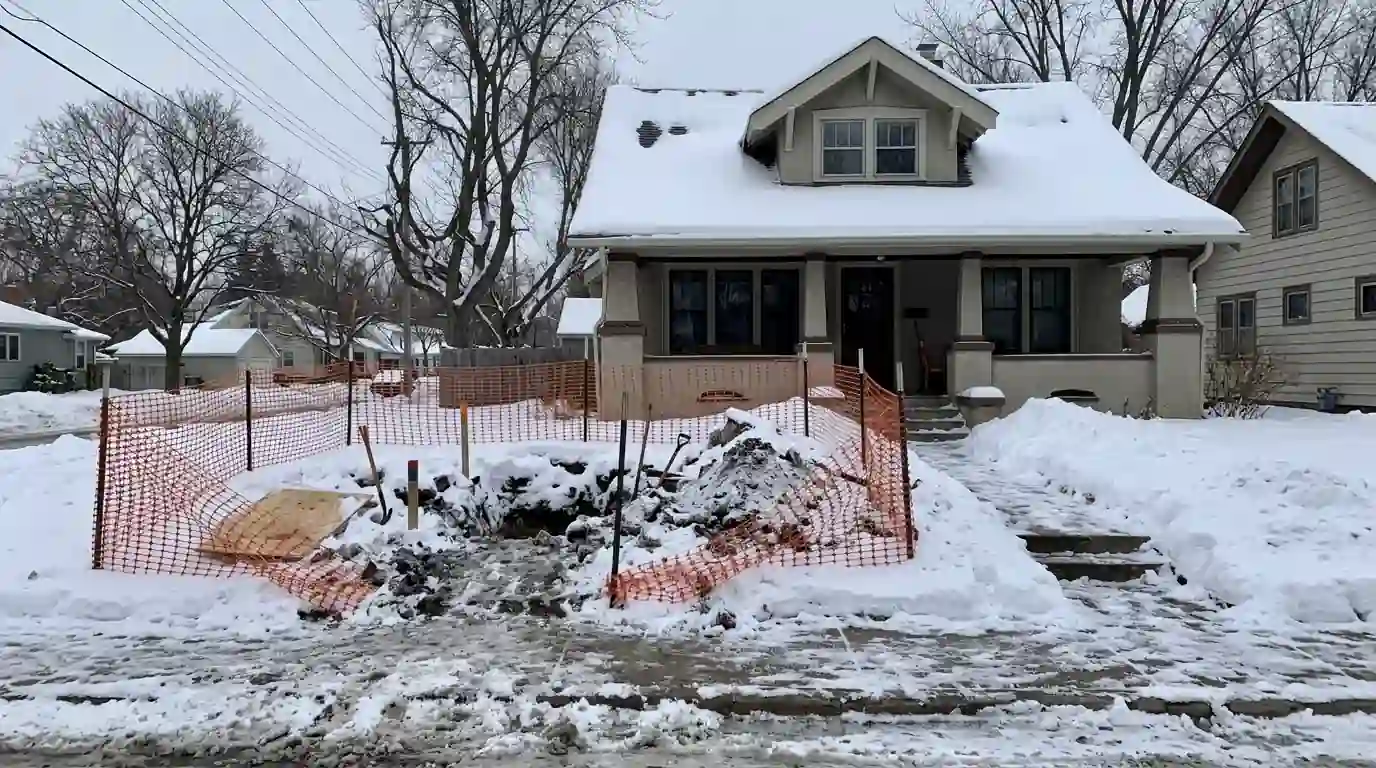
If no faucet in the house works and the meter area is cold, the freeze may be in the service line where it comes through the foundation, or in the shallow section under a driveway or sidewalk. Plowed and packed snow drives frost deeper than normal, so a line that has worked for decades can freeze in a bitter winter.
Thawing a service line needs different tools. When PlumbTek gets a no-water call in a hard freeze, the plumber checks the meter and the line inside the wall first, then uses a thawing machine or hot water jet fed through the pipe from the meter end. Once water flows, a trickle overnight keeps it from refreezing.
Clues a pipe is frozen, not just low on pressure
These signs during a cold snap point to ice in the line rather than a plumbing failure.
- One fixture dry, others fineA single dead faucet while the rest of the house flows normally means ice is blocking that fixture's branch line.
- Faucet trickles then stopsA thin stream that slows to nothing over a few minutes means ice is building and narrowing the pipe as you watch.
- Frost on an exposed pipeWhite frost or condensation freezing on a basement or crawl space pipe marks the cold section where the plug likely sits.
- Toilet tank not refillingA tank that stays empty after a flush, especially in a bathroom over a garage or porch, points to a frozen feed line.
- Odd smell from a drainSometimes a frozen or blocked vent lets sewer gas through a trap. It is less common, but it shows up in deep cold.
- Bulge or swelling on pipeA visible bulge on copper, or a swollen PEX fitting, means pressure already stretched it. Expect a leak once it thaws.
How we thaw a frozen pipe without cracking it
Open the dead faucet
The faucet fed by the frozen pipe is opened so melting water and steam can escape. That relieves pressure and shows the moment flow returns.
Find the ice plug
The plumber traces the line toward the cold spot, using touch and an infrared thermometer to find the section sitting at freezing.
Apply controlled heat
Heat goes on starting at the faucet side and working back, using a heat gun, warm air or a thawing machine, never a flame.
Check for splits
As water starts moving, the plumber watches the thawed section and nearby joints for drips, swelling or spray that signal a frost crack.
Stop the next freeze
Before leaving, the plumber explains the cold spot and how to protect it, from opening cabinets to insulation or a reroute.
Typical price to thaw frozen pipes in the Twin Cities
Thawing is mostly labor, so access and the location of the ice plug drive the cost. The final price depends on access and the condition of the pipe, and you approve it before anything is cut or replaced.
| Job | Typical range | What moves the price |
|---|---|---|
| Thaw an exposed basement or crawl space pipe | $186 to $347 | Time to find the plug and how cold the space is |
| Thaw a pipe inside a finished wall | $268 to $529 | Cabinet removal, small access hole, or thawing machine use |
| Thaw a frozen water service line | $394 to $887 | Depth of the freeze and access at meter and foundation |
| Thaw plus split repair | $413 to $962 | Number of frost cracks and the pipe material |
What changes the number
- The colder and more exposed the pipe, the longer it takes to bring above freezing.
- A thawing machine is used on metal pipe in walls, but not on PEX or other plastic pipe.
- Splits found during the thaw are repaired as a separate line item, explained first.
- Night and weekend calls during cold snaps carry a higher trip rate.
- Sealing or insulating the cold spot is optional and priced on its own.
Ranges reflect typical Twin Cities jobs in 2026. Your price is explained before work starts. Compare other jobs in the PlumbTek price guide.
Keeping a thawed pipe from freezing again tonight
- Let a thin stream run. A pencil-width trickle of cold water from the affected faucet keeps water moving, which makes it much harder for ice to form overnight.
- Open the sink cabinet. Leaving cabinet doors open lets warm room air reach pipes on an outside wall. Move cleaning chemicals out of reach of kids and pets.
- Hold the thermostat steady. Skip the deep overnight setback during a cold snap. A few degrees of savings isn't worth a frozen kitchen line.
- Close the garage door. If the frozen pipe ran through a garage ceiling or wall, keep the overhead door shut until the cold breaks.
- Block the draft. Stuff a rag or foam board into an open rim joist gap or a broken basement window near the pipe until it can be sealed properly.
Twin Cities homes that freeze in every hard winter
Brick and stucco homes from the 1910s and 1920s in Powderhorn, Linden Hills and Saint Paul's Macalester-Groveland often have kitchen plumbing in uninsulated exterior walls. They may go years without trouble, then freeze in the one week the wind chill sits far below zero and air leaks at the sill blow straight on the pipe.
In newer homes from Blaine to Shakopee, the usual frozen spots are bathrooms over attached garages, laundry rooms on outside walls, and the line to an outdoor faucet left with a hose attached. Homes on wells in Sherburne and Wright counties also see frozen pressure tank lines in unheated well pits and pump houses.