Pipe repair in Minneapolis, the short answer
Pipe repair in Minneapolis covers fixing a damaged section of water supply or drain pipe: pinhole leaks in copper, corroded galvanized joints, cracked cast iron stacks, failed fittings and sagging drain lines. You need it when a pipe drips, sweats rust, smells of sewer gas, or rattles loose. A plumber cuts out the failing section, joins new pipe with the correct fittings, and tests the repair.
Supply pipe repairs: copper, galvanized and PEX
Copper fails in two main ways. Pinholes start inside the pipe where water chemistry or turbulence wears through the wall, often near elbows. Fittings fail where a joint was soldered poorly decades ago. The plumber cuts out a section with a few inches of margin and inspects the cut ends. If the inside is pitted or thin, more pipe probably needs to go.
Galvanized steel rusts from the inside out, starting at the threads where the wall is thinnest. A leak at one joint usually means others are close behind. Repairs replace the leaking length with copper or PEX, with a dielectric fitting where metals meet. PEX repairs are simple: cut, add a coupling, and expand or crimp the fittings.
Drain pipe repairs: cast iron, clay and plastic
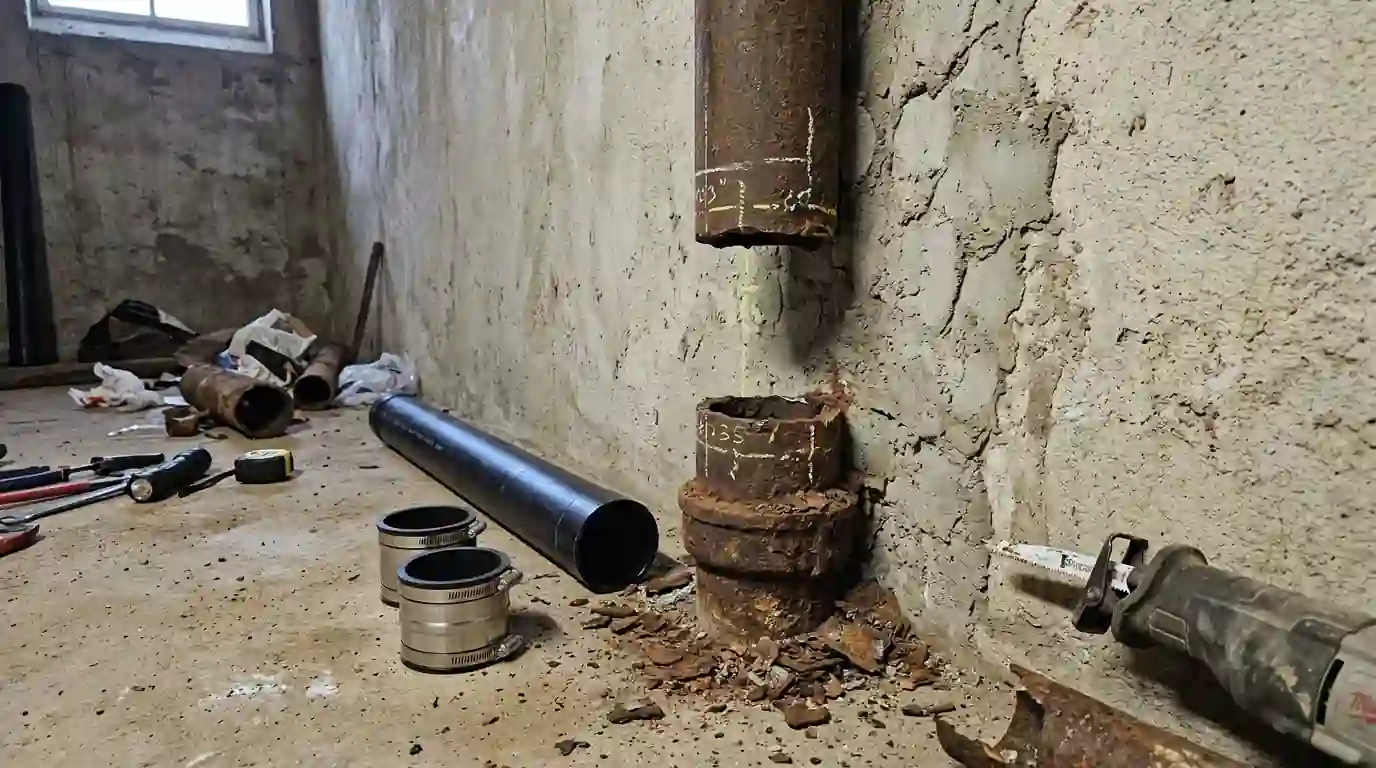
Cast iron drains in Minneapolis basements are often near a century old. They crack along the bottom where waste has scoured the inside, or split along a seam. A cracked section can be cut out with a snap cutter and replaced with PVC or ABS, joined to the old iron using no-hub couplings with stainless bands.
Before cutting into a vertical stack, the plumber supports the iron above with a riser clamp, because a stack carries a lot of weight. Leaded hub joints that weep can sometimes be repacked, but a cracked hub usually means cutting back to sound iron. Plastic drains mostly fail at glued joints or from sagging where hangers are too far apart.
When a section repair is enough, and when it isn't
A single failure in otherwise healthy pipe is a repair job, plain and simple. When PlumbTek repairs a pipe, the plumber looks at the old piece once it's out. Clean, smooth copper with one bad joint is a good sign. A cut end that's crusted with rust or scale, or a galvanized line choked down to a pencil-sized opening, tells a different story.
If you've had several leaks in a year, if water pressure has been fading for a long time, or if rust-tinted water keeps showing up, you'll hear that plainly, along with what a larger replacement would involve. The decision stays yours, and a sensible repair today doesn't stop you from planning bigger work later.
Signs a pipe in your house needs repair soon
Small symptoms now usually turn into bigger leaks later.
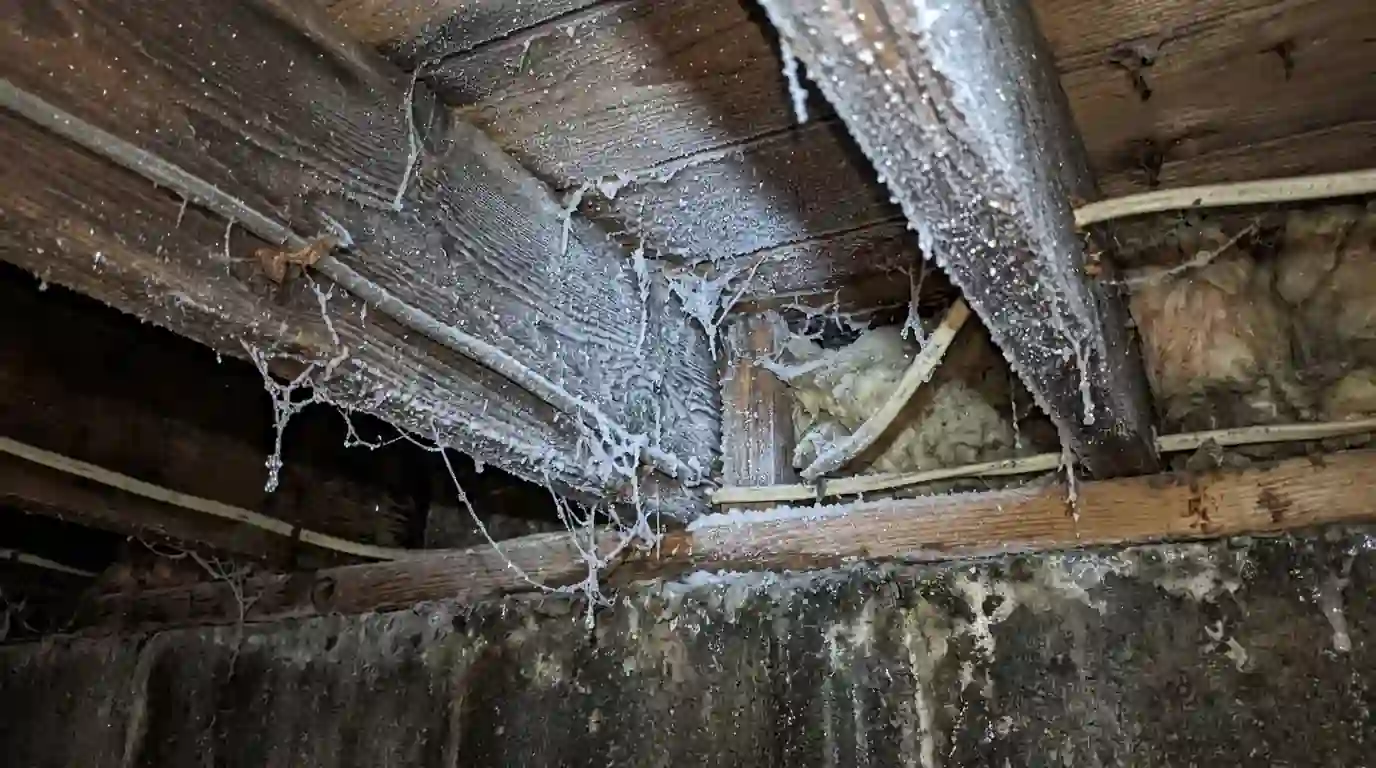
- Green or white crust on copperMineral or green buildup on a copper joint means water has been seeping out slowly and drying there, often for months.
- Rust stains at galvanized threadsOrange streaks or a damp ring at a threaded fitting signal the thin threads are rusting through from the inside.
- Sewer smell near a stackA sour odor near a cast iron stack or cleanout often comes from a hairline crack or failed joint letting gas escape.
- Pipes banging or rattlingLoose straps let pipes knock against framing, and that movement stresses joints until they eventually crack or loosen.
- Sagging drain lineA belly in a horizontal drain holds water and debris, slowing drainage and putting strain on the joints at each end.
- Discolored water from one tapRusty water from a single faucet points to a corroded section of galvanized pipe feeding that fixture.
How we repair a damaged pipe properly
Confirm the failure
The plumber finds the exact leak point, checks nearby joints, and works out whether it's a supply or drain problem and what material it is.
Isolate and protect
Water is shut to that branch, the area is protected, and heavy drain stacks are supported with riser clamps before any cutting starts.
Remove the weak section
The damaged pipe comes out with enough margin to reach sound material, then the cut ends are inspected for hidden wear.
Install new pipe
New copper, PEX, PVC or ABS goes in with fittings matched to the old pipe, including dielectric or no-hub transitions where needed.
Test and secure
Supply repairs are tested under full pressure and drains are flushed, then loose runs get new hangers or straps.
Pipe repair costs for Minneapolis homes
Material and access make the biggest difference to price. The age of your plumbing and how easy it is to reach set the final number, and you approve it before anything is cut or replaced.
| Job | Typical range | What moves the price |
|---|---|---|
| Copper pinhole or joint repair, exposed | $214 to $437 | Pipe size and how much surrounding pipe is worn |
| Galvanized section replaced with copper or PEX | $368 to $824 | Length replaced and how stubborn the old threads are |
| Cast iron drain section replaced with PVC | $527 to $1,186 | Stack or horizontal line, pipe size, and wall access |
| Re-hang or resupport a sagging drain | $243 to $518 | Run length and whether joints must be redone |
What changes the number
- Pipes in open basement ceilings cost far less to repair than ones behind finished walls.
- Galvanized and cast iron repairs take longer because old joints rarely come apart cleanly.
- Vertical cast iron stacks need extra support and care before cutting.
- Larger drain pipe sizes mean heavier parts and more labor.
- If the inspection shows wider wear, a bigger section may make more sense than a patch.
Ranges reflect typical Twin Cities jobs in 2026. Your price is explained before work starts. Compare other jobs in the PlumbTek price guide.
How to make your pipes last longer between repairs
- Keep pressure in a sane range. High water pressure strains every joint. A pressure reducing valve set to a moderate level slows wear on copper, fittings and fixture supply hoses.
- Support long runs. Pipes that sag or swing need hangers. Movement every time water starts and stops slowly fatigues joints and loosens fittings.
- Watch for green or white crust. Look at exposed copper joints in the basement once a year. Early crust means a slow seep that's easy to fix now.
- Avoid chemical drain openers. Caustic drain cleaners sit in traps and old cast iron, eating at metal and softening glued plastic joints. A cable or plunger is safer.
- Fix mixed-metal joints. Where galvanized meets copper with no dielectric fitting, have it corrected before corrosion opens a leak.
Pipe repairs we see across Twin Cities housing
Pre-war homes in Lyndale, Como and Saint Paul's West Seventh often still have galvanized supply lines and cast iron drains in the basement, sometimes mixed with copper from a remodel. Those mixed systems fail at the transitions, where steel meets copper without a proper dielectric fitting and corrodes quickly.
Homes from the 1970s and 1980s in Bloomington, Burnsville and Coon Rapids usually have copper supply and plastic drains. Their repairs center on pinholes in copper near the water heater, soft solder joints that finally let go, and ABS drains that sag or crack at fittings under a basement bathroom.