Gas line installation in Minneapolis, the short answer
Gas line installation in Minneapolis is running new gas piping from your existing system to an appliance that doesn't have a supply yet, such as a range, dryer, fireplace insert, garage heater, generator or outdoor grill. You need it whenever an appliance converts from electric or is added in a new spot. The line has to be sized for total household demand, permitted, inspected and pressure tested.
Will your gas meter and main line handle another appliance?
Before any pipe gets cut, the plumber adds up the BTU ratings of everything already on gas: furnace, water heater, dryer, maybe a fireplace. Then the new appliance gets added to that total. Gas piping is sized on demand and distance, so a long run to a detached garage needs a bigger pipe than a short hop to a kitchen range directly above the meter.
If the total load is close to what the meter or the main trunk can carry, the utility may need to upgrade the meter, or part of the trunk line may need upsizing. Skipping that math is how you end up with a furnace that short-cycles or a range burner that sputters every time the dryer runs. We'd rather find it on paper than after the inspection.
Black iron, CSST or poly: which pipe goes where
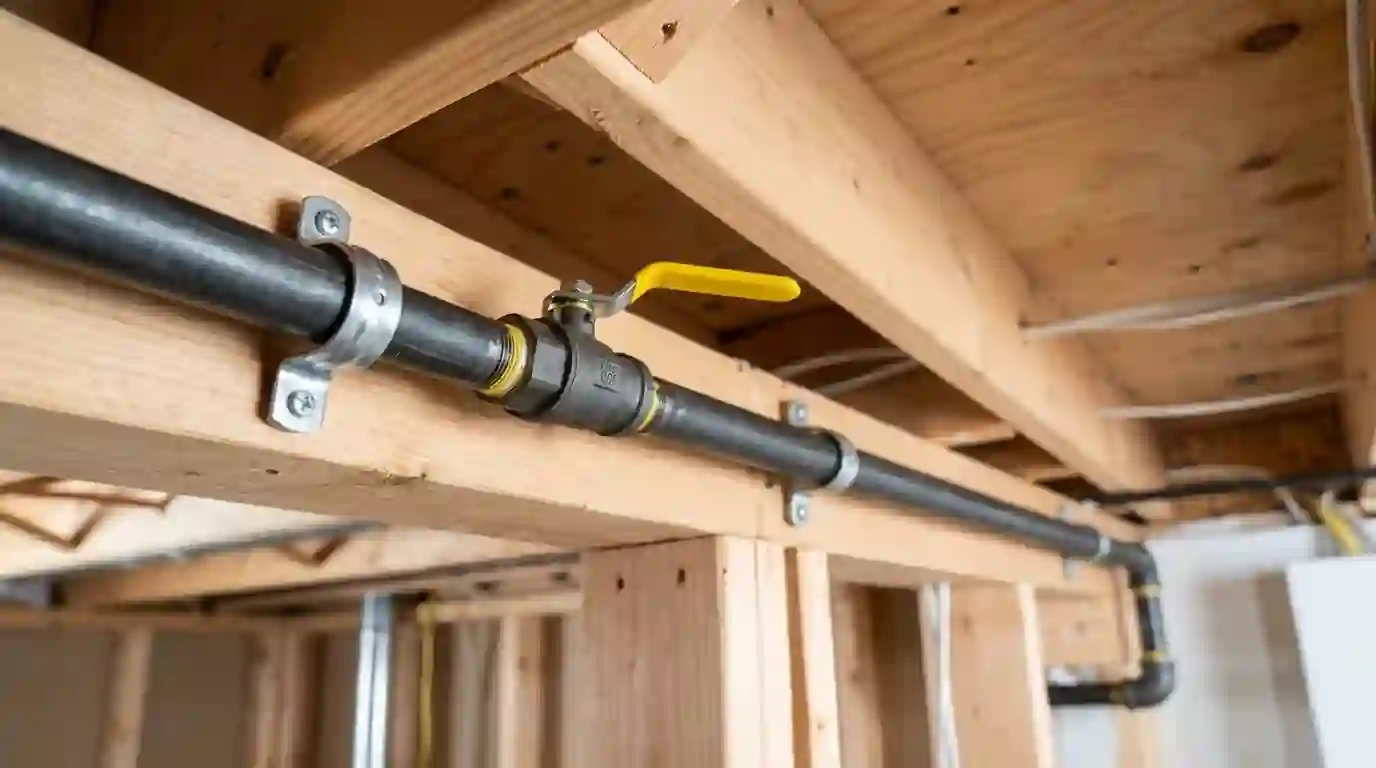
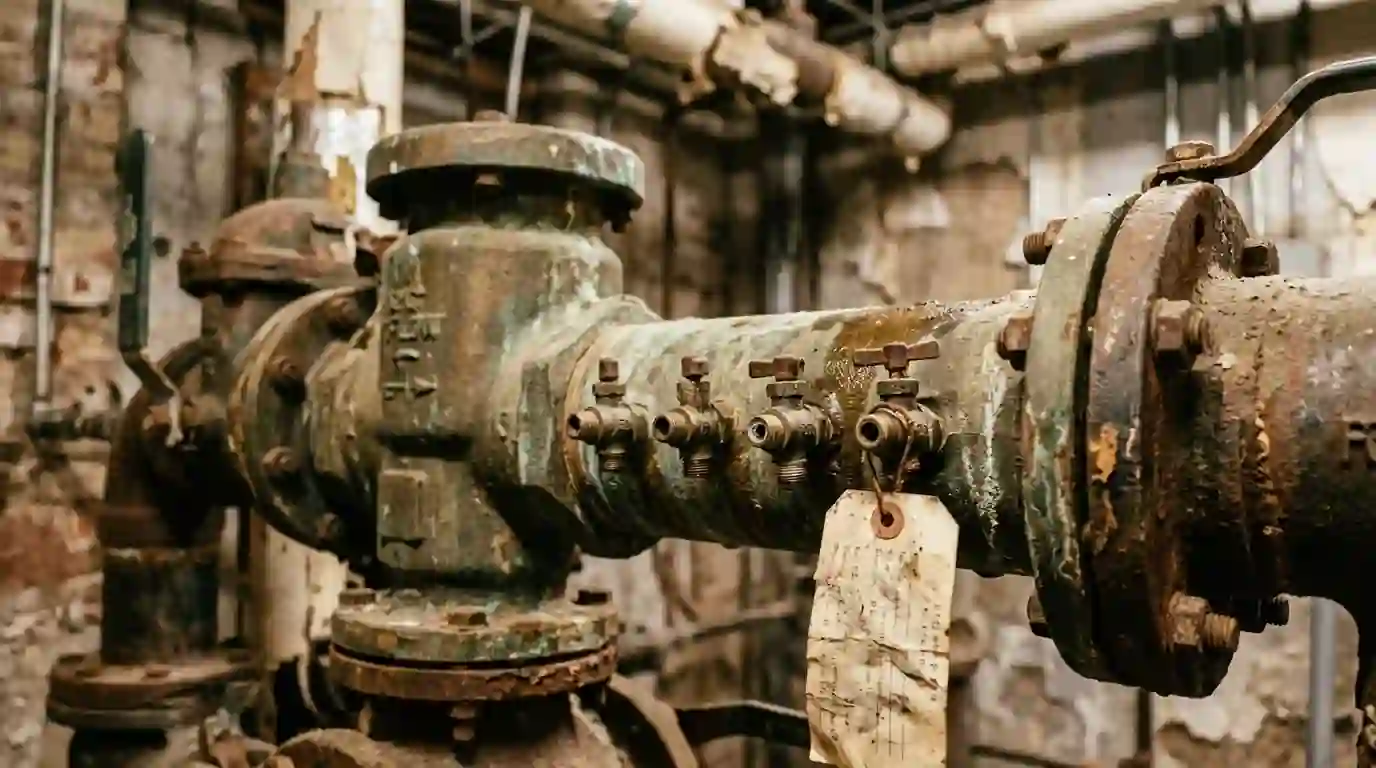
Black iron pipe is still the standard for exposed basement runs. It's rigid, durable and easy to inspect. Corrugated stainless steel tubing (CSST) is flexible and threads through finished walls and ceilings with fewer openings, which helps in a remodeled house. It needs a bonding wire to the electrical ground, and we install that on every CSST job.
For buried lines to a detached garage, shop or outdoor kitchen, yellow polyethylene gas pipe goes in the trench with a tracer wire so it can be located later. It transitions to steel with a riser where it comes above ground. In Minnesota the trench depth and riser location matter because frost heave can push on that transition fitting every winter.
Permits, inspection and turning the new line on
New gas piping needs a permit and city inspection in Minneapolis, Saint Paul and nearly every suburb, and PlumbTek pulls the permits the job needs. The inspector usually wants to see the piping under test pressure, the drip leg and shut-off valve at the appliance, and correct support spacing before the line is put in service.
Once the line passes, the appliance is connected with a new flexible connector and its own shut-off, gas is turned on and every joint is checked again with leak solution. Burners or pilots are lit and adjusted so the flame burns blue and steady. You'll get a clear walk-through of where the new shut-off valve sits.
Projects that call for a new gas line
These gas line jobs come up most around the Twin Cities.
- Electric to gas range swapMany kitchen remodels move to a gas range or cooktop. That usually means a new branch from the basement trunk up through the floor behind the range.
- Gas dryer in a new laundryMoving laundry from the basement to a main or upper floor needs a new gas run plus a dryer vent route to an outside wall.
- Heater for a detached garageUnit heaters make Minnesota winters bearable in a shop or garage. They need a buried line or overhead run sized for a long distance.
- Fireplace insert or log setConverting an old wood fireplace to gas means piping to the firebox with a shut-off valve close by and a matching vent.
- Outdoor grill or fire tableA permanent hookup on the deck or patio ends propane tank refills. The line needs an outdoor-rated shut-off and a quick-connect fitting.
- Standby generator hookupWhole-house generators draw a lot of gas at startup, so the supply often needs a larger pipe and sometimes a meter upgrade from the utility.
How a new gas line gets planned and installed
Load and route survey
The plumber lists every gas appliance and its BTU rating, measures the run from the meter, and picks a route that avoids ductwork and finished ceilings where possible.
Size the pipe
Total demand and pipe length set the pipe diameter. If the meter or trunk is near capacity, that's flagged before work begins, not after.
Permit and install
We pull the permit, then run black iron, CSST or buried poly pipe with proper hangers, a drip leg and a shut-off valve at the appliance.
Pressure test and inspect
The new piping is capped and held at test pressure on a gauge for the city inspector, who checks the test, support spacing and valve placement.
Connect and light
The appliance is connected with a new flexible connector, gas is turned on, joints are leak-checked again and burners are lit and adjusted.
What a new gas line costs in Minneapolis
Typical 2026 Twin Cities ranges for new gas piping. Permits and site access can move the total, and it is explained up front.
| Job | Typical range | What moves the price |
|---|---|---|
| Gas line to a kitchen range or dryer | $412 to $887 | Run length, floor and wall openings, and basement ceiling finish |
| Gas line for a fireplace insert | $568 to $1,165 | Distance from the trunk line and access to the firebox |
| Outdoor grill or fire table hookup | $627 to $1,284 | Wall penetration, outdoor valve, and trench or deck routing |
| Buried line to a detached garage heater | $1,640 to $3,915 | Trench length, pipe size, frozen ground and lawn restoration |
What changes the number
- Longer runs and higher combined loads need larger pipe, which costs more in material and labor.
- Finished basement ceilings may need access openings or a CSST route instead of black iron.
- Permit and inspection fees are part of the job and included in the price we explain up front.
- Winter trenching for buried lines takes extra time when the ground is frozen.
- A meter upgrade from the utility, if needed, is a separate step with its own timeline.
Ranges reflect typical Twin Cities jobs in 2026. Your price is explained before work starts. Compare other jobs in the PlumbTek price guide.
Black iron versus CSST for a new gas run
| Point | Black iron pipe | CSST tubing |
|---|---|---|
| Best for | Exposed basement and utility room runs | Finished walls, ceilings and remodels |
| Installation | Cut, threaded and fitted on site | Pulled through framing in long lengths |
| Openings in drywall | More, at each change of direction | Fewer, often just at each end |
| Bonding | Grounded through the metal piping system | Needs its own bonding wire to ground |
| Typical cost | Lower material, more labor | Higher material, less labor |
Running gas lines in Twin Cities houses old and new
In a 1920s Linden Hills or Macalester-Groveland house, the basement trunk line often started as a small pipe sized for one furnace. Adding a range and a dryer decades later sometimes means that original trunk can't carry everything at once. We check the existing pipe sizes along the whole route instead of assuming the nearest tee has enough capacity.
In Eagan, Plymouth or Blaine homes from the 1980s and 1990s, finished basements are the bigger challenge. CSST lets the plumber fish a line through a soffit or joist bay with fewer openings in drywall. Farther out in Big Lake, Elk River and rural Wright County, long runs to pole sheds and shops are common, so buried poly lines with tracer wire are a big part of the work.