Lead service line replacement in Minneapolis, the short answer
Lead service line replacement in Minneapolis removes the lead pipe that carries water from the curb stop into an older home and replaces it with copper or another approved material. You need it if your house was built before about 1950 and the pipe at the meter is dull gray, soft and non-magnetic. Both Minneapolis and Saint Paul run replacement programs, so check your address first.
How to check whether your service line is lead
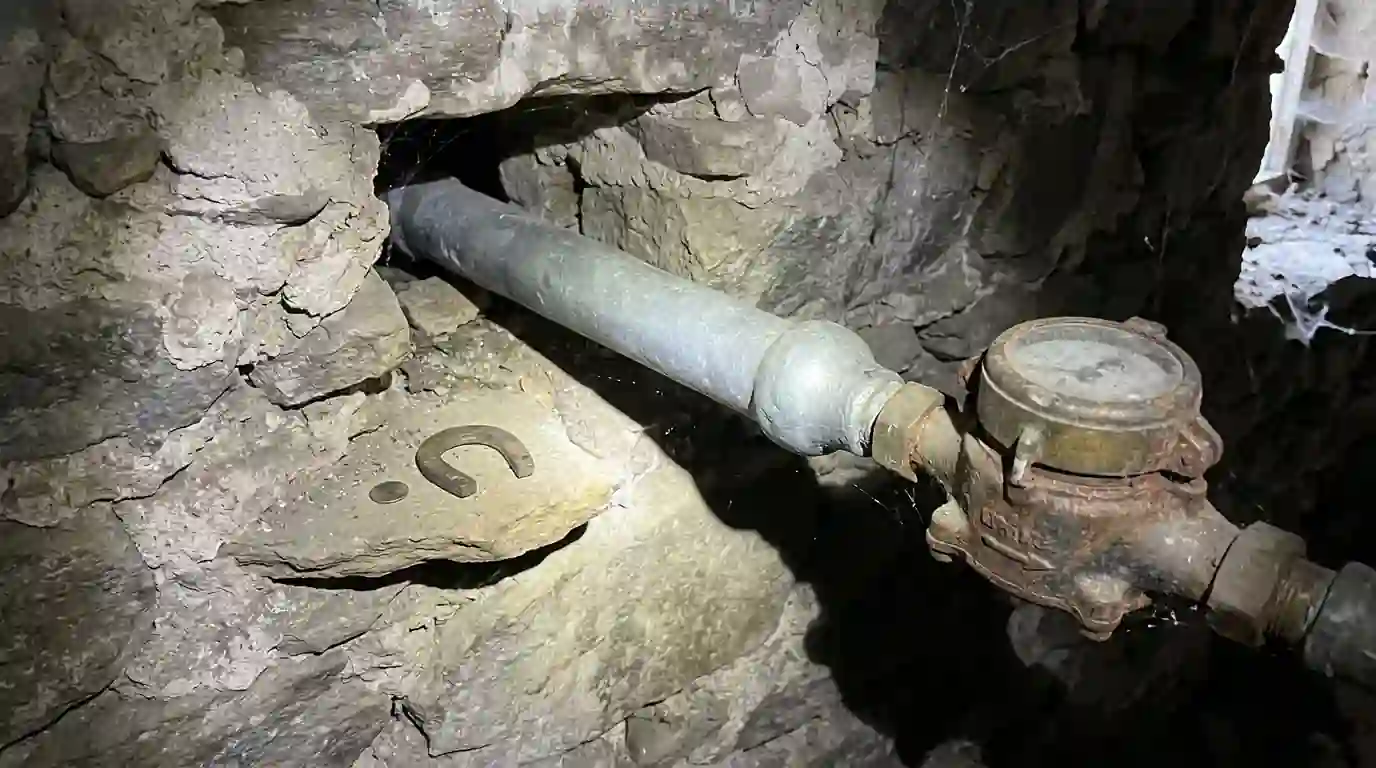
Go to the basement and find where the water pipe comes through the front foundation wall, just before the meter. Lead pipe is dull gray, often with a bulb-shaped wiped joint where it connects to the meter fitting. Scratch it gently with a coin or key: lead shows a shiny silver mark and is soft enough to dent.
A refrigerator magnet won't stick to lead, which tells it apart from galvanized steel, which a magnet grabs. Copper scratches to a penny color. Keep in mind that only the visible section is checked this way, and part of a line can be lead even when the piece at the meter has been replaced.
Replace the whole line, not just your side of it
A lead service line has two parts: the public side from the main to the curb stop and the private side from the curb stop to the house. Replacing only one side leaves lead in the other, and cutting into lead pipe can temporarily shake loose particles. Full replacement is the standard, and the city programs are built around it.
When PlumbTek replaces a lead service, the plumber coordinates with the water utility so both sides are handled, either by the city program, by PlumbTek, or split between them depending on the city's rules. The goal is no lead left anywhere from the main to the meter.
City programs and what to ask before you sign up
Minneapolis and Saint Paul each have lead service line replacement programs, and both offer online address lookups that show whether your home is likely to have lead. Program details change, including how much is covered and how long the waiting list runs, so read the current terms for your city.
Ask the utility which part of the line the program replaces, whether you choose your own plumber for the private side, and what happens inside the basement at the meter and main valve. Suburbs handle this differently. If your city has no program, a private replacement is the way to go, priced like any other service line job.
Signs your Twin Cities home may still have a lead service
These clues raise the odds that lead pipe brings water into your house.
- House built before about 1950Lead was commonly used for service lines in older Minneapolis and Saint Paul neighborhoods until roughly the middle of the last century.
- Soft gray pipe at the meterLead is dull gray, scratches silver, and can be dented with a fingernail or key. It won't hold a magnet.
- Bulb-shaped wiped jointA rounded, swollen joint where the service pipe meets the meter fitting is a classic lead connection.
- City lookup flags your addressMinneapolis and Saint Paul online lookups show addresses with known or likely lead service lines based on utility records.
- Partial replacement on recordIf only one side was replaced in the past, lead may still remain on the other side of the curb stop.
- TISH report mentions the serviceA Truth in Sale of Housing evaluation may note the service material, which can prompt a buyer or seller to act.
What happens on lead service replacement day
Confirm the material
The plumber checks the pipe at the meter, looks up the utility record, and confirms with the city which parts of the line are lead.
Coordinate with the utility
Permits are pulled, program paperwork lined up if you're enrolled, and the street shut-off scheduled with the water department.
Dig two small pits
Pits at the curb stop and the foundation let the old lead be pulled out and new pipe pulled in, usually without trenching the yard.
Connect and replace valves
New pipe ties into the curb stop and comes through the wall to a new main shut-off valve and meter connection.
Flush and test
The line is flushed thoroughly, inspected by the city, and you get a flushing plan for the first days of use.
Lead service line replacement costs in Minneapolis
Program coverage changes what you pay, so these are private-replacement ranges. The age of your plumbing and how easy it is to reach set the final number, and the plumber explains it before starting.
| Job | Typical range | What moves the price |
|---|---|---|
| Private side replacement, trenchless | $3,870 to $6,940 | Line length, pit depth, and soil conditions |
| Private side replacement, open trench | $4,960 to $9,370 | Trench length, depth, and yard or sidewalk restoration |
| Interior meter connection and main valve | $468 to $1,087 | Wall condition and meter setting requirements |
| Full line, both sides, where city allows | $6,840 to $12,630 | Street work, permits, and utility coordination |
What changes the number
- City programs can cover some or all of the cost; the amount depends on the current program terms.
- Longer front yards and deeper lines increase pit size and pull length.
- Trees, retaining walls and driveways along the route can shape which method works.
- Some cities require their crews or approved contractors for the public side.
- Basement work, such as replacing the main valve and meter piping, is a smaller added cost.
Ranges reflect typical Twin Cities jobs in 2026. Your price is explained before work starts. Compare other jobs in the PlumbTek price guide.
Steps to take while you wait for lead line replacement
These habits reduce lead exposure until the old service is out.
- Run cold water for a few minutes before drinking if it has sat for hours
- Use only cold water for drinking, cooking and baby formula
- Clean faucet aerators to remove trapped particles
- Use a drinking water filter rated under NSF/ANSI 53 for lead
- Ask your utility whether it offers lead testing kits
- Do not boil water to remove lead, since boiling concentrates it
- Look up your address on the Minneapolis or Saint Paul lead lookup
Where lead lines still run in Twin Cities neighborhoods
Lead service lines are concentrated in the older parts of Minneapolis and Saint Paul, in neighborhoods built out before the war. Think of the streetcar-era blocks of South Minneapolis, Northeast, North Minneapolis, Frogtown, the East Side and the West End. Many of these homes have had their interior plumbing updated while the service line stayed original.
Inner-ring suburbs with older housing stock, like Richfield, Columbia Heights and South Saint Paul, may also have some lead lines. Newer suburbs from the 1960s on rarely do. If your home is newer but the meter pipe looks gray, a quick magnet and scratch test will tell you whether it's galvanized steel instead.