Sewer line replacement in Minneapolis, the short answer
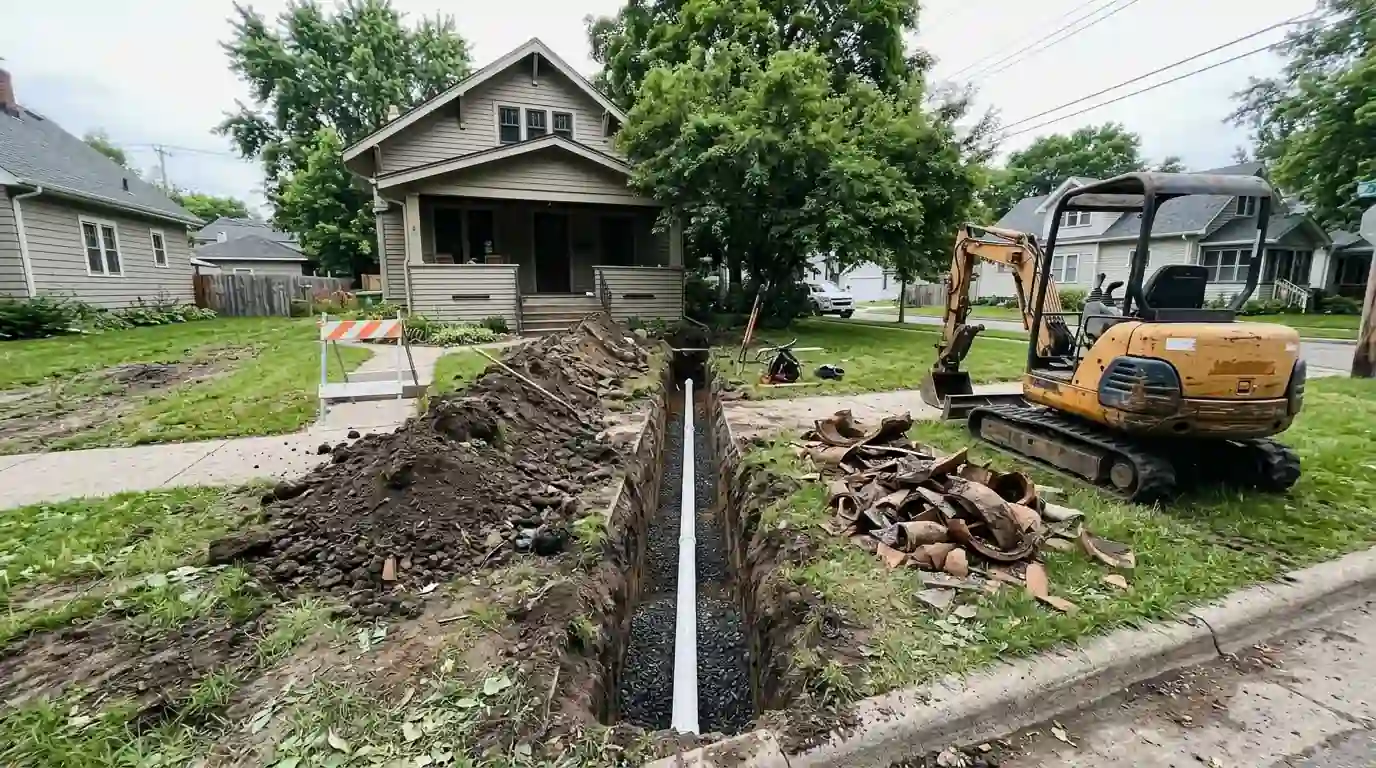
Sewer line replacement in Minneapolis means removing or abandoning a failed sewer lateral and installing a new pipe, usually PVC, from the house to the city sewer main. You need it when a camera shows damage along most of the line, such as many root-filled clay joints, collapsed sections or flattened Orangeburg pipe. It's done by open trench or by trenchless pipe bursting, depending on the property.
Patch it again or start over with a new lateral?
A lateral earns replacement when the problems are spread out, not isolated. Roots at most clay joints, several offset or cracked sections, long bellies, or pipe that has lost its round shape all point that way. So does a history of yearly root cutting plus a spot repair or two that hasn't stopped backups.
Pipe material matters too. Orangeburg fiber pipe, used in some 1950s and 1960s homes, softens and flattens over time and can't be repaired well. Very old clay with crumbling walls may not hold a liner. In those cases a new pipe is the only fix that lasts, and spending more on cleaning only delays it.
Open trench or pipe bursting: two ways to lay new pipe
Open trench replacement digs along the full route, removes the old pipe, and lays new PVC on a proper gravel bed at correct slope. It's the most direct method and the only one that can fix serious grade problems, since the new line is set to slope as it's laid. The tradeoff is a long trench through lawn, landscaping or concrete.
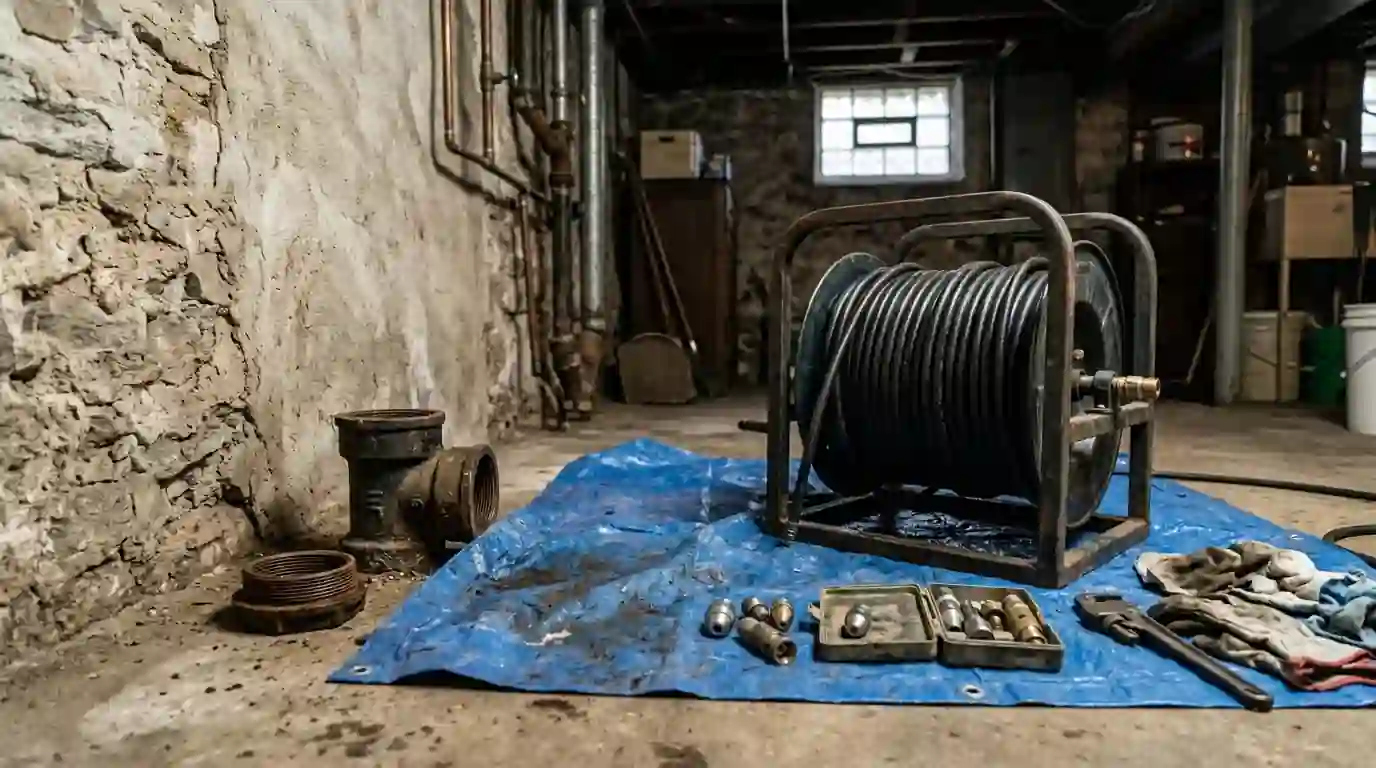
Pipe bursting pulls a cone-shaped head through the old pipe, fracturing it outward while new HDPE pipe follows behind. It needs only an entry pit near the house and an exit pit near the main. It works well under mature trees and driveways, but it follows the old pipe path, so it won't correct a sag in the old route.
The connection at the street is part of the job
Your lateral ends where it ties into the city sewer main, often under the street or the boulevard. If that connection is cracked or root-choked, a new lateral that stops short of it will still back up. Replacement usually includes a new tap or connection, which can involve street excavation, traffic control and city inspection.
Inside the house, the new pipe joins the building drain near the foundation. That's a good time to add a two-way cleanout outside or replace a seized cleanout inside, so future cleaning and camera work is easier. Some homeowners also add a backwater valve during the same project.
Signals that your lateral has reached the end of its life
One of these alone may mean a repair. Several together usually mean replacement.
- Roots at nearly every jointWhen the camera shows root intrusion along most of the clay lateral, cutting and spot repairs can't keep up with regrowth.
- Flattened or oval pipeOrangeburg and badly deformed pipe lose their round shape, choking flow and making cleaning risky or impossible.
- Collapsed sections on cameraPipe missing pieces or fully collapsed blocks waste and lets soil wash in, and liners need a whole pipe to bond to.
- Yearly backups despite cleaningA line that backs up every year after cutting and jetting is telling you the pipe itself is failing, not just clogging.
- Multiple bellies along the runSeveral sagging sections mean the soil under the pipe has shifted widely, and only relaying at correct slope fixes it.
How a full sewer replacement project unfolds
Camera, locate and plan
We record the existing line, mark its route and depth, and decide between open trench and pipe bursting based on what's above it.
Permits and utility locates
PlumbTek pulls the sewer permit and any right-of-way permits, then requests Gopher State One Call marking of buried utilities before excavation.
Excavate and remove or burst
Crews dig the trench or the entry and exit pits, then remove the old pipe or burst it while pulling new pipe through.
Connect at both ends
The new pipe ties into the building drain at the foundation and into the city main at the street, with new cleanouts where needed.
Inspection and camera check
The city inspects the open work, and we camera the new line end to end to confirm slope and clean joints.
Backfill and rough restore
Trenches and pits are backfilled in lifts and compacted, and any concrete or street surface is patched as the permit requires.
Budget ranges for a new sewer lateral
Replacement is a major project, and costs vary widely with depth, length and what's above the pipe. The final price depends on access and the condition of the pipe, and you get the figure ahead of the work.
| Job | Typical range | What moves the price |
|---|---|---|
| Open trench replacement through a yard | $8,947 to $17,385 | Lateral length, depth and soil conditions |
| Pipe bursting replacement | $9,768 to $19,214 | Line length, pit locations and pipe diameter |
| New connection at the city main | $3,127 to $8,463 | Street excavation, traffic control and restoration rules |
| Driveway or sidewalk removal and patch | $1,286 to $3,742 | Square footage of concrete cut out and replaced |
What changes the number
- Length of the lateral from foundation to the city main.
- Depth of the pipe, since deeper trenches need shoring and more time.
- Whether the street connection must be replaced, which adds street work.
- Obstacles above the line such as trees, driveways, stoops and fences.
- Season, as frozen ground in winter raises excavation costs.
- Permit, inspection and right-of-way fees in your city.
Ranges reflect typical Twin Cities jobs in 2026. Your price is explained before work starts. Compare other jobs in the PlumbTek price guide.
Add-ons worth doing while the sewer trench is open
- Add an outdoor cleanout. A two-way cleanout near the foundation lets future cleaning and camera work happen outside without opening the basement line.
- Consider a backwater valve now. With the line already open, adding a backwater valve costs less than installing one later and helps protect the basement.
- Plan landscaping after, not before. Hold off on new plantings, patios or fences along the route until the trench has settled through a full season.
- Keep the camera footage. Save the final video of the new line. It's useful proof of condition if you sell the home or need future work.
Replacing laterals under older Twin Cities lots
Many pre-war homes in Minneapolis neighborhoods like Standish, Audubon Park and Saint Paul's Hamline-Midway sit on narrow lots with the lateral running straight to the street under a front yard and a boulevard tree. That tree and the public sidewalk often make pipe bursting attractive, since the route stays the same and only two pits are needed.
Suburbs built in the 1950s and 1960s, such as parts of Richfield, Bloomington and Roseville, are where Orangeburg turns up. Those lines often run under driveways added later. In newer developments farther out, full replacement is rare and usually tied to a construction defect or a collapse under heavy equipment.