Drain cleaning in Minneapolis, the short answer
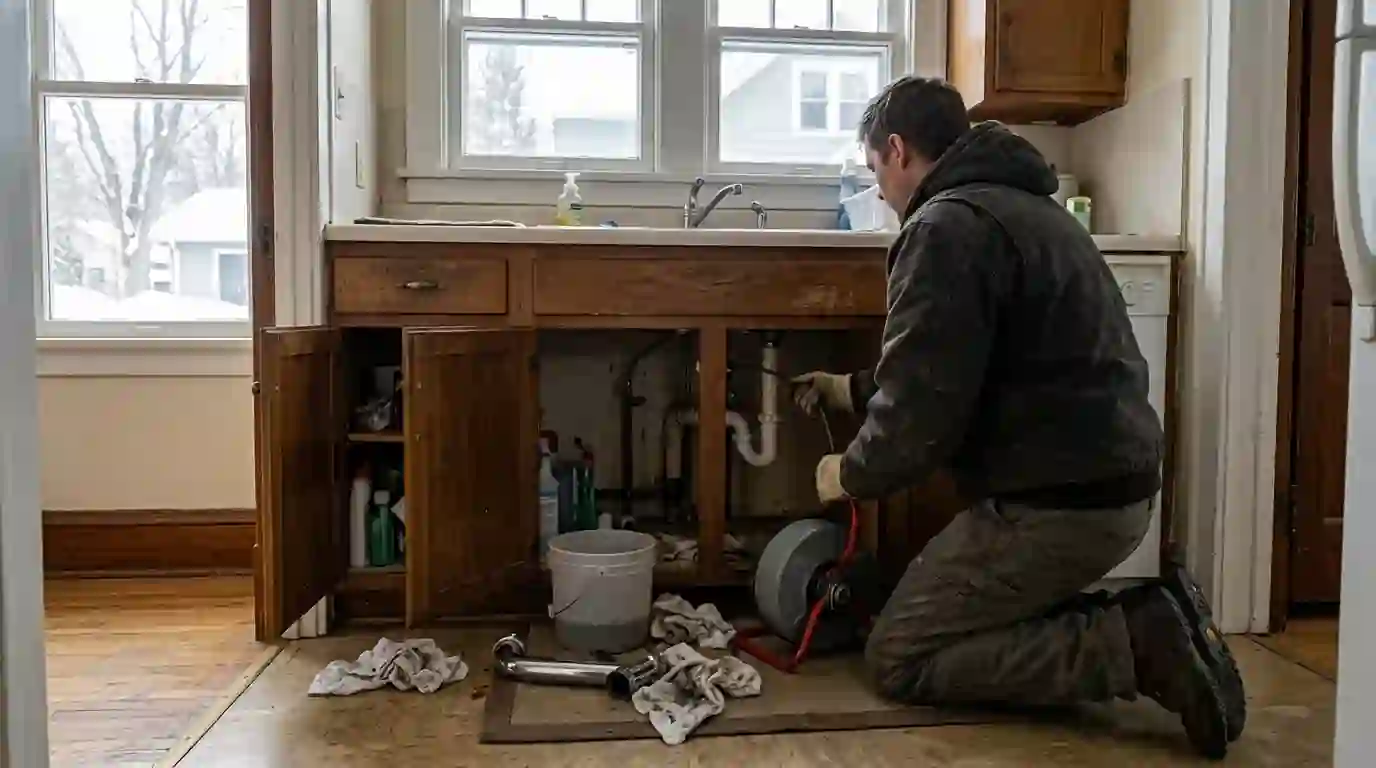
Drain cleaning in Minneapolis means mechanically clearing a clogged branch drain, such as a kitchen sink, bathroom sink, tub, shower or laundry standpipe, before the blockage spreads or overflows. You need it when water drains slowly, gurgles, or rises in a neighboring fixture. A plumber runs a cable machine through the trap or a cleanout, cuts or pulls the clog loose, then flushes the line to confirm full flow.
Galvanized scale or a sagging run: why one drain keeps clogging
In a lot of 1910s to 1940s Minneapolis houses, kitchen and bathroom drains run through galvanized steel branch lines inside the walls. Galvanized pipe rusts from the inside, and the rough scale grabs grease, soap and hair until the opening shrinks. Cabling punches through the clog, but the scale stays, so the drain slows again within months. The lasting fix is often cutting out the worst section and replacing it with PVC.
Newer homes have their own patterns. A 1990s Woodbury or Maple Grove house with PVC drains rarely scales up, but a long horizontal run to an island sink or basement wet bar can sag between hangers. Water pools in the low spot, food settles there, and the clog returns in the same place. That needs proper hangers and slope, not another cleaning.
What actually ends up in each kind of drain
Kitchen sinks collect grease, coffee grounds and starchy food that turns into a waxy plug, often well past the trap where the line turns down into the stack. Garbage disposals make it worse when they grind peels, rice or pasta. Bathroom sinks and tubs mostly clog with hair bound up in soap scum, usually within the first couple of feet below the pop-up stopper or the tub trip lever.
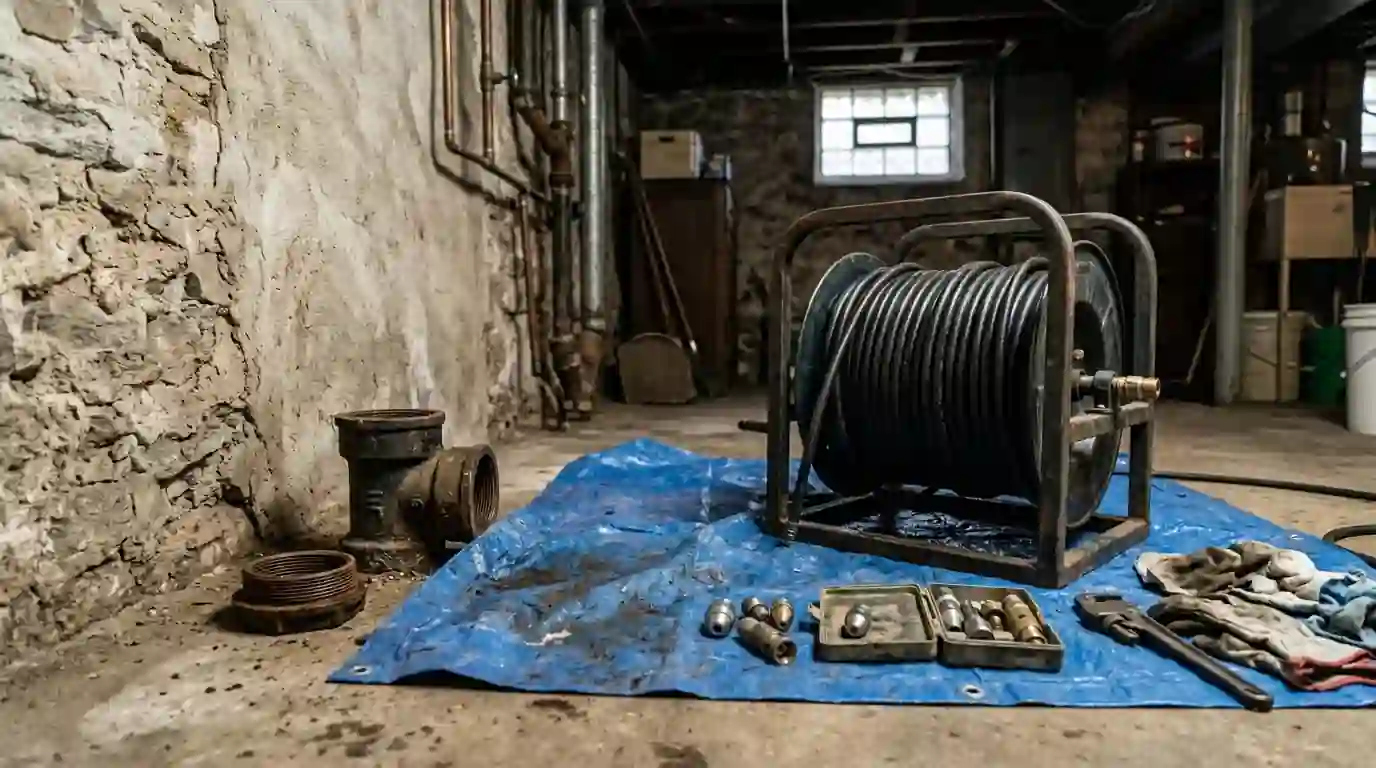
Laundry standpipes and basement laundry tubs catch lint, which is why many older basements have a lint sock on the washer hose. When it gets skipped, lint mats into the line the tub shares with the floor drain, and the washer starts pushing gray water up through the floor drain on every drain cycle. That one often gets mistaken for a main sewer problem.
Cable, jet or chemicals: which tool fits your clog?
For most branch drains PlumbTek uses a drum machine with a quarter-inch to three-eighths-inch cable and a cutter head matched to the pipe. We go in through the trap arm or a cleanout, not the sink overflow, so the cable doesn't bind on tight fittings. Then we run hot water long enough to be sure the line holds full flow.
Store-bought caustic openers can soften old brass slip nuts, pit chrome tailpieces and sit in a clog without clearing it. If you've already poured something in, tell us what it was so we can protect skin and eyes first. A kitchen line packed with years of grease is sometimes better served by hydro jetting.
Signs a drain needs a plumber, not another plunge
These point to a clog that has moved past the trap or is tied into another line.
- Water rises in the other bowlWhen one side of a double kitchen sink fills as the other drains, the clog sits past the shared tee, deeper in the wall line.
- Gurgling after a toilet flushGurgling in a tub or sink after a flush means air is being pulled through a partly blocked drain or a vent that isn't working.
- Washer water at the floor drainIf the floor drain overflows during the washer drain cycle, lint or sludge has narrowed the line both fixtures share.
- Still slow after plunging twiceA plunger clears a trap clog. When the drain stays slow after two honest attempts, the blockage is in the pipe beyond the trap.
- Sour smell from a clean sinkRotting food or grease lodged in the line gives off a sour odor even when the basin and stopper look spotless.
From pulled trap to full flow, one step at a time
Run the nearby fixtures
We run water in the problem fixture and the ones around it to see which drains share the clog, which tells us where the blockage likely sits.
Open the best access point
We pull the trap, the tub drain linkage or a cleanout plug so the cable enters straight, which protects your finishes and avoids tight bends.
Cable and retrieve the clog
The machine cuts through the blockage, and we pull back what we can so you see whether it was hair, grease, lint or pipe scale.
Flush and test full flow
We fill and drain the fixture several times with hot water and check the neighboring drains before the trap goes back together.
Explain the cause
You get a plain account of what caused the clog and whether a camera look, a pipe section or a habit change will stop it returning.
How much a clogged sink, tub or laundry line costs to clear
These are typical 2026 ranges for branch drains around the metro. The final price depends on access and the condition of the pipe, and nothing starts until you agree to it.
| Job | Typical range | What moves the price |
|---|---|---|
| Kitchen sink line cabled past the trap | $167 to $338 | Depth of grease buildup and whether the disposal must come off |
| Bathroom sink or tub drain | $158 to $296 | Access through the stopper, trip lever plate or a pulled trap |
| Laundry standpipe or laundry tub line | $189 to $367 | Amount of matted lint and condition of the old trap |
| Night, weekend or holiday drain call | $264 to $489 | Time of the call and how many drains need clearing |
What changes the number
- How far the clog sits from the nearest trap or cleanout.
- Whether the line is galvanized, cast iron, copper or PVC.
- Corroded traps or slip nuts that have to be replaced to reopen the line.
- How many fixtures get cleared on the same visit.
Ranges reflect typical Twin Cities jobs in 2026. Your price is explained before work starts. Compare other jobs in the PlumbTek price guide.
Habits that keep your drains open between visits
- Wipe pans before washing. Wipe grease and oil into the trash with a paper towel. Hot water only carries grease a few feet before it sets up again in the pipe.
- Put a hair catcher in the tub. A simple mesh or silicone strainer over the tub drain catches most of the hair that would otherwise wrap the trip lever linkage.
- Empty the laundry lint sock. If your washer hose drains into a laundry tub, keep a lint sock on it and empty it every few loads so lint stays out of the line.
- Go easy on the disposal. Skip potato peels, rice, pasta and coffee grounds. They pack into a paste that settles in the trap arm and the line behind the wall.
Drain clogs in Minneapolis homes, by the age of the house
In Longfellow, Nokomis and Kingfield bungalows, the kitchen often sits on an outside wall, and the drain line passes a cold rim joist on its way to the stack. Grease cools fast there in January, which is why winter kitchen clogs are so common in these houses. Many still have galvanized branch lines tied into a cast iron stack with lead and oakum joints.
Post-war ramblers in Richfield, Columbia Heights and New Hope usually mix cast iron with some galvanized, and a basement laundry tub feeds the floor drain line. Homes built from the 1980s on in the outer suburbs have PVC throughout, so clogs there come down to habits and pipe slope rather than corroded pipe.