Sewer line repair in Minneapolis, the short answer
Sewer line repair in Minneapolis fixes a specific damaged section of a home's sewer lateral, such as a cracked clay joint, a broken cast iron hub or a sagging belly, without replacing the whole run. You need it when a camera inspection shows localized damage and the rest of the pipe is in fair condition. Repairs are done by digging down to the break or by installing a short internal liner.
What counts as a repairable sewer defect
Not every problem on a camera calls for a new line. A single cracked clay section, a joint shifted out of line from settling, a cast iron hub that's split, or a short belly that holds water can all be handled as spot repairs. The test is whether the damage is limited to one or two places and the pipe on either side still looks solid.
Repair gets harder to justify when the camera shows trouble at nearly every joint, long runs of crushed or flattened pipe, or a lateral made of Orangeburg fiber. In those cases fixing one section just moves the next failure a few feet down the line, and replacement or full lining usually makes more sense.
How an excavated spot repair is done
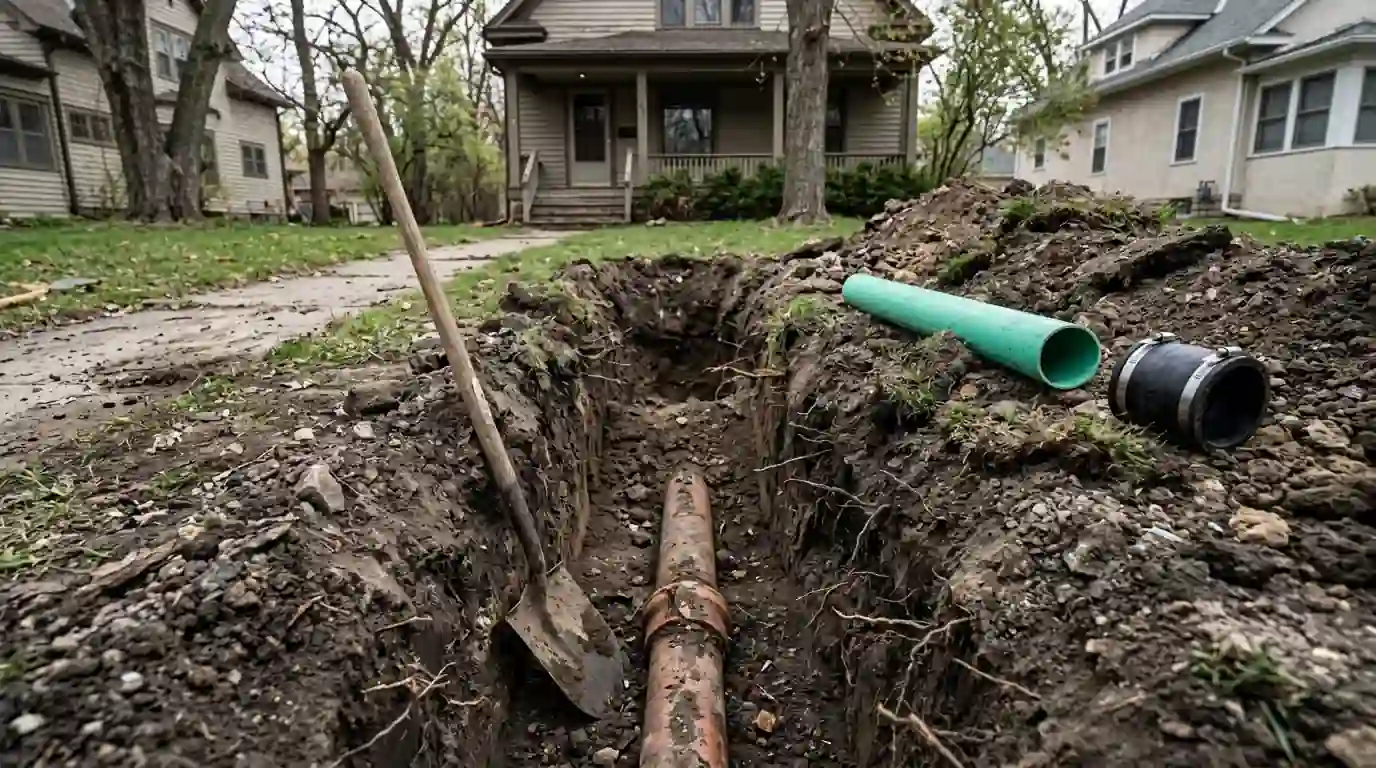
We locate the defect from the camera footage, mark it, and call Gopher State One Call so buried utilities are marked before digging. Then we excavate down to the pipe, cut out the broken section, and replace it with new PVC joined to the old pipe using shielded rubber couplings rated for the material change, bedding it on compacted sand or rock.
Depth matters a lot. Minneapolis sewer laterals sit deep to stay below frost, so a dig in the front yard or boulevard can be several feet down and needs shoring. Repairs under a driveway or sidewalk add concrete cutting and patching. PlumbTek pulls the permits and arranges the inspections the job needs.
Short liners for breaks under things you'd rather not dig up
When the damage sits under a driveway, a mature tree or a front stoop, a sectional point repair can work without digging. A fiberglass sleeve soaked in resin is pulled into the pipe on an inflatable packer, positioned at the defect on camera, and inflated against the pipe wall. Once the resin cures, the sleeve forms a new pipe wall across the crack or joint.
Point repairs need a pipe that's round and mostly intact. They can't fix a sag, since the liner follows the low spot, and they don't work where pipe is missing entirely or crushed flat. We confirm on camera that the section is a good candidate before recommending one.
Clues your sewer lateral has a break that needs fixing
These go beyond a simple clog and suggest the pipe itself has failed somewhere.
- Clay shards on the cutterIf cleaning brings back pieces of red or brown clay along with roots, the pipe wall is breaking apart at that point.
- Sinking soil over the lineA depression in the lawn or a sunken patch along the sewer path means soil is washing into a broken pipe below.
- Backups after cleaning quicklyWhen a freshly cleaned line backs up again within weeks, a sag, offset or collapse is catching waste faster than normal.
- Sewer gas outside the houseA sewage smell in the yard or near the foundation can mean the pipe is cracked and venting gas into the soil.
- Camera shows a water bellyStanding water in one section on camera means the pipe dipped, and paper settles there until it blocks the line.
- Cracked cast iron under the slabDamp spots, smells or sewer flies near a basement floor can point to a split cast iron drain beneath the concrete.
Steps from diagnosis to a closed trench
Camera and locate the defect
We confirm the damage on video and mark its exact location and depth so the dig or liner lands in the right place.
Utilities marked and permits pulled
Gopher State One Call marks buried gas, electric and water lines, and we pull the city permit before any digging starts.
Excavate or set the liner
For a dig, we open a pit and shore it. For a point repair, we prepare the pipe and pull the resin sleeve into place.
Replace or seal the section
Damaged pipe is cut out and replaced with PVC and couplings, or the liner is inflated and cured across the defect.
Inspect, backfill and restore
The city inspects the work, we run the camera through the finished repair, then backfill and compact the trench and rough grade the surface.
What sewer repairs typically cost here
Repairs vary with depth and what sits above the pipe. Your house sets the final number, and you hear it before any work starts.
| Job | Typical range | What moves the price |
|---|---|---|
| Excavated spot repair in a yard | $2,187 to $4,465 | Pipe depth, soil, shoring needs and length of replaced section |
| Spot repair under driveway or sidewalk | $3,348 to $6,215 | Concrete cutting, removal and patching on top of the dig |
| Sectional point repair liner | $1,689 to $3,412 | Length of liner and pipe condition at the defect |
| Cast iron drain repair under a basement slab | $1,876 to $4,138 | Slab thickness, length of pipe and floor restoration |
What changes the number
- How deep the pipe sits, since deep digs need more shoring and time.
- What lies above the break, such as lawn, concrete, a tree or a stoop.
- Pipe material and the couplings needed to join old pipe to new.
- Permit and inspection requirements for your city.
- Frozen ground in winter, which slows digging and adds cost.
- Restoring concrete, sod or landscaping after the repair.
Ranges reflect typical Twin Cities jobs in 2026. Your price is explained before work starts. Compare other jobs in the PlumbTek price guide.
Digging versus a point liner for a single break
| Point | Excavated spot repair | Sectional point liner |
|---|---|---|
| Fixes a sag or belly | Yes, the pipe is relaid at proper slope | No, the liner follows the existing dip |
| Handles missing or crushed pipe | Yes, the bad section is cut out and replaced | No, the host pipe must be round and mostly whole |
| Surface disruption | A pit in the yard, driveway or boulevard | Access through the cleanout, little or no digging |
| Best location | Open lawn or where pipe is shallow | Under driveways, trees, stoops or walks |
| Result | New PVC section with couplings | Cured resin sleeve forming a new inner wall |
Boulevards, sidewalks and frost: digging conditions in the metro
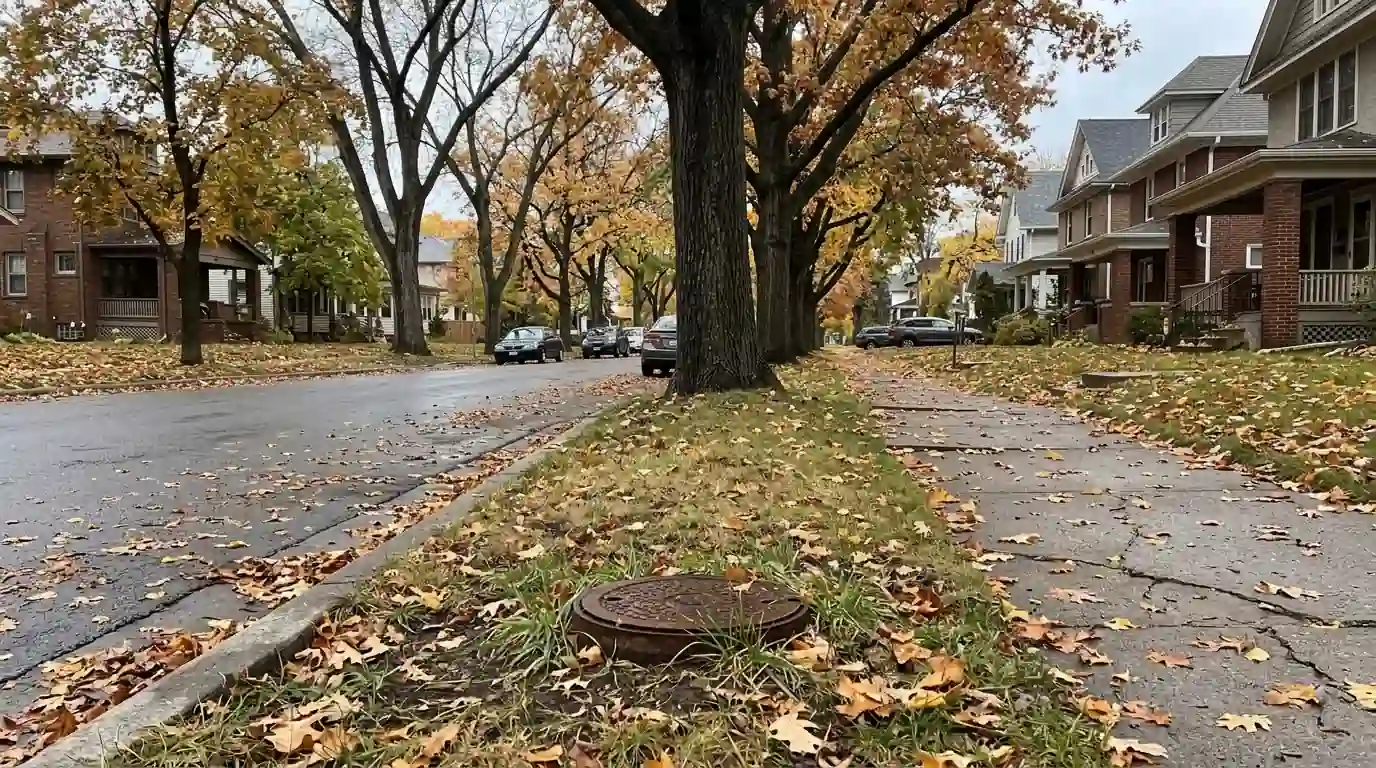
In older parts of Minneapolis and Saint Paul, laterals often run under the boulevard and sidewalk to a main in the street, and many homes have little setback. That puts many repairs near the curb, in the boulevard or under the public sidewalk, which can require city right-of-way coordination along with the plumbing permit.
Winter repairs happen, especially after a backup in January, but frozen ground slows everything. Crews may need ground thawing or frost-cutting equipment, and the trench has to be protected overnight. When the damage can wait, many homeowners plan repairs for spring or fall when the soil digs easily.