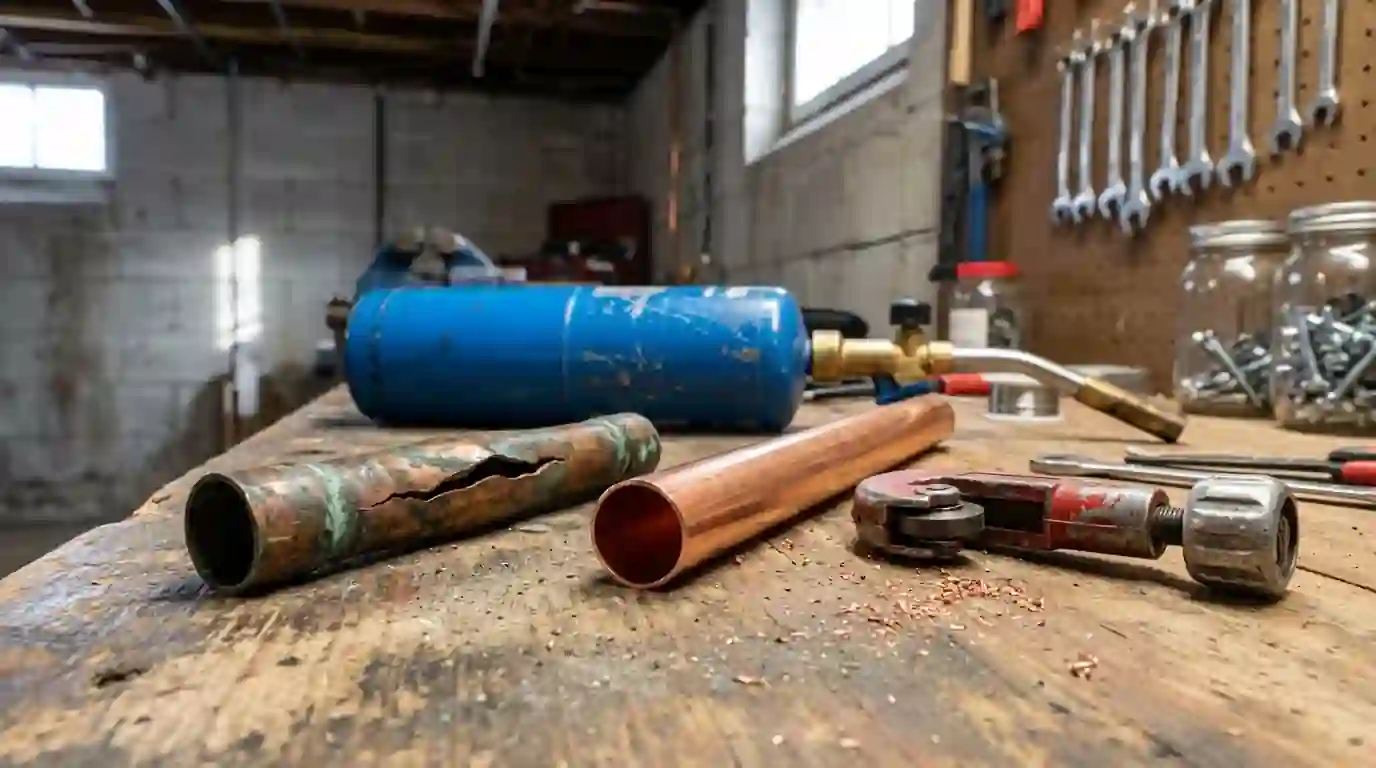
Burst pipe repair in Minneapolis, the short answer
Burst pipe repair in Minneapolis means cutting out a section of split copper, galvanized or PEX supply pipe and replacing it with new pipe and fittings, then pressure-checking the line. You need it when a pipe has frozen and cracked, a fitting has blown apart, or corrosion has opened a pinhole that suddenly let go. Shut off the main first, then call.
Why pipes split open, and why it often happens after the cold snap
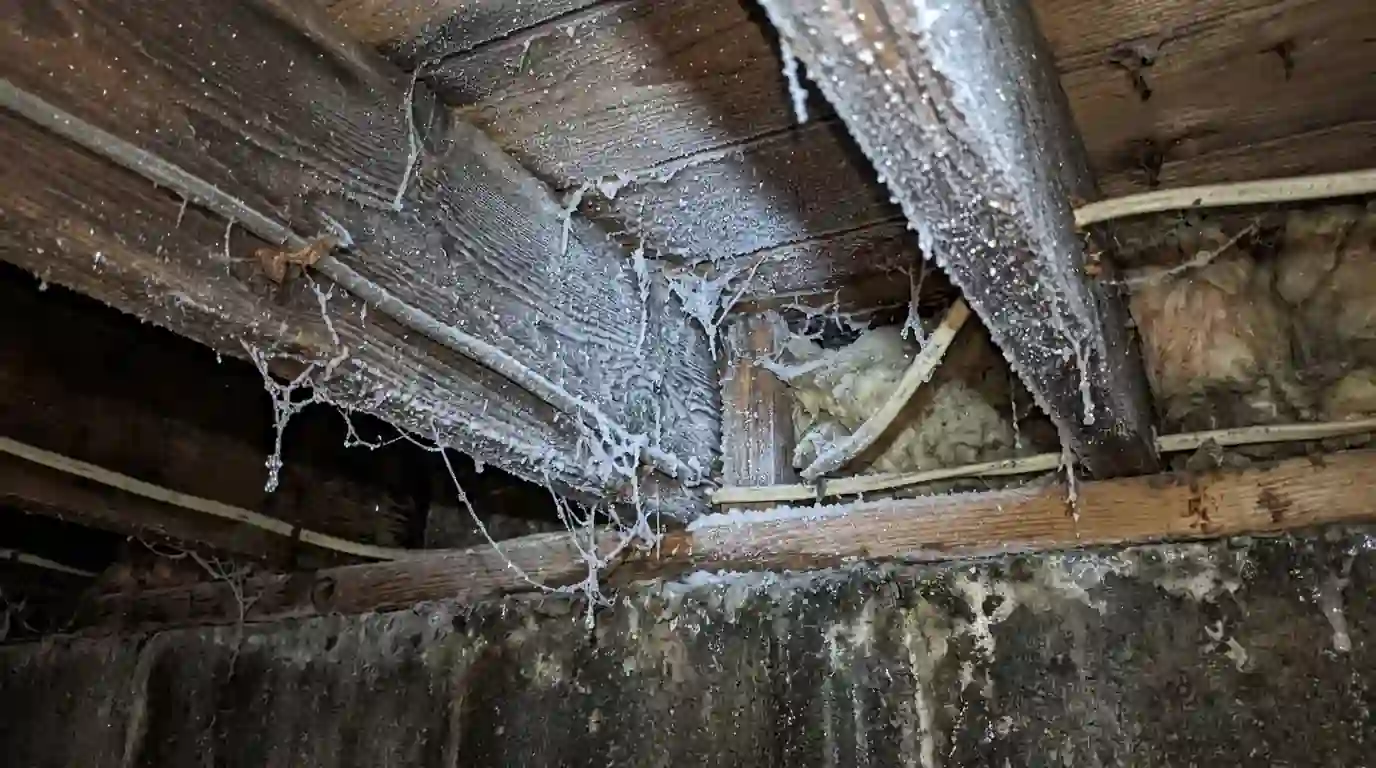
Water expands as it freezes. In a pipe, the ice plug itself rarely splits the metal. The pressure builds in the water trapped between the ice and a closed faucet, and that pressure opens a seam in copper or swells a PEX fitting. The pipe can sit cracked and quiet for days while it stays frozen.
Then the weather warms up, the ice melts, and full city pressure pushes through the crack. That is why so many burst pipe calls come on the first mild afternoon after a deep freeze, often while nobody is home. Corrosion is the other cause: an aging galvanized nipple or a pitted copper elbow can fail with no frost at all.
Patch clamp or a real repair: what holds up
A rubber-lined repair clamp from the hardware store can slow a leak for a day or two. It isn't a fix. Clamps creep on copper, can't seal a split that runs past their edges, and do nothing for a crack hidden behind the visible one. Treat it as a way to get water back on until a plumber arrives.
A proper burst pipe repair removes the whole damaged length plus a few inches of good pipe on each side. On copper, that means new type L pipe joined with soldered or press couplings. On galvanized, the plumber usually transitions to copper or PEX with a dielectric union. PEX gets cut back and joined with expansion or crimp fittings.
Fixing the reason the pipe froze
Replacing the split section without changing anything else invites a repeat. When PlumbTek repairs a frozen burst, the plumber looks at where the pipe runs. Is it tight against an outside wall, sitting in a rim joist pocket, or running through an unheated garage ceiling? Those spots get the same cold air every January.
Often the better move is rerouting a few feet of pipe toward the warm side of the wall cavity, adding insulation behind it rather than in front, or sealing the air leak at the sill plate that is blowing on it. A pipe that sees heated basement air rarely freezes, even in a minus-twenty week.
How to tell a pipe has burst somewhere you can't see
Not every burst pipe sprays water in plain sight, so watch for these clues.
- Sudden drop in water pressureIf every faucet goes weak at once, a large leak somewhere is stealing the flow before it reaches your fixtures.
- Wet spot spreading on drywallA darkening patch on a ceiling below a bathroom or along an outside wall usually means a supply pipe inside has opened up.
- Water running sound at nightHearing water move when every faucet and toilet is quiet means pressure is escaping from a pipe somewhere in the house.
- Bulging or blistered paintPaint that bubbles out from the wall is holding water behind it, often from a pinhole or split in a nearby pipe.
- Water meter spinningShut off every fixture and watch the meter dial. Steady movement confirms a leak even when you can't find it yet.
- Icy pipe with no flowA frosted section and a dead faucet in January means a freeze is in progress, and a split is likely once it thaws.
How a burst pipe gets repaired, start to finish
Shut down and drain
The main valve is closed and the lines drained so the plumber can work dry. If the main valve is seized, the water utility can close the curb stop.
Open only what's needed
The plumber traces the water to its source and opens the smallest drywall or ceiling patch that gives clean access to the damaged length.
Cut out the damage
The split section is removed along with a margin of good pipe, then the remaining pipe is checked for more frost cracks or thin walls nearby.
Join new pipe
New copper, PEX or a material transition goes in with fittings rated for the line, and the run gets rerouted or protected if cold caused the failure.
Pressure test and walk through
Water comes back on slowly, every joint is watched under full pressure, and you get a plain explanation of what failed and what changed.
What burst pipe repair costs in Minneapolis
Most of the price comes from how hard the pipe is to reach. Parts, access and labor time decide the final figure, and the plumber explains it before starting.
| Job | Typical range | What moves the price |
|---|---|---|
| Single split in an open basement ceiling | $227 to $468 | Pipe size, copper versus PEX, and time of day |
| Burst pipe inside a finished wall | $412 to $893 | Drywall access, nearby wiring, and reroute away from cold |
| Multiple frost splits on one run | $638 to $1,374 | Number of breaks and how far the freeze damage spread |
| Galvanized burst with transition to copper | $486 to $1,117 | Seized threads and how much old pipe must come out |
What changes the number
- A pipe in an open joist bay is far quicker to repair than one behind tile, cabinets or a plaster wall.
- Galvanized pipe adds time because old threads rarely break loose, so more pipe often comes out than planned.
- Rerouting a line away from an exterior wall adds parts and labor but prevents the same split next winter.
- Night, weekend and holiday calls carry a higher trip rate than weekday visits.
- Drywall patching, painting and water drying are separate from the plumbing repair.
Ranges reflect typical Twin Cities jobs in 2026. Your price is explained before work starts. Compare other jobs in the PlumbTek price guide.
Temporary clamp or permanent pipe section?
| Point | Repair clamp | Cut-in pipe section |
|---|---|---|
| How long it lasts | A few days, until a plumber can get there | Decades, the same as the rest of the line |
| Splits it can handle | Short splits fully under the clamp | Any length, plus hidden cracks nearby |
| Pipe types | Rigid copper or steel only | Copper, galvanized, PEX and CPVC |
| Fixes the cause | No, the cold spot stays the same | Yes, the run can be rerouted or protected |
| Behind a wall | Hard to fit and to check | Opened, repaired and pressure tested |
Where pipes burst in Twin Cities homes
In older Minneapolis houses, the classic spot is the kitchen sink on an exterior wall, fed by pipes that run up through an uninsulated balloon-frame cavity. Second-floor bathrooms added over porches in Kingfield, Standish and Northeast are another repeat offender, since the floor below them was never meant to be heated.
Newer suburban homes in Maple Grove, Woodbury and Lakeville split pipes too, usually in the garage ceiling under a bonus room, at a frost-free sillcock with a hose left on, or in a rim joist where the insulation was stuffed in loosely. The house is tight, but one cold pocket is all it takes.