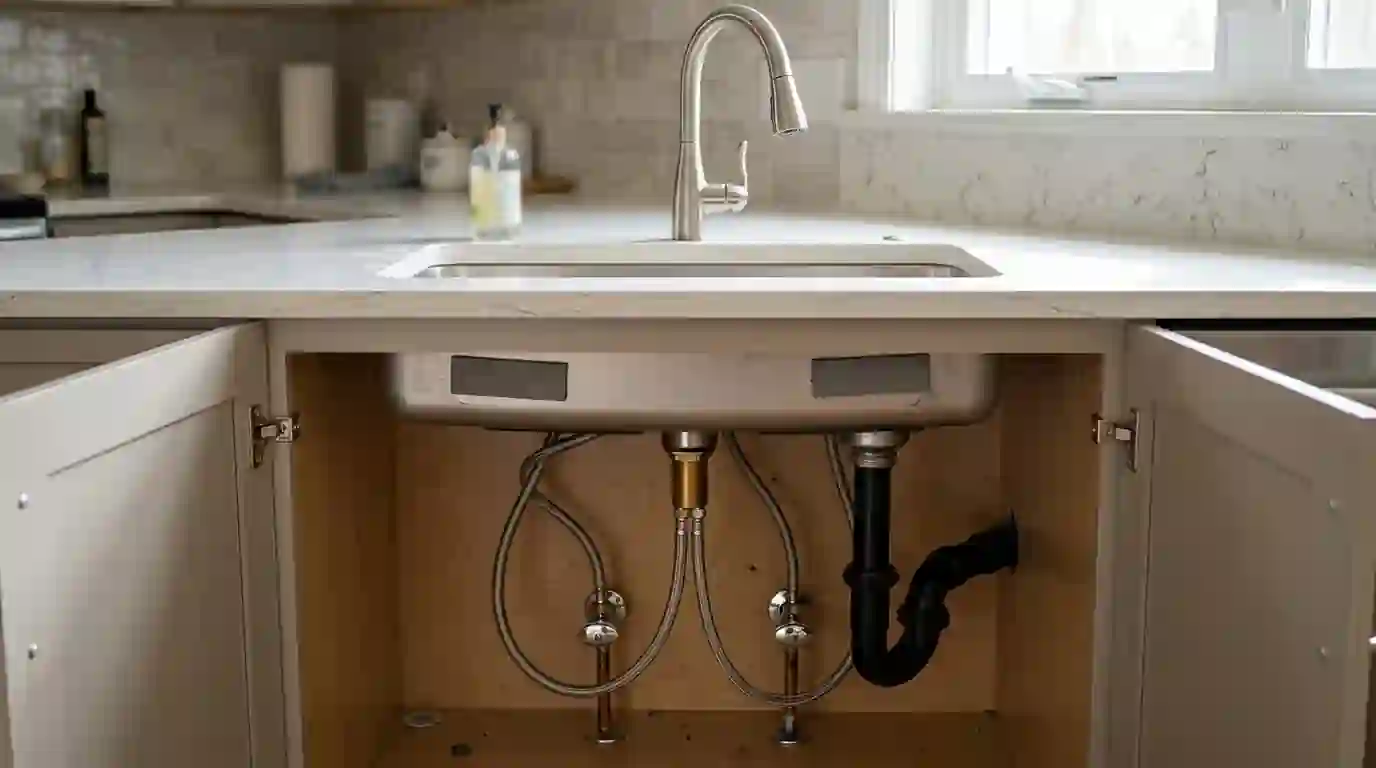
Faucet installation in Minneapolis, the short answer
Faucet installation in Minneapolis means removing the old faucet, preparing the sink or countertop, mounting a new kitchen, bathroom, bar or laundry faucet, and connecting it to fresh supply lines and stop valves. You need it when an old faucet is worn out, you're updating a kitchen or bath, or you want features like a pull-down sprayer or touchless control.
Will the new faucet fit your sink?
Sinks come with one, two, three or four holes, and faucets are built for specific layouts. A single-hole faucet can cover a three-hole sink with a deck plate, but a widespread bath faucet needs three holes spaced six to sixteen inches apart. Count your holes and measure center to center before you buy, or send a photo and we'll check it.
Countertop thickness matters too. Thick stone tops and older cast iron sinks with deep decks can exceed the shank length on some faucets, so the mounting nut won't reach. Undermount sinks with holes drilled in the countertop need a faucet that suits that setup. Catching these things early saves a second trip to the store.
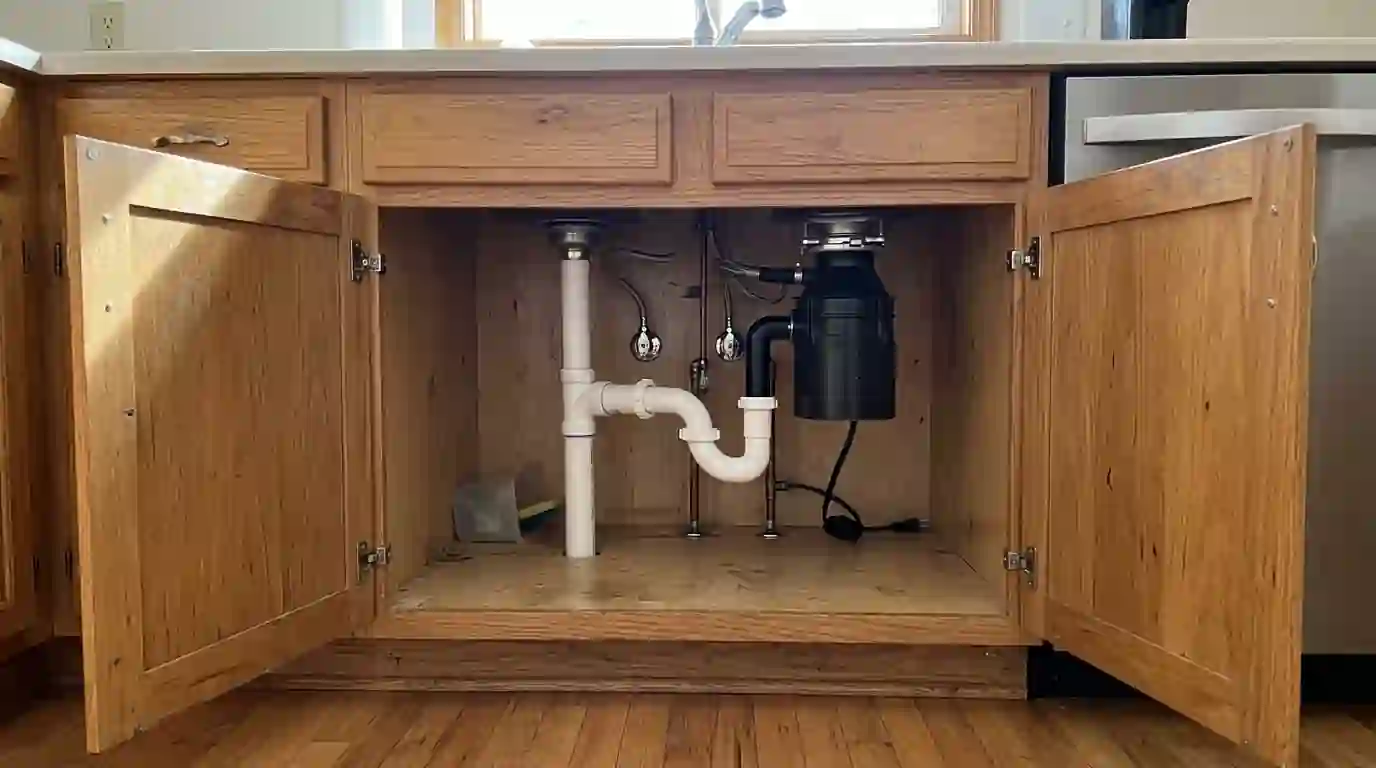
Why the stop valves and supply lines get replaced too
The new faucet is only as reliable as what feeds it. Many Minneapolis homes still have multi-turn compression stops under the sink that have not been turned in decades. They seize, weep at the packing nut, or close only partway. Swapping them for quarter-turn valves while the cabinet is already empty is cheap insurance.
Old supply tubes are another weak point. Rigid chrome tubes and plastic-sheathed lines from the 1980s crack with age. PlumbTek installs braided stainless lines sized to the faucet connections, and on galvanized supply pipe the plumber checks whether the stub-out is corroded enough to need replacing before anything new is threaded onto it.
Kitchen faucets with extras need more planning
A pull-down faucet needs a hose weight placed where it won't hit the disposal or the drain trap. Touchless faucets need a battery pack or a nearby outlet for the power module. Faucets with a filtered water tap or a separate drinking water spout need space for the filter canister and a third connection.
If you're adding a dishwasher air gap, a soap dispenser or a separate sprayer, each takes its own hole. The plumber lays out everything under the sink before mounting, so the hoses don't kink, the trap stays clear, and the shut-offs can still be reached when you need them.
When a new faucet makes more sense than another repair
If a faucet shows several of these, putting more parts into it is rarely worth it.
- Corroded or pitted bodyGreen or white crust around the base and spout means the metal is breaking down and leaks will keep returning.
- Finish flaking offPeeling chrome or plated finish on a cheaper faucet is a sign the underlying material is wearing out.
- Parts are hard to findOlder or off-brand faucets with no available cartridges end up costing more in repeated repair attempts.
- Wobbly or loose baseFaucets that move when you use them strain the supply lines and the seal at the deck.
- You're updating the roomNew counters, a new sink or a kitchen refresh are the easiest time to change faucet style and hole layout.
- You want different featuresPull-down sprayers, touchless control or a single handle for easier use are reasons to upgrade on their own.
What happens during a faucet install
Check fit and supplies
The plumber confirms hole count, spacing and deck thickness, and looks at the stop valves and pipe under the sink before removing anything.
Remove the old faucet
Water is shut off, supply lines and mounting nuts are removed, and old putty or caulk is cleaned off the sink deck.
Replace valves if needed
Seized or leaking stops are swapped for quarter-turn valves, and corroded stub-outs are repaired so the new connections seal properly.
Mount and connect
The faucet is set with the right gasket or putty, tightened from below, and connected with new braided lines and any sprayer hose.
Flush and test
The aerator is removed and lines flushed of debris, then hot and cold are run, connections checked dry and features tested.
Faucet installation costs in the Twin Cities
These 2026 labor ranges assume you supply the faucet unless noted. Your actual price depends on the faucet and what's under the sink, and it's explained before work starts.
| Job | Typical range | What moves the price |
|---|---|---|
| Bathroom faucet install, single or centerset | $176 to $318 | Pop-up drain swap adds a little time |
| Widespread bathroom faucet install | $238 to $427 | Three separate valves to mount and connect |
| Kitchen faucet install with pull-down | $214 to $389 | Tight cabinets and disposals slow the work |
| New stop valves and supply lines | $118 to $263 | Galvanized stub-outs may need extra repair |
| Touchless or filtered faucet install | $289 to $513 | Power module or filter canister adds setup |
What changes the number
- Stone countertops that need a new hole drilled add cost and require the right tooling.
- Seized mounting nuts on old faucets sometimes have to be cut off to remove the fixture.
- Galvanized supply stubs that crumble when touched need repair before new valves go on.
- Wall-mounted faucets involve work inside the wall and cost more than deck-mounted ones.
- Faucets bought through PlumbTek include the fixture price on top of the labor shown.
Ranges reflect typical Twin Cities jobs in 2026. Your price is explained before work starts. Compare other jobs in the PlumbTek price guide.
Buying tips for a faucet that lasts
- Choose solid brass internals. Faucets with brass or stainless bodies and ceramic valves hold up better than zinc or plastic bodies over years of daily use.
- Check that parts are sold separately. Brands that sell cartridges and hoses on their own make future repairs cheap instead of forcing a full replacement.
- Match the spout reach to the sink. A spout that's too short splashes on the back of the basin. Too long and it sprays over the front edge.
- Mind the clearance above. Tall gooseneck faucets can hit a window sill or low cabinet. Measure the space before you choose one.
- Keep the box and paperwork. Model numbers make finding replacement cartridges simple years later, so tape the info inside the cabinet door.
Faucet swaps in Minneapolis kitchens and baths
Kitchens in Seward, Standish and other pre-war neighborhoods were often remodeled in the 1970s or 1980s, and the supply piping behind those cabinets is frequently a patchwork of galvanized, copper and older plastic. A faucet swap there means checking how sound each stub-out is before tightening new valves onto it, since old galvanized threads can snap.
In newer construction around Maple Grove, Lakeville and Shakopee, PEX supply and crimp stops are common, which makes faucet installs quicker. The usual issue in those homes is space: deep farmhouse sinks, large disposals and pull-out trash cabinets leave little room for a pull-down hose to swing freely.