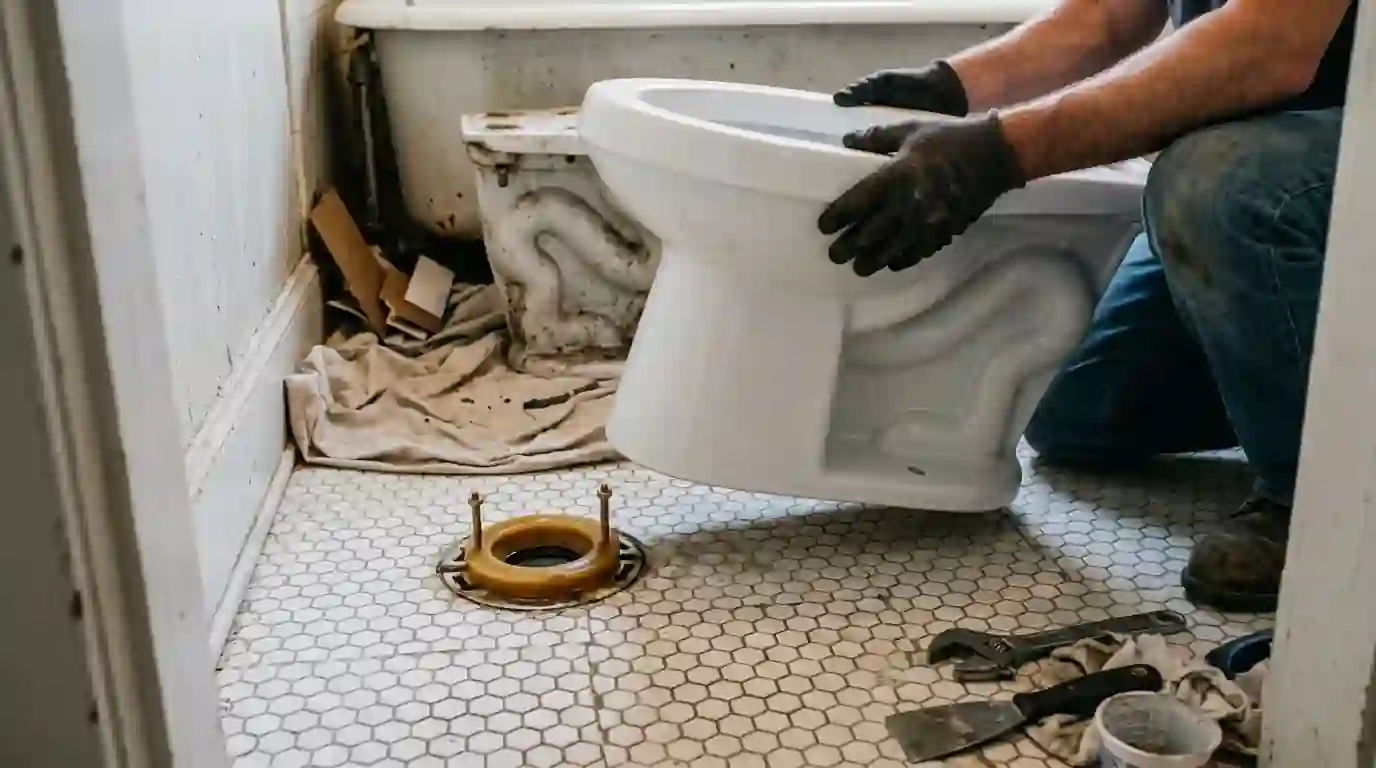
Toilet installation in Minneapolis, the short answer
Toilet installation in Minneapolis covers removing the old toilet, inspecting the closet flange, setting a new bowl on a fresh seal, connecting the tank and supply, and hauling the old fixture away. You need it when a toilet cracks, clogs constantly, wastes water, or no longer fits a remodeled bathroom. The plumber confirms the rough-in measurement and explains the price before starting.
Measure the rough-in before you buy the toilet
The rough-in is the distance from the finished wall to the center of the closet bolts. Most toilets are made for a 12 inch rough-in, but plenty of older Minneapolis bathrooms measure 10 or 14 inches, especially where a wall was furred out or plaster was replaced with thicker board. Buy the wrong size and the tank either hits the wall or sits awkwardly far from it.
Measure from the wall itself, not from the baseboard, to the bolt caps. If your old toilet has four bolts, use the two at the back. Bowl shape matters too. An elongated bowl adds a couple of inches of reach, which can block a door swing in a tight bungalow bath. When in doubt, call and we'll help you check before you order.
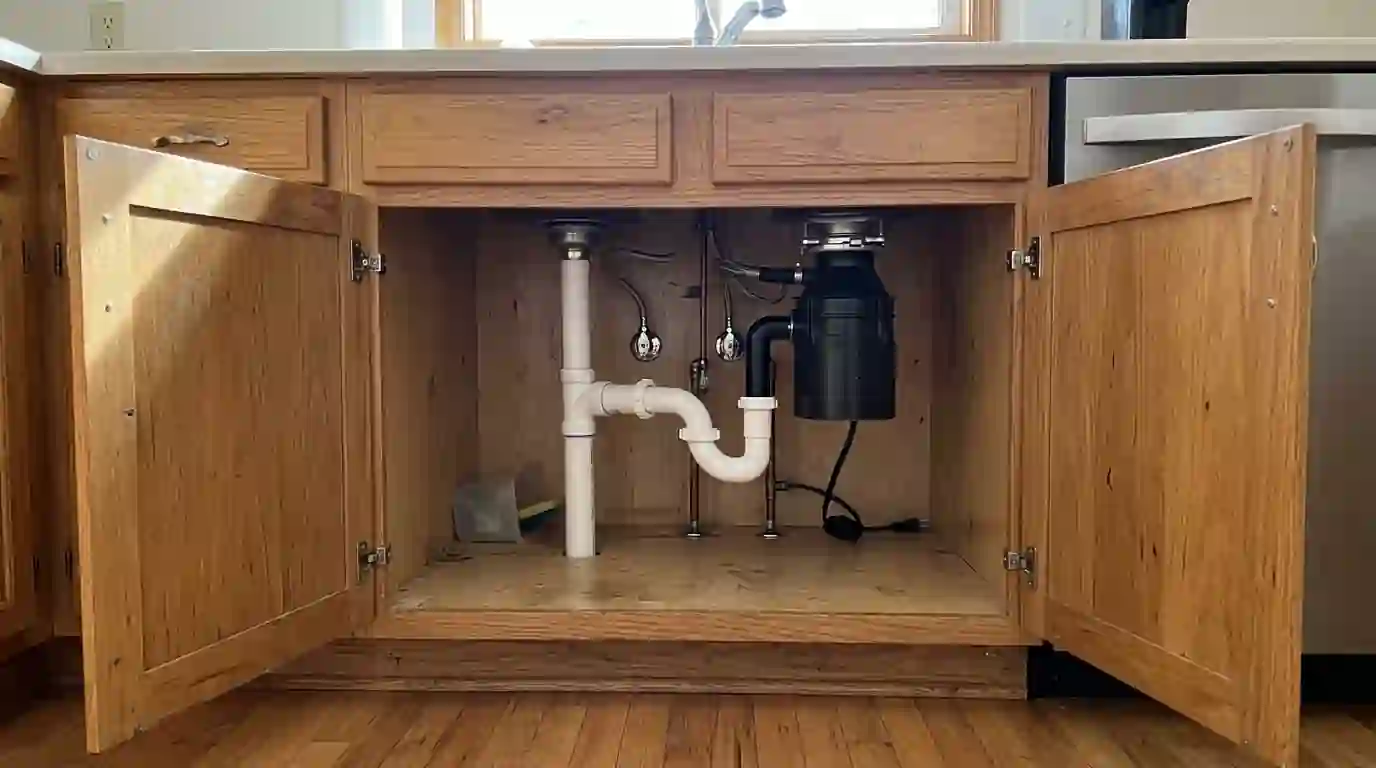
What gets checked under the old toilet
Pulling an old toilet is the one chance to see the closet flange, the bend below it, and the subfloor around it. The plumber checks that the flange is fastened tight, sits at or slightly above the finished floor, and has solid bolt slots. A flange that's broken or set too low is the most common reason a new toilet leaks within a year.
The stop valve gets attention too. Old multi-turn compression valves in pre-war homes often drip or refuse to close, and a new quarter-turn valve with a braided supply line costs little next to a flooded floor. If the floor around the flange is soft, you'll see it before anything is set, so you can choose whether to repair it now.
Getting a new toilet to sit solid and flush well
A toilet that rocks is a toilet that will leak. The plumber sets the bowl, checks it with a level in both directions, and shims any gap with plastic shims rather than relying on the wax to fill it. Closet bolts are snugged evenly by hand feel, because porcelain cracks if you lean on a wrench.
Modern low-flow toilets flush better than the early versions, but they depend on a clean, properly vented drain. In older houses with partly clogged cast iron or a poorly vented bathroom group, a new toilet can flush sluggishly. If that shows up during testing, the plumber will explain whether the drain line or vent needs work.
When replacing the toilet beats repairing it
These are the situations where new parts on an old toilet stop making sense.
- Crack in the tank or bowlHairline cracks in porcelain spread over time. A cracked tank can split and empty its water onto the floor without warning.
- Clogs every week or twoEarly low-flow toilets with narrow trapways clog no matter how often you plunge. A newer bowl design usually ends that.
- Parts no longer madeSome 1990s toilets use odd flush valves or tank styles that are hard to find parts for, so repairs keep failing.
- Old high-volume flushToilets from before the 1990s use much more water each flush than a modern model, which adds up on your water bill.
- Remodel or new flooringWhen tile is being replaced, it's the easiest time to change the toilet and fix the flange height to match the new floor.
From old toilet out to new toilet flushing
Confirm size and fit
The plumber measures the rough-in, checks clearance to the vanity, tub and door, and confirms the toilet you chose will fit and connect to your supply.
Remove the old fixture
Water is shut off, the tank and bowl are drained, the toilet comes up, and the old wax is scraped clean off the flange.
Inspect and fix the flange
The flange, closet bend and subfloor are checked. Broken or low flanges get repaired with the right ring, spacer or replacement before anything else.
Set, level and connect
The bowl goes down on a new seal, gets leveled and bolted, then the tank, stop valve and braided supply line are installed.
Test and haul away
Several flushes confirm a dry base and full refill, the base is caulked if you want it, and the old toilet leaves with the plumber.
What it costs to install a toilet in the Twin Cities
Typical 2026 labor ranges for Minneapolis and the suburbs, with the toilet supplied by you or by PlumbTek. Your actual price depends on what's under the old toilet and is explained before work starts.
| Job | Typical range | What moves the price |
|---|---|---|
| Swap a toilet you supply | $238 to $412 | Includes removal, new seal, bolts and haul away |
| Supply and install a standard toilet | $517 to $943 | Fixture choice drives most of the spread |
| Comfort height or one-piece install | $611 to $1,187 | Heavier one-piece bowls and premium models cost more |
| Flange repair added to install | $163 to $447 | Cast iron and lead closet bends take longer |
| Wall-hung toilet with in-wall carrier | $1,873 to $3,642 | Opening the wall and framing the carrier adds labor |
What changes the number
- A non-standard rough-in may limit you to certain toilet models, which can raise the fixture cost.
- New flooring that raises the floor height usually means an extended flange or spacer.
- Replacing a corroded stop valve or old rigid supply tube adds a small amount of time and parts.
- Carrying a heavy one-piece toilet up narrow stairs in an old house takes extra hands.
- Rotted subfloor around the flange has to be repaired before a new toilet can be set safely.
Ranges reflect typical Twin Cities jobs in 2026. Your price is explained before work starts. Compare other jobs in the PlumbTek price guide.
Two-piece or one-piece toilet: which suits your bathroom?
| Point | Two-piece toilet | One-piece toilet |
|---|---|---|
| Upfront cost | Lower, with many models to choose from | Higher for the same flush performance |
| Weight and handling | Tank and bowl carried separately, easier up old stairs | Heavy single piece, harder in tight upstairs baths |
| Cleaning | Seam between tank and bowl collects grime | Smooth sides with no seam to scrub |
| Future repairs | Tank-to-bowl gasket and bolts can wear and leak | No tank bolts, fewer places to drip |
| Fit in small rooms | Wide range of compact and round-front shapes | Fewer compact sizes, often a longer footprint |
Setting new toilets in old Minneapolis bathrooms
In Tangletown, Lynnhurst and other neighborhoods with 1920s housing, bathrooms were built small and floors were often mudset tile over a thick bed. That bed can hide a closet bend that's lower than expected, so new toilets there commonly need a spacer to bring the seal up to the bowl. Tight spaces also make round-front bowls the practical choice.
Ramblers and split-levels from the 1960s and 1970s across Richfield, Bloomington and Roseville usually have PVC or ABS flanges at a standard rough-in, which makes swaps simpler. The common snag there is a flange glued flush with an old vinyl floor that later got covered with thicker tile, leaving the toilet sitting proud.