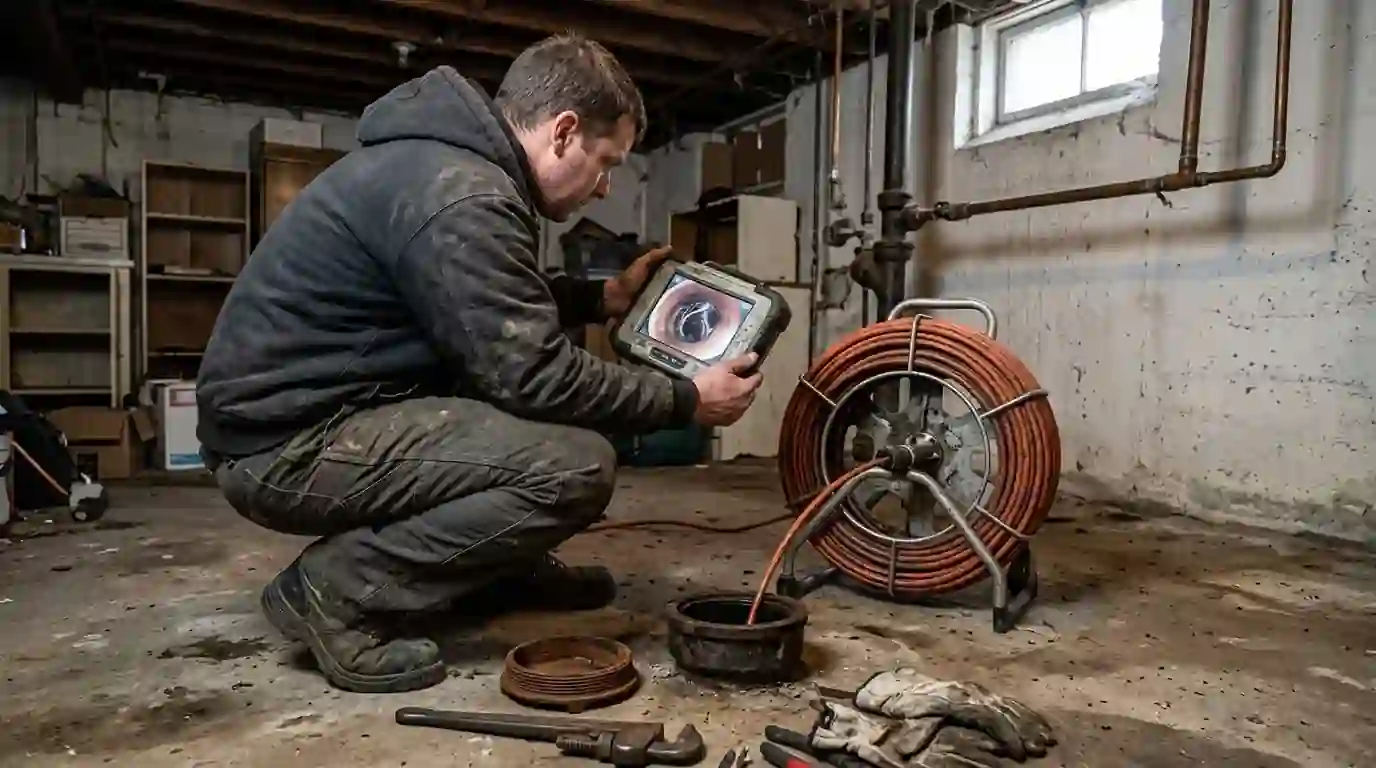
Sewer camera inspection in Minneapolis, the short answer
A sewer camera inspection in Minneapolis is a video survey of the lateral pipe that carries waste from your house to the city main. A waterproof camera on a push rod records the pipe interior while a locator marks its depth and position from the surface. You need one before buying an older home, after repeat backups, or before paying for any sewer repair or replacement.
What the camera can see that a cable can't tell you
When a cable machine comes back with roots on the head, you know roots are in there somewhere. You don't know whether it's one joint or twenty, whether the pipe is cracked, or whether a section has sunk. A camera answers those questions directly, so the next decision rests on what the pipe actually looks like.
On the screen we watch for offset joints where one pipe section has shifted, cracks and missing pieces in clay, belly sections that hold standing water, scale and rust in cast iron, and the point where your lateral meets the city main. Each finding is noted with its distance from the cleanout.
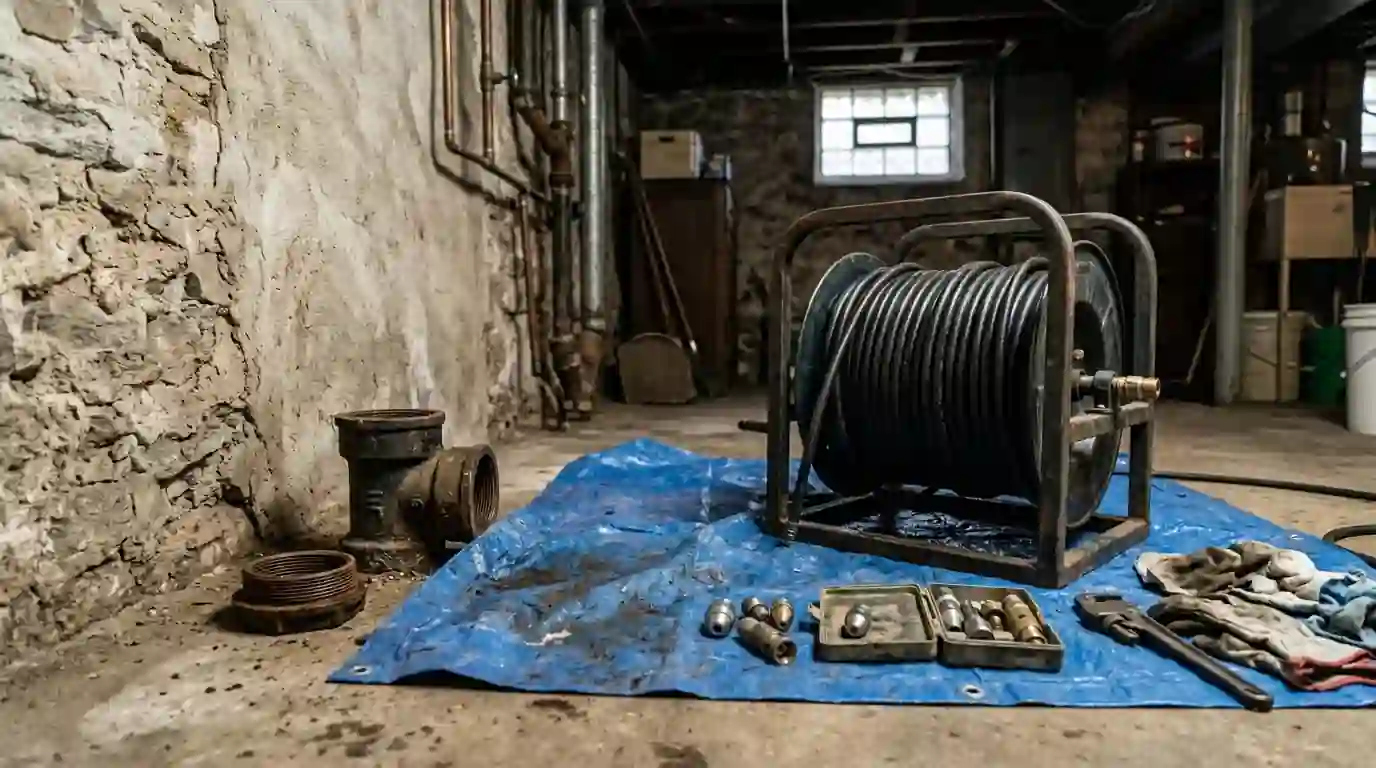
Locating problems from the yard above
The camera head carries a small transmitter called a sonde. When the camera stops at a problem, we sweep a handheld locator over the lawn or boulevard to find the signal, then mark the spot with paint or a flag along with its depth. That turns a vague backup into an exact spot to dig, or a reason not to dig at all.
Locating matters because Minneapolis laterals often run under driveways, mature boulevard trees and front steps. Knowing the trouble sits eleven feet out at about seven feet deep, past the sidewalk, tells you whether a spot repair is practical or whether a lining or full replacement makes more sense.
Why buyers in older neighborhoods should scope the sewer
A standard home inspection usually doesn't include the sewer lateral, and Truth in Sale of Housing evaluations focus on visible plumbing. Yet the homeowner owns the lateral all the way to the city main. If you buy a 1920s house in Linden Hills or Como with a collapsed clay line, that repair is yours after closing.
A camera inspection before closing costs a small fraction of a lateral replacement. If the footage shows serious damage, you have time to negotiate a repair credit or a price change. If it shows a clean line, you can move on knowing the pipe out to the street is in reasonable shape.
Situations where a sewer camera look makes sense
If any of these fit, seeing the pipe beats guessing at it.
- Buying a house built before 1960Clay tile and cast iron laterals from that era often hide root intrusion, cracks or offset joints that no home inspection covers.
- Second backup in a yearRepeated main line clogs mean something in the pipe keeps catching waste, and cleaning again without looking just repeats the cycle.
- Roots came back on the cutterRoots on the cable show the pipe has open joints, and the camera shows how many and how bad they are.
- Planning a driveway or patioBefore pouring concrete over the lateral path, it's smart to confirm the pipe is sound and know where it runs.
- Soggy spot or sinkhole in yardA wet patch or settling soil over the sewer path can mean a broken pipe leaking into the ground below.
- Sewer smell in the basementA persistent sewer odor with no obvious source can point to a cracked pipe, a dry trap or a failed cleanout plug.
From cleanout to city main: the inspection visit
Find and open the cleanout
We locate the main cleanout, often a cast iron plug near the front basement wall, and open it carefully since old brass plugs can seize.
Clear a path if needed
If water is backed up, we cable the line first so the camera can see the pipe instead of murky standing water.
Run the camera to the main
The camera travels the full lateral while recording, and we pause at every joint, transition and defect to look closely.
Locate and mark defects
At each problem we find the sonde signal from above and mark the location and depth on the lawn, boulevard or driveway.
Review the footage with you
You watch the key sections with us, hear what each defect means, and get the recording to keep or share.
Sewer scope pricing, with and without locating
Most homes fall in these ranges. What you pay depends on the specifics of the job, and you hear it before any work starts.
| Job | Typical range | What moves the price |
|---|---|---|
| Camera inspection through existing cleanout | $247 to $438 | Lateral length and whether the line is clear when we arrive |
| Pre-purchase scope with locating and recording | $298 to $489 | Marking defects at the surface and the recorded footage |
| Camera after cabling a backed-up line | $187 to $342 | Added when we are already on site clearing the line |
| Access through a toilet or roof vent | $364 to $627 | No usable cleanout, so a fixture is pulled for access |
What changes the number
- Whether a usable cleanout exists or a toilet has to be pulled.
- Whether the line has to be cleared before the camera can see.
- How far the lateral runs to the city main.
- Whether you want defects located and marked at the surface.
- Seized cleanout plugs that need cutting out and replacing.
Ranges reflect typical Twin Cities jobs in 2026. Your price is explained before work starts. Compare other jobs in the PlumbTek price guide.
What to ask for before paying for a sewer scope
Use this list so the inspection actually answers your questions.
- Ask that the camera runs all the way to the city main, not just partway.
- Ask for the footage as a file or link you can keep and share.
- Make sure defects are located and marked at the surface with depth.
- Ask what pipe material each section is and where materials change.
- Have the condition of the connection at the city main described.
- Know where the cleanout is and whether it needs replacing.
- Ask which defects are urgent and which can wait and be watched.
- For a home purchase, schedule the scope early in your inspection window.
What scopes usually find under Minneapolis yards
In pre-war neighborhoods like Tangletown, Seward and Saint Paul's Mac-Groveland, most laterals are vitrified clay tile in short sections joined with mortar or packed joints. Over the decades roots from boulevard elms, maples and ash work into those joints. The camera often shows a clean pipe for a few feet, then root clumps at regular intervals.
Post-war homes in Richfield, Robbinsdale and Roseville often have cast iron or clay mixed with later PVC repairs. In some 1950s and 1960s suburbs we see Orangeburg fiber pipe that has flattened into an oval. Newer homes in Blaine or Shakopee usually show PVC, with any problems at the connection to the city main.