Water heater maintenance in Minneapolis, the short answer
Water heater maintenance in Minneapolis is a yearly service visit that flushes sediment from the tank, checks the anode rod, tests the T&P relief valve and inspects the burner or elements and venting. It makes sense for any tank over two years old, and especially for homes on hard well water or softened water.
What builds up inside a tank between service visits
Every time water heats, dissolved minerals drop out and settle to the bottom of the tank. On a gas heater, that layer sits right on top of the burner's heat. Water trapped under the scale boils in small pockets, which is the popping you hear, and the steel underneath runs hotter than it should. On electric tanks, scale buries the lower element until it burns out.
Meanwhile the anode rod, a magnesium or aluminum rod hanging from the top of the tank, corrodes on purpose so the steel doesn't. Once it's eaten down to bare core wire, the tank lining has nothing protecting its weak spots. Replacing a spent anode costs a fraction of a new heater and is the single biggest thing you can do for tank life.
Why hard well water and softened water both shorten tank life
Homes on private wells around Big Lake, Elk River and Buffalo often have hard, iron-bearing water. Hard water drops heavy scale, so those tanks benefit from a flush every year. Iron can also stain the tank interior and feed bacteria that cause a sulfur smell from hot taps.
Softened water drops far less scale, but it's more aggressive toward the anode. A softened Minneapolis home can wear through an anode in just a few years. So the maintenance focus shifts: on hard water we push sediment out, on softened water we pull and measure the anode more often. Either way, a yearly look keeps you ahead of failure.
Gas burner, venting and relief valve: the safety half of the visit
Maintenance isn't only about longevity. On a gas tank the plumber pulls the burner access cover, checks flame color and shape, clears lint from the flame arrestor screen, and tests the thermocouple or flame sensor. The vent connector gets checked for rust and proper slope, and the draft hood gets a smoke test to make sure exhaust leaves the house.
The T&P relief valve is lifted briefly to make sure it opens and reseats. A valve that hasn't moved in years can stick shut, and that's the one safety device standing between a runaway thermostat and an overpressurized tank. If it won't reseat, it gets replaced that visit.
Signs your water heater is overdue for a service
Any of these suggests it has been too long since anyone opened the tank up.
- Popping or crackling during heatingSediment is trapping water against the tank bottom. The sound gets louder as the layer thickens and the burner works harder.
- Hot water runs out soonerScale takes up space inside the tank and insulates water from the burner, so usable hot water drops even though the tank size hasn't changed.
- Sandy grit in faucet aeratorsLoose sediment or bits of a crumbling dip tube are being carried out to fixtures. A flush clears it before it clogs cartridges.
- Relief valve never testedIf no one has lifted the T&P lever in years, there's no way to know it will open when needed.
- Yellow or lazy burner flameA healthy flame is mostly blue. Yellow tips suggest poor combustion air, a dirty burner, or a blocked arrestor screen.
What happens during a PlumbTek water heater tune-up
Visual and leak check
We look at the tank base, fittings, gas connector, vent pipe and floor for rust, seepage or scorch marks before turning anything off.
Shut down and drain
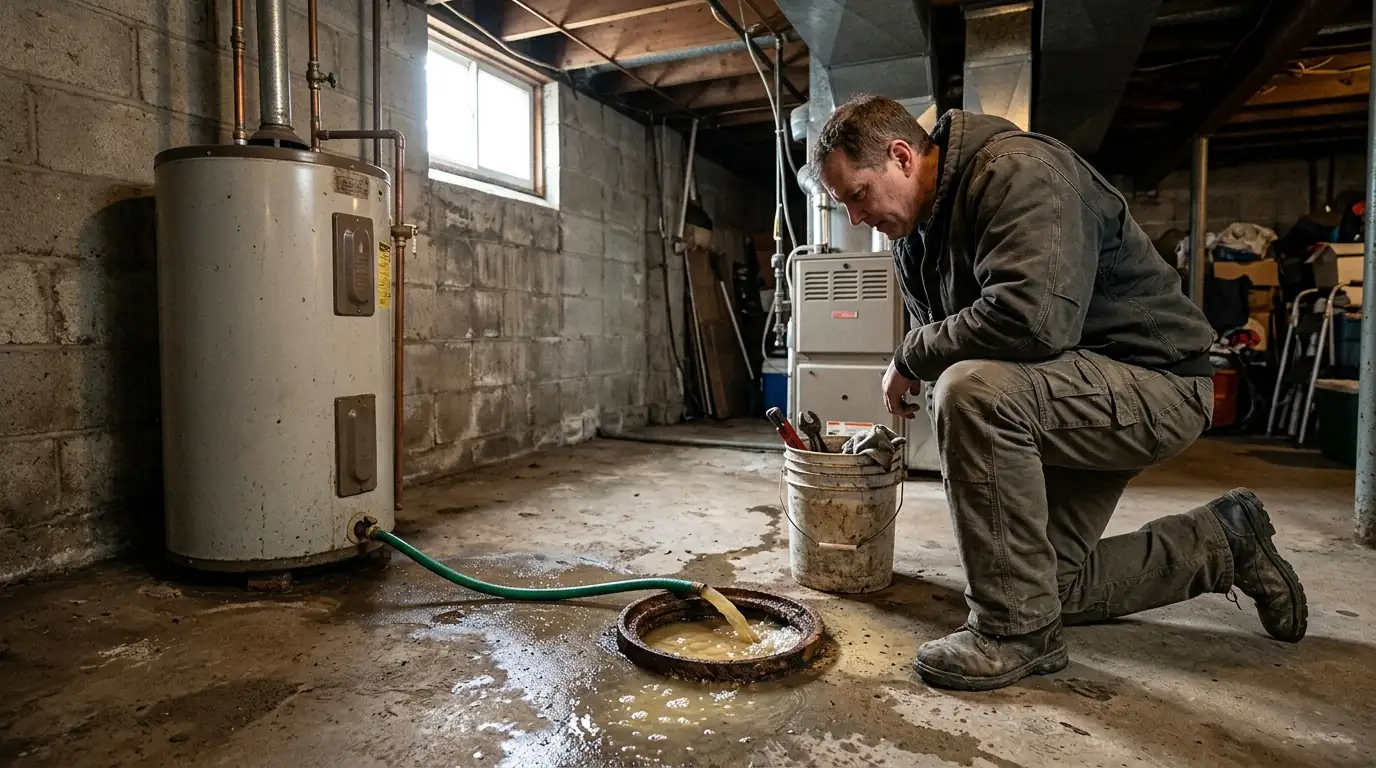
Gas or power is turned off, the cold supply is closed, and the tank drains through a hose to the floor drain until water runs mostly clear.
Flush the sediment
Cold water is cycled through the open tank in bursts to stir up and push out settled scale. Very hard tanks may need several rounds.
Anode and valve inspection
Where clearance allows, the anode rod is pulled and measured. The T&P valve is tested and the drain valve checked for a clean shutoff.
Refill, relight, verify
The tank refills with air purged from the lines, then the burner or elements are restarted, temperature set, and draft confirmed.
Twin Cities pricing for water heater maintenance in 2026
Most visits land in the first row. Your actual price depends on what the inspection finds and is explained before any added work starts.
| Job | Typical range | What moves the price |
|---|---|---|
| Flush and inspection, gas or electric tank | $163 to $247 | Sediment volume and whether the drain valve flows freely |
| Anode rod replacement during service | $187 to $326 | Rod type, ceiling clearance and how seized the fitting is |
| T&P relief valve replacement | $143 to $236 | Valve access and discharge pipe condition |
| Brass drain valve upgrade | $119 to $193 | Swapping a plastic drain valve that clogs or won't seal |
What changes the number
- Thick, hardened scale on well-water tanks can take several flush cycles.
- Anodes that haven't been touched in years can be very hard to break loose.
- Low ceilings may require a segmented flexible anode instead of a solid rod.
- Gas burner cleaning adds time if the flame arrestor screen is heavily blocked.
- A tank found leaking at the shell during service may need replacement rather than maintenance.
Ranges reflect typical Twin Cities jobs in 2026. Your price is explained before work starts. Compare other jobs in the PlumbTek price guide.
Habits that keep a water heater healthy between visits
- Keep the setting near 120 degrees. Higher temperatures speed up scale and anode wear and raise scald risk. Most households have plenty of hot water at this setting.
- Leave the burner area clear. Boxes, laundry lint and stored paint near a gas tank block combustion air and clog the arrestor screen.
- Watch the floor near the tank. A small drip from the drain valve or a fitting is cheap to fix early and costly once it rusts the tank base.
- Note the install date. Write it on the tank with a marker. Knowing the age makes repair or replace decisions much easier later.
Maintenance schedules that fit Twin Cities water
City water in Minneapolis and Saint Paul is treated and softened at the plant, so homes on those systems see moderate scale. For most of them, a flush and anode check every one to two years is a sensible rhythm. Older houses with original brass drain valves sometimes need that valve replaced first, because a corroded valve can drip forever once opened.
Out in Sherburne and Wright counties, where wells often carry hard, iron-rich water, an annual flush is closer to essential. PlumbTek runs service calls from the Big Lake office through that area, and the difference shows: tanks flushed yearly drain clear, while neglected ones can choke a hose with scale.