Boiler repair in Minneapolis, the short answer
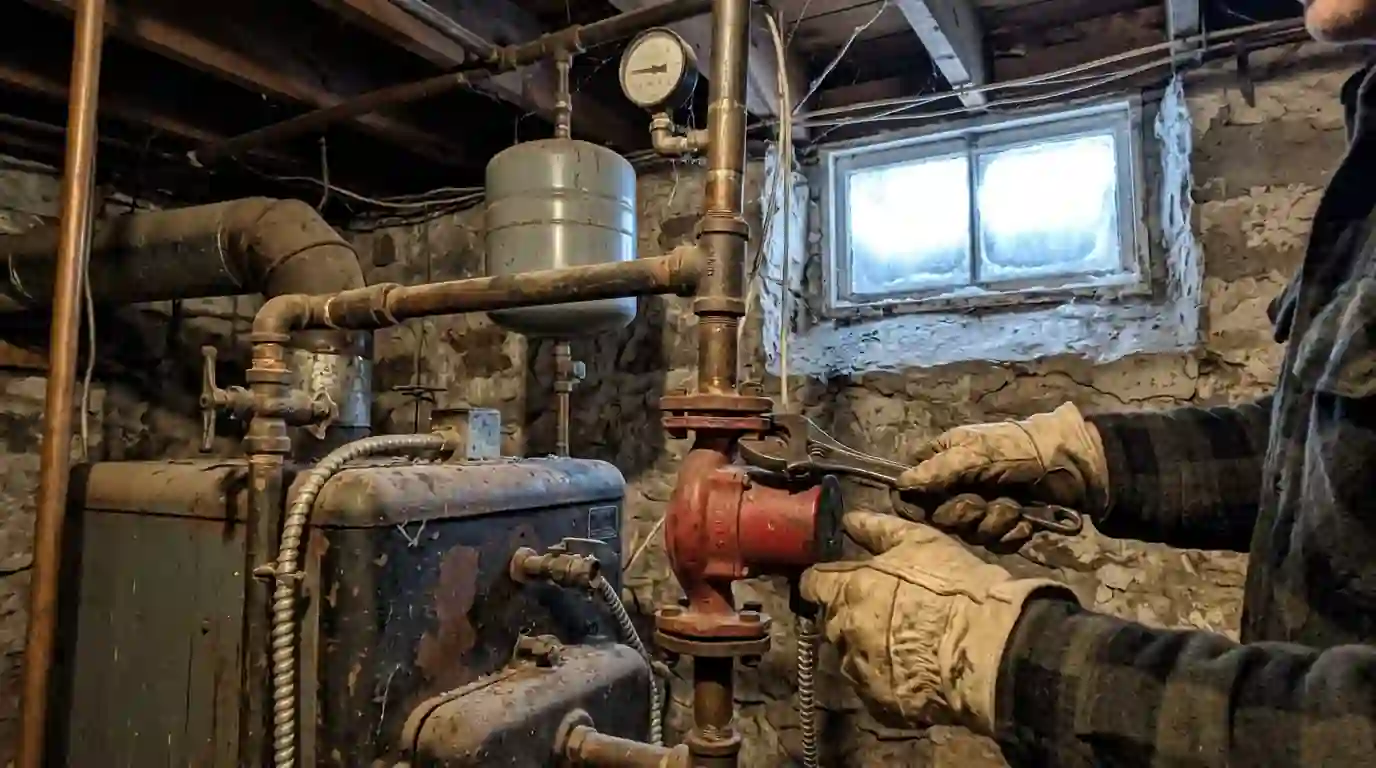
Boiler repair in Minneapolis means fixing the hot water (hydronic) or steam boiler behind your radiators or baseboard when it stops heating, heats unevenly, leaks or loses pressure. The work covers circulators, zone valves, expansion tanks, relief and fill valves, low-water cutoffs, ignition parts and radiator valves. A cracked heat exchanger or a worn-out boiler means replacement gets discussed.
Hot water or steam: which kind of boiler heats your house?
A hot water boiler, also called hydronic, keeps the loop full and pushes water through radiators or baseboard with a circulator pump. Its gauge usually reads 12 to 20 psi when cold. A steam boiler is only partly full, shows its water level in a sight glass, and sends steam up to the radiators.
The two fail differently. Hydronic systems suffer from trapped air, pressure swings and tired circulators. Steam systems suffer from low water, failed radiator vents and pipes that have lost pitch. Mixing them up leads to bad advice, like opening a steam radiator with a bleed key, so every visit starts by reading your system.
Why some radiators stay cold while the rest of the house is warm
On hot water systems, air is the usual suspect. It collects at high points, often the second-floor radiators in a 1920s foursquare, and blocks flow. Bleeding releases it, but if air keeps returning, something lets it in: a failing automatic air vent, a weeping fitting, or makeup water carrying dissolved air.
If bleeding changes nothing, the circulator is next. A pump with a seized impeller or snapped coupler can hum while moving no water. With several thermostats, a burned-out zone valve head leaves one room calling for heat that never arrives. On steam, uneven heat traces to clogged vents or sagging pipes.
Pressure trouble, a dripping relief valve and a waterlogged expansion tank
A residential hot water boiler has a relief valve set to open at 30 psi. If it drips, pressure is climbing too far as the water heats. Usually the expansion tank has lost its air charge, so heated water has nowhere to go. Recharging or replacing the tank settles most of these calls.
Low pressure is the opposite problem. When the fill valve on the makeup water line clogs, a small leak slowly drains the loop. That fill line also needs a backflow preventer so rusty boiler water can't siphon into your drinking water. PlumbTek adds one whenever the fill valve gets replaced.
Steam cutoffs, ignition faults and when to stop repairing
Steam boilers have a low-water cutoff that kills the burner if the water drops too far. A float-type cutoff needs regular blowdown in heating season to flush out sludge, or it can shut the boiler down for no reason or let it fire dry. Ignition parts, from thermocouples to flame sensors, get meter tests.
A cracked heat exchanger or a boiler at the end of its life is where repairs stop and replacement is talked through. One rule overrides everything here: anyone who smells gas should leave the house right away and call the gas utility or 911 from outside.
Boiler symptoms worth a call before the next cold night
Each usually points to one component, and most are repairable.
- Some radiators cold, others hotTrapped air, a stuck zone valve or a weak circulator on hot water systems. On steam, clogged radiator vents are the usual cause.
- Relief valve dripping or dischargingPressure is passing 30 psi as the boiler heats, most often from a waterlogged expansion tank or a fill valve that won't shut off.
- Pressure gauge sitting near zeroThe loop is losing water through radiator valve packing or a weeping union, and a clogged fill valve no longer tops it up.
- Banging or gurgling in the pipesGurgling on hot water means air in the loop. Banging on steam usually means condensate trapped in a pipe that has lost its pitch.
- Burner lights, then shuts downA failing flame sensor, igniter or thermocouple, or a low-water cutoff that thinks the boiler is dry when it is not.
What happens on a boiler service call, from the gauge to a full heat cycle
Call with the gauge reading
Phone (612) 254-6294 any hour with the gauge reading and which rooms are cold. Subzero no-heat calls are prioritized.
Safety check at the boiler
The plumber checks for gas odor, flue draft and carbon monoxide, and looks at the relief valve discharge pipe and floor for leaks.
Test one component at a time
Pressure, water level, expansion tank charge, circulator output and zone valve response are each checked, so nothing is guessed.
Price before any parts
You hear what failed, what the fix costs and how much life the boiler likely has left before any part goes in.
Repair, purge and run a cycle
The loop is refilled to the right cold pressure and purged, or the steam boiler set to its water line, then fired through a full cycle.
What boiler repair costs in Minneapolis and Saint Paul in 2026
Typical ranges for common hydronic and steam repairs. Your actual price depends on the boiler and access, and it's explained before work starts.
| Job | Typical range | What moves the price |
|---|---|---|
| Expansion tank replacement and recharge | $318 to $587 | Tank size, isolation valve condition and how much air needs purging |
| Circulator pump replacement | $467 to $893 | Pump size, flange condition and whether the loop must be drained |
| Relief or fill valve with backflow preventer | $247 to $529 | Whether a backflow device has to be added to the fill line |
| Low-water cutoff or ignition part | $296 to $713 | Probe versus float cutoff, and igniter, flame sensor or pilot type |
What changes the number
- Boilers from the 1950s and 1960s can need hard-to-find parts, adding time or a second trip.
- Seized unions and corroded flanges on old near-boiler piping often have to be cut out and rebuilt.
- Draining and refilling a big cast iron radiator system takes longer than a baseboard loop.
- Night and weekend calls during a cold snap can cost more than a weekday visit.
Ranges reflect typical Twin Cities jobs in 2026. Your price is explained before work starts. Compare other jobs in the PlumbTek price guide.
How to bleed a hot water radiator without a mess
- Confirm it is hot water, not steam. Only hydronic radiators get bled with a key. Steam radiators have an automatic side vent and should never be opened that way.
- Start upstairs with the pump off. Turn the thermostat down so the circulator stops, then work from the top floor, where air collects.
- Open a quarter turn, close on water. Hold a cup and rag under the valve, let the air hiss out, and close it as soon as a steady stream of water appears.
- Recheck the gauge afterward. Bleeding drops pressure. If the gauge stays well below 12 psi, or air returns every week, the fill valve or a leak needs attention.
Twin Cities houses that still heat with radiators
Plenty of older homes in Kingfield, Longfellow, Macalester-Groveland and Summit Hill were built with cast iron radiators, and many still heat that way. Some began as gravity systems with no pump, then got a newer boiler and circulator decades later. The near-boiler piping in those conversions is often a patchwork, and it's where many repairs begin.
Winter raises the stakes. A boiler that quits on a subzero night lets the house cool fast, and pipes in exterior walls, rim joists and three-season porches can freeze by morning. With the heat out in deep cold, open sink cabinets on outside walls, let a faucet drip, and call right away.