Main sewer line cleaning in Minneapolis, the short answer
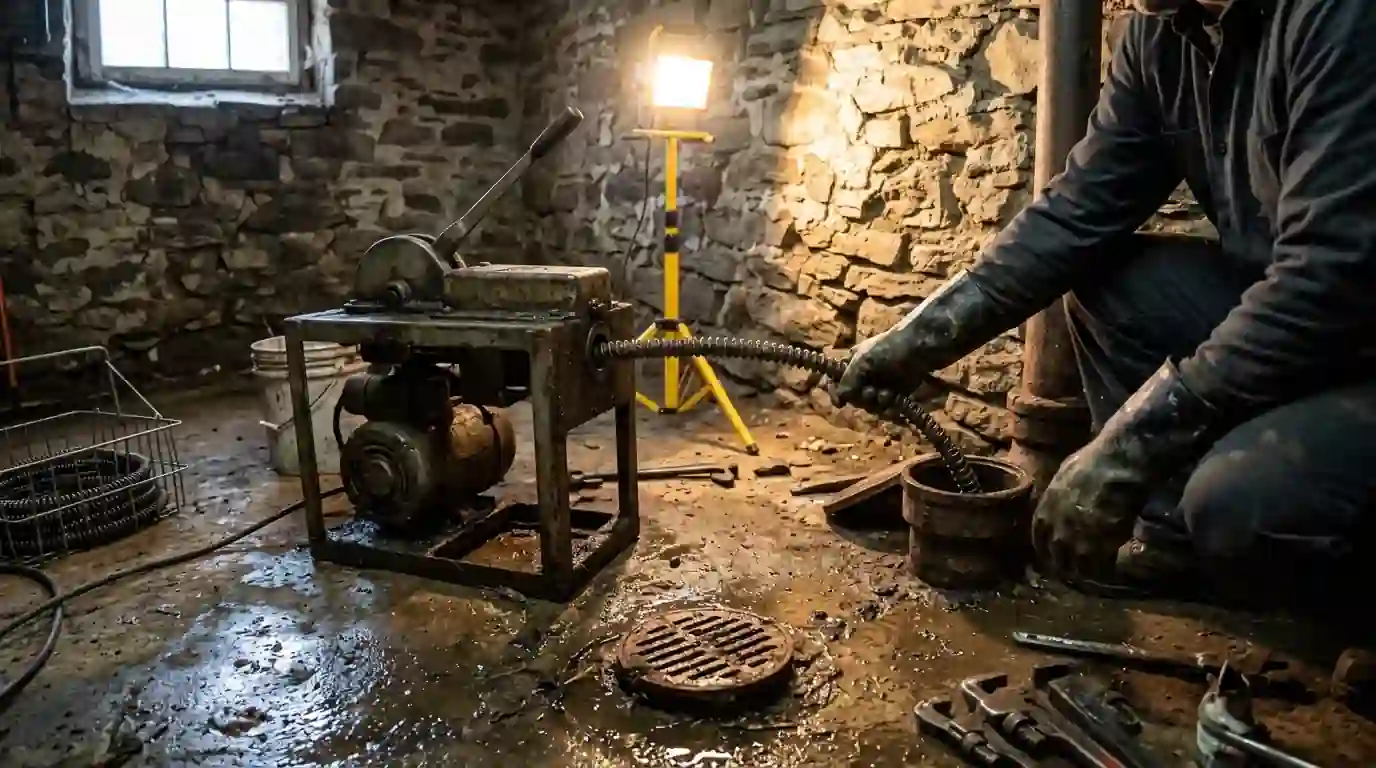
Main sewer line cleaning in Minneapolis clears the large pipe that carries all of a home's waste out to the city sewer. You need it when several fixtures back up at once, sewage rises in the basement floor drain, or toilets gurgle when the washer drains. A plumber runs a heavy cable machine with a root cutter through the main cleanout, opens the line, and confirms flow.
Main line clog or branch clog: how to tell
A clog in one sink only affects that sink. A main line clog affects the lowest drains in the house first, because waste backs up to the lowest opening. In most Minneapolis homes that's the basement floor drain, so the first sign is often water around the drain grate after a shower upstairs, a laundry load or a toilet flush.
A quick test helps. If running water in an upstairs sink sends water up the basement floor drain, or a toilet bubbles when the washer drains, the blockage is downstream of where those lines join. That's the building drain or the lateral to the street, and a small hand auger won't reach it.
What the heavy machine does in a four-inch line
Main lines in most houses are four-inch pipe, and many older Minneapolis homes still have cast iron inside and clay tile from the foundation out. We use a sectional or large drum machine with cable stiff enough to push the full length and a cutter blade sized close to the pipe diameter. That blade shears off roots and breaks up paper and waste packed against them.
We usually go in through the main cleanout, typically a capped tee or Y near where the drain leaves the front wall. If the cleanout plug is seized, which is common with old brass plugs set in cast iron, we may have to cut it out and fit a new one. Pulling a toilet is the fallback when no cleanout exists.
Why clearing the line is only half the answer
Once water is flowing, the real question is why it stopped. Roots at a clay joint, a sagging belly that collects paper, a root-choked connection at the city main, or a heavy load of wipes all look the same from the basement. What comes back on the cutter gives a clue: fine white roots, paper wads, grease or chunks of clay.
That's why PlumbTek recommends a camera look after any main line backup, especially a first one in a house you've just bought. If the line is in fair shape, cleaning may be all you need for a long while. If the camera shows broken pipe, you'll know before the next storm or holiday weekend backs it up again.
Warning signs your main sewer line is plugging up
These point to the main line, not a single fixture drain.
- Water around the floor drainGray water or sewage rising around the basement floor drain grate when upstairs fixtures run is the classic main line backup sign.
- Toilet bubbles when the washer drainsA toilet gurgling or the bowl level bouncing during the washer drain cycle means the two share a partly blocked line downstream.
- Every drain slow at onceWhen the kitchen, bathroom and tub all slow together, the blockage sits past the point where they join, in the main.
- Sewage at the lowest fixtureA basement shower, toilet or laundry tub filling with dirty water is the house telling you the main can't take more flow.
- Wet ground near the cleanoutWater seeping from around the cleanout cap or a damp floor near it can mean pressure from a blocked line pushing back.
How we clear a backed-up main sewer line
Stop the water coming in
We ask everyone in the house to stop running water, flushing and laundry, so the backup doesn't get worse while we set up.
Open the main cleanout
We open the cleanout slowly over a bucket since the line may be full, then let the standing water drain off before cutting.
Run the cutter to the main
The machine drives the cutter out to the city main, clearing roots and debris along the way, and we note where the cable meets resistance.
Flush and confirm flow
We run water from several fixtures at once, watching the cleanout and floor drain, to make sure the line carries a full load.
Clean up and recommend
We clean the work area, sanitize around the drain, and tell you whether a camera look or repair should come next.
Main sewer line cleaning costs in the metro
Main line work costs more than a sink clog because of the heavier machine and longer run. Your house sets the final number, and the plumber explains it before starting.
| Job | Typical range | What moves the price |
|---|---|---|
| Main line cabled through an open cleanout | $268 to $497 | Length to the city main and density of roots |
| Main line cleared by pulling a toilet | $389 to $638 | Toilet removal, new wax ring and reset included |
| Seized cleanout plug cut and replaced | $143 to $317 | Plug type and condition of the cast iron fitting |
| After-hours main line backup | $412 to $786 | Night, weekend or holiday call and backup severity |
What changes the number
- Whether there's a usable cleanout or the line has to be reached through a toilet.
- How dense the roots are and how far out the blockage sits.
- Whether the call comes during regular hours or overnight, weekends and holidays.
- Cleanup needed around the floor drain after sewage has come up.
- Adding a camera inspection on the same visit to find the cause.
Ranges reflect typical Twin Cities jobs in 2026. Your price is explained before work starts. Compare other jobs in the PlumbTek price guide.
What to do in the first hour of a sewer backup
These steps limit damage and keep everyone safe until the line is clear.
- Stop all water use in the house, including toilets, showers, dishwasher and washer.
- Keep children and pets away from the basement and any sewage water.
- Move boxes, rugs and anything absorbent away from the floor drain area.
- Do not pour chemical openers into the floor drain or cleanout.
- Wear rubber gloves and boots if you must walk through wet areas.
- Find the main cleanout and clear space around it for the machine.
- Take photos of the water and any damaged belongings for your records.
- Call (612) 254-6294; the line is answered around the clock.
Why Minneapolis main lines back up when they do
Backups cluster around a few moments in Twin Cities homes. Late summer and fall are heavy root seasons, when trees push hard for water through clay joints. Thanksgiving and other holidays load the line with grease and extra guests. Heavy spring rain raises groundwater, which can seep into cracked laterals and add flow the pipe can't handle.
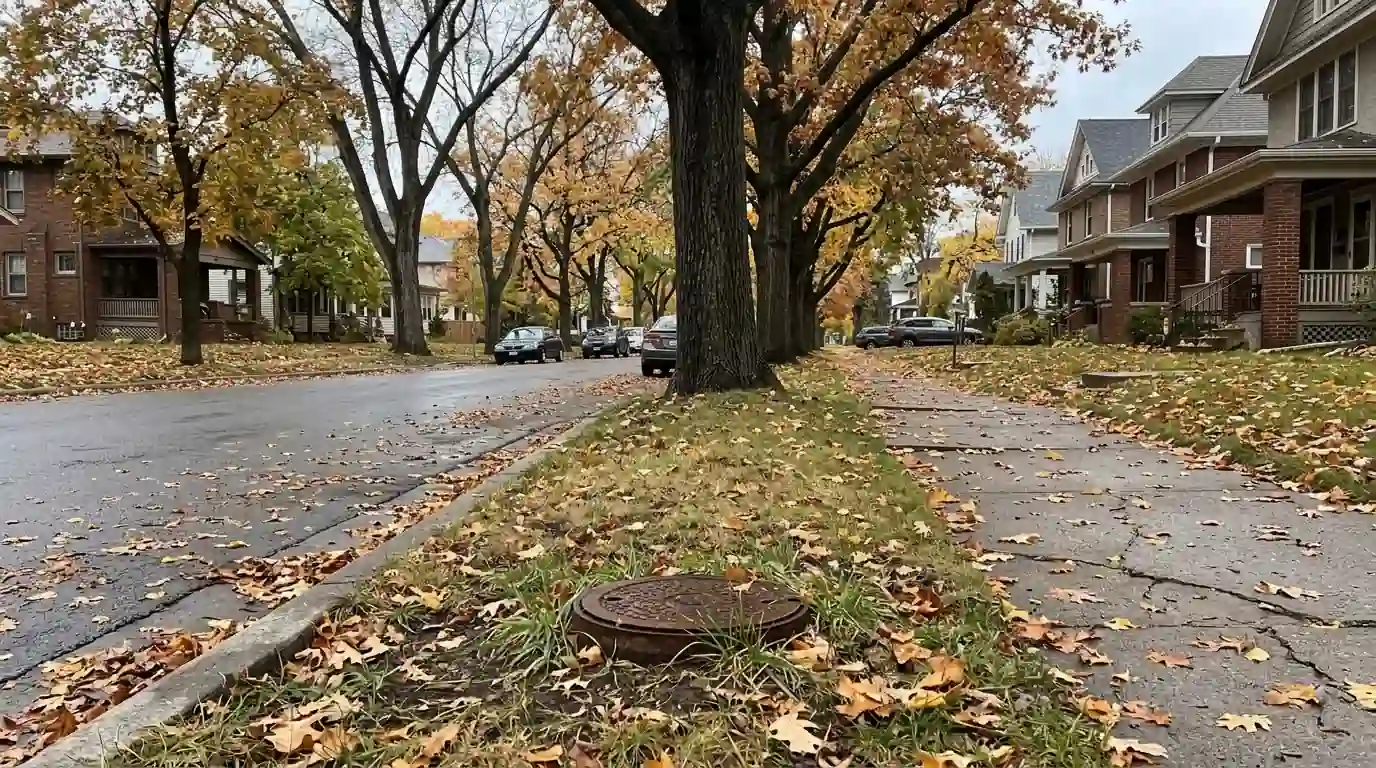
Older blocks in Northeast, Bryn Mawr and Saint Paul's West Seventh often have laterals that run under big boulevard trees on the way to the main in the street. Houses on corner lots or set far back from the street have longer laterals with more joints, so more spots where roots or settling can start.