Whole-house repiping in Minneapolis, the short answer
Whole-house repiping in Minneapolis replaces every water supply line in a home, from the main shut-off to each fixture, usually swapping old galvanized steel or failing copper for PEX or new copper. You need it when corroded pipe causes low pressure everywhere, rusty water, or repeated leaks. Most homes are repiped in a few days, with water restored at the end of each day.
Why galvanized pipe eventually has to go
Galvanized steel was the standard supply pipe in Twin Cities homes for decades. Its zinc coating wears away over time, and the steel underneath rusts from the inside. The rust builds up as scale, shrinking the opening until a three-quarter-inch pipe flows like a straw. That's why the second-floor shower dies when someone runs the kitchen tap.
The scale also breaks loose and colors the water, and the thinned threads at every joint start to weep. Patching one leak at a time stops making sense once the whole system is at the same age and condition. Replacing everything at once costs less than chasing failures for years, and you get full pressure back.
PEX or copper for a repipe?
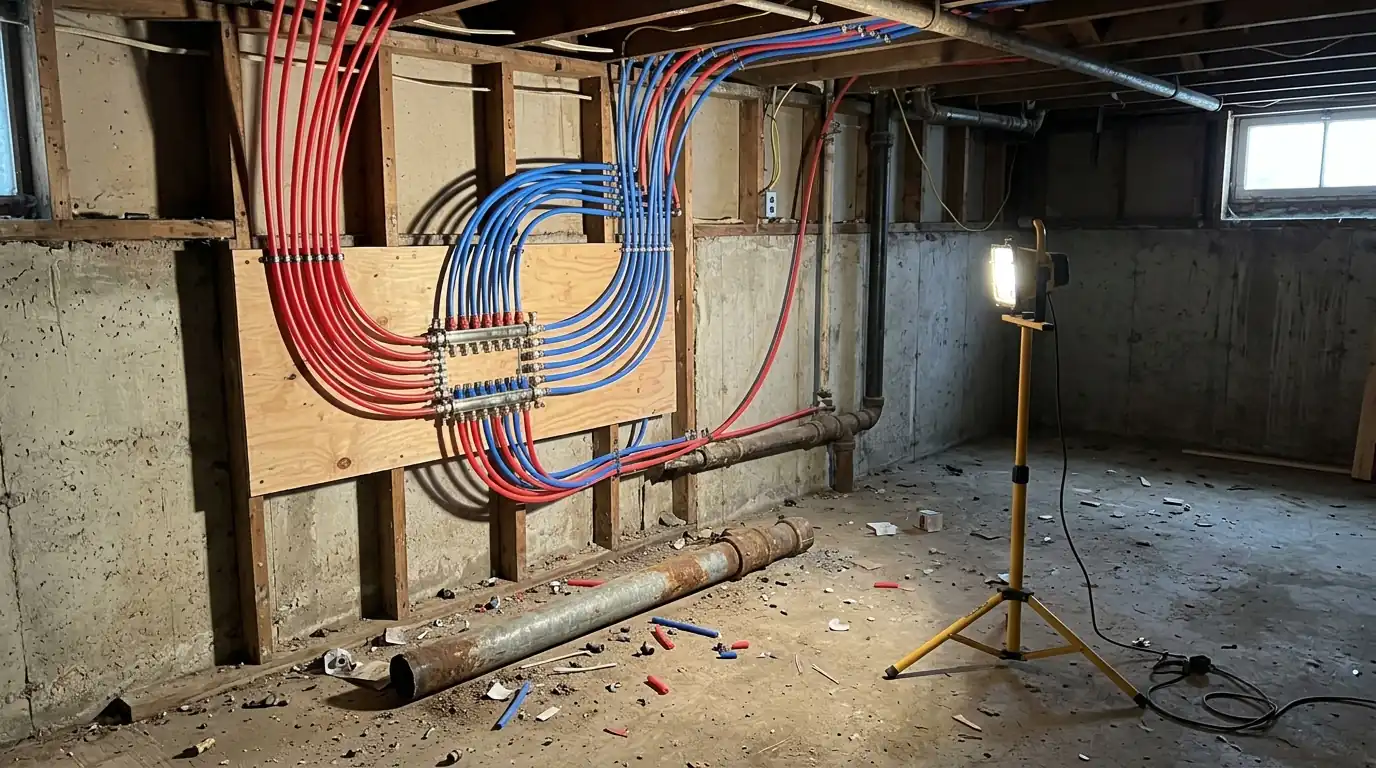
Most Minneapolis repipes today use PEX. It's flexible, so it snakes through walls and joist bays with fewer openings, it handles freezing better than copper, and a home-run manifold gives every fixture its own shut-off. PEX costs less in material and labor, and it doesn't pit or scale the way older metal pipe does.
Copper still makes sense for exposed runs, for owners who prefer metal, or where a historic house's inspector or buyer expects it. Type L copper is durable and handles heat well near a water heater. Many repipes mix the two, using copper at the water heater and meter and PEX through the walls.
Living in the house while it's repiped
You don't have to move out. When PlumbTek repipes a home, the new system is run alongside the old one, with fixtures switched over a few at a time. Water is usually off for part of each day and back on by evening. The kitchen and at least one bathroom come back first.
Wall openings are planned to be small and few, often inside closets, behind access panels, or below fixtures, with the routes mapped from the basement up. Drywall and plaster patching is a separate step after the inspection. PlumbTek pulls the permits the job needs, and the city inspector checks the new pipe before walls close.
When repairs stop making sense and a repipe does
One of these alone may be a repair; several together usually point to repiping.
- Low pressure at every fixtureWhen every faucet in the house runs weak, not just one, the main supply pipes are likely clogged with rust or scale.
- Brown or rusty waterDiscolored water that shows up in the morning or after a trip, then fades, is rust from inside aging galvanized pipe.
- Leaks in different placesTwo or three leaks in a year at different joints means the whole system has reached the end of its useful life.
- Galvanized pipe still in useGray threaded pipe with fittings, especially if it's original to a pre-1960 house, is near or past its expected life.
- Patchwork of pipe typesA mix of galvanized, copper and plastic from decades of spot repairs means lots of transition joints that can fail.
- Planning a big remodelIf walls are already opening for a kitchen or bath remodel, repiping now costs far less than coming back later.
How a whole-house repipe runs, day by day
Map the house
The plumber walks every fixture and the basement, plans pipe routes, marks where small openings are needed, and explains the price before starting.
Pull permits and protect
Permits are pulled, floors and furniture near work areas are covered, and the plan for water-off hours each day is set.
Run the new trunk
New main lines go in from the shut-off valve, often with a manifold, while the old system keeps the house supplied.
Switch fixtures over
Each fixture is connected to the new lines with new stop valves, a few at a time, so water returns by evening.
Inspect and test
The system is pressure tested, the city inspector checks it, then the old pipe is cut out or abandoned and openings are ready for patching.
What whole-house repiping costs in Minneapolis
House size, number of bathrooms and wall access make the biggest difference. Your house sets the final number, and it is explained up front.
| Job | Typical range | What moves the price |
|---|---|---|
| Repipe a one-bath bungalow in PEX | $4,870 to $7,630 | Fixture count, basement access, and plaster versus drywall |
| Repipe a two-story, two-bath home in PEX | $7,240 to $11,860 | Second-floor access, number of fixtures, and manifold layout |
| Repipe a two-bath home in copper | $9,680 to $15,920 | Copper price, soldered joints, and more wall openings |
| Repipe with main shut-off and pressure valve replacement | $5,470 to $12,740 | Size of house plus added valves at the meter |
What changes the number
- Each fixture adds connection time, new stop valves and pipe length.
- Plaster and lath walls take longer to open and patch than drywall.
- Copper costs more than PEX in both material and labor.
- Finished basements remove the easy routing path and add access work.
- Permit and inspection fees are part of the job; wall patching is usually separate.
Ranges reflect typical Twin Cities jobs in 2026. Your price is explained before work starts. Compare other jobs in the PlumbTek price guide.
PEX vs copper repiping in a Minnesota house
| Point | PEX | Copper |
|---|---|---|
| Wall openings needed | Fewer, flexible pipe bends through bays | More, rigid pipe needs straight access |
| Freeze tolerance | Better, expands without splitting as often | Lower, splits more easily when frozen |
| Cost for the same house | Lower material and labor cost | Higher, often by a third or more |
| Shut-offs | Easy home-run manifold with a valve per fixture | Individual stops at each fixture |
| Exposure to sunlight | Must be shielded from UV | No UV concern |
| Hard well water | Resists scale well | Can pit with aggressive water |
Repiping old Minneapolis and Saint Paul houses
Foursquares and bungalows in Longfellow, Northeast, Hamline-Midway and the Saint Paul North End were mostly built with galvanized supply pipe. Many still have it, often with a section of copper added when a bathroom was remodeled. Those homes are prime repipe candidates, and their open basement ceilings make routing the new trunk lines easier.
Plaster walls are the main challenge. Plaster cracks if it's cut carelessly, so plumbers route through closets, along chases next to chimneys, and up from basement ceilings into first-floor walls. Second-floor bathrooms are often reached through the floor of a closet above or the ceiling below rather than through the bathroom walls themselves.