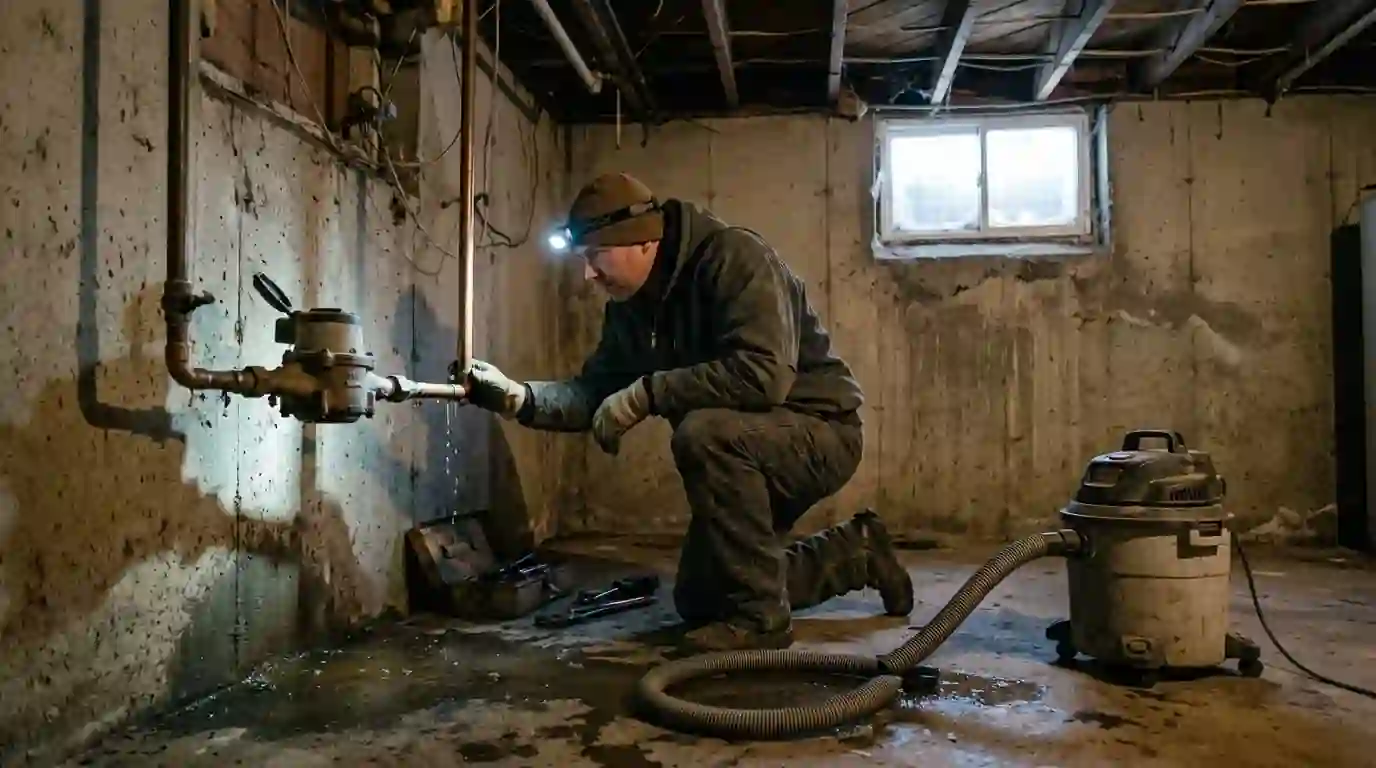
Emergency plumbing in Minneapolis, the short answer
An emergency plumber in Minneapolis handles problems that can't wait for business hours: a burst supply pipe, sewage coming up through the basement floor drain, a water heater leaking from the tank, or a house with no water at all. The phone is answered around the clock, urgent jobs are prioritized, and the price is explained before any work starts.
What counts as a plumbing emergency in a Twin Cities house?
Anything actively putting water where it shouldn't be counts. A split pipe in a ceiling, a supply hose that blew off a toilet, or a water heater leaking from the tank seam all get worse the longer they run. So does sewage rising through a basement floor drain, because that water carries bacteria into the concrete, carpet and drywall it touches.
Losing water entirely is an emergency too, especially in winter, when it usually points to a frozen service line or a frozen pipe in an outside wall. No hot water during a cold snap matters more here than in warmer states, since incoming water in January is cold enough that nobody showers comfortably without a working heater. A dripping faucet or a toilet that runs now and then can wait for a regular visit.
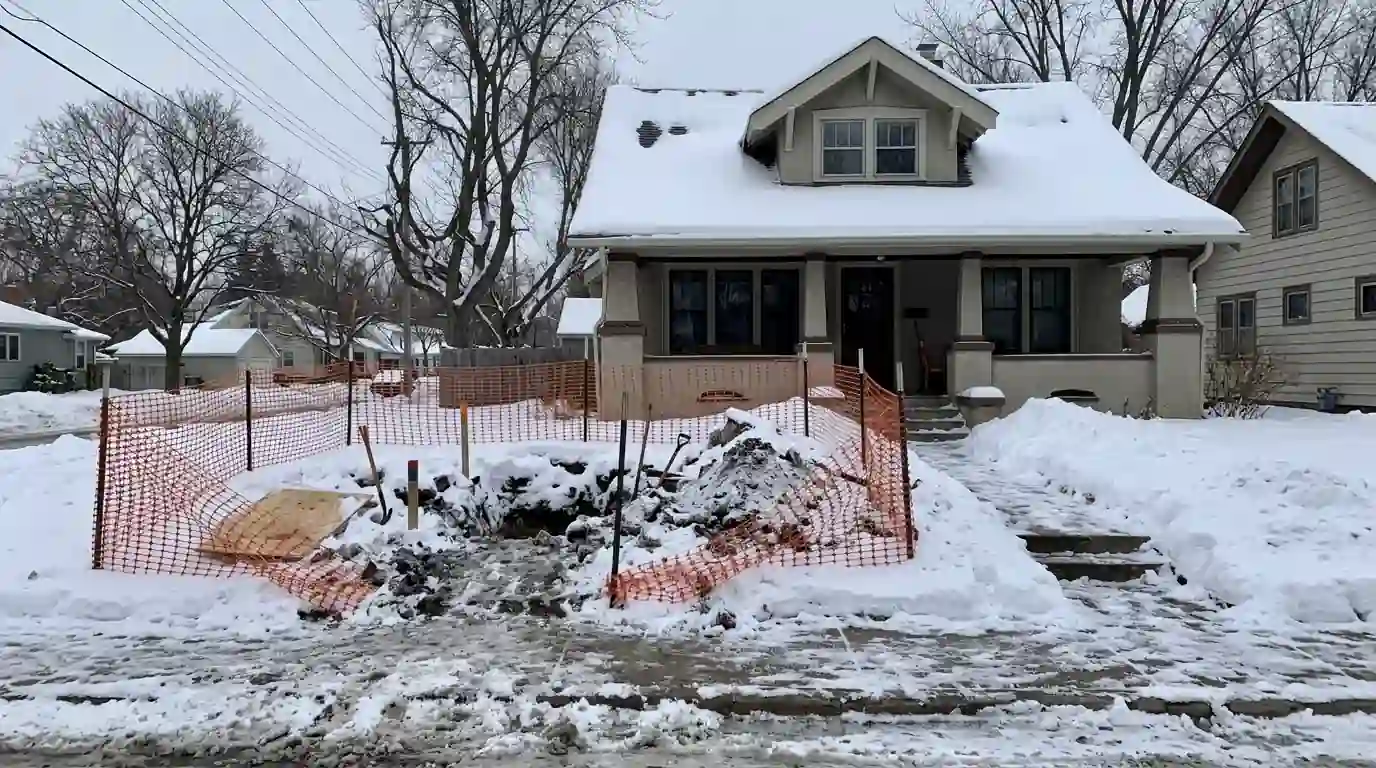
Stopping the water yourself before help arrives
Most Minneapolis houses have the main shut-off in the basement, on the wall facing the street, right beside the water meter. In older homes it's often a round-handled gate valve that hasn't moved in decades. Turn it clockwise firmly, but don't force it. A seized gate valve can snap its stem and leave you worse off than before.
Newer houses and remodels usually have a lever-handle ball valve that needs only a quarter turn, so the handle ends up crossways to the pipe. Once the main is off, open a basement faucet to bleed pressure out of the lines. If water is near outlets or the electrical panel, stay off the wet floor.
Why the cause matters more than the puddle
Stopping the water is step one. The real job is figuring out why it happened so it doesn't repeat next week. A burst pipe in an exterior wall means that wall is cold, and patching the split leaves the next freeze waiting. A floor drain backup usually traces to roots in a clay sewer lateral, which needs cutting and a camera look, not a plunger.
When PlumbTek shows up on an emergency call, the plumber checks the main valve, watches the meter for hidden flow, and opens only as much drywall as it takes to reach the damaged pipe. You get a plain explanation of what failed, what the permanent fix is, and whether it should happen that night or once things dry out.
Signs your plumbing problem can't wait until Monday
If any of these are happening right now, call instead of waiting it out.
- Water dripping from a ceilingA stain that keeps growing or starts dripping means a supply line or drain above has failed. Soaked drywall sags and can drop.
- Sewage coming up the floor drainDark water rising out of the basement floor drain when the washer drains or a toilet flushes points to a blocked main sewer lateral.
- No water at any faucetIn winter this is usually a frozen service line or a frozen pipe near the meter. Leave one faucet open and never use an open flame to thaw it.
- Water heater leaking from the tankWater pooling under the tank itself, not just at the relief valve pipe, means the steel liner has rusted through. It won't seal itself and can let go suddenly.
- Meter moving with everything offIf the small leak indicator on the water meter keeps turning while nothing runs, water is escaping somewhere you can't see yet.
What happens after you call at 2 a.m.
Talk it through first
Call (612) 254-6294 and describe what's happening. We help you find and close the shut-off valve, which often limits damage more than anything else.
Plumber arrives with stocked parts
The van carries copper, PEX, fittings, valves and a drain machine, so most emergency repairs get finished on the first visit instead of waiting for a supply house to open.
Isolate the failure
The plumber shuts down the affected branch, checks the meter for hidden flow, and opens walls or ceilings only where needed to reach the damaged pipe or fitting.
Price explained, then the repair
Before any repair begins, you hear what failed, what the fix involves and what it costs. Nothing gets done until you've agreed to it.
Restore water and recheck
Water goes back on slowly, every joint is checked under full pressure, and you get notes and photos for your insurance adjuster.
How much does a night or weekend plumber cost in the Twin Cities?
After-hours work runs higher than a weekday visit, mostly because of the off-hours trip. What you pay depends on the specifics of the job, and the plumber explains it before starting.
| Job | Typical range | What moves the price |
|---|---|---|
| After-hours emergency visit and diagnosis | $187 to $346 | Time of night, holiday, and distance from the nearest office |
| Stop and repair a burst supply pipe | $318 to $864 | Pipe material, ceiling or wall access, and number of breaks |
| Clear a main sewer backup | $289 to $617 | Cleanout access, roots in clay tile, distance to the city main |
| Emergency water heater replacement | $1,980 to $3,640 | Gas or electric, tank size, venting and code updates |
What changes the number
- Access drives labor most: a pipe in an open basement ceiling takes a fraction of the time of one behind tile.
- Old materials add time, because galvanized threads and lead joints rarely come apart cleanly.
- Some emergency work, such as a water heater swap, needs a permit, and PlumbTek pulls the ones the job requires.
- Drywall, flooring and drying out the space are separate from the plumbing repair itself.
Ranges reflect typical Twin Cities jobs in 2026. Your price is explained before work starts. Compare other jobs in the PlumbTek price guide.
Before the plumber gets there: a short checklist
These steps limit damage and make the repair go faster once help is at the door.
- Close the main shut-off valve next to the water meter
- Open the lowest faucet in the house to drain the lines
- Switch off the breaker for an electric water heater if the lines are drained
- Move rugs, boxes and electronics away from the wet area
- Photograph the damage before you start cleaning up
- Clear a path to the basement, the meter and any access panels
- Stop using sinks, tubs and the washer if the floor drain is backing up
Why Minneapolis plumbing emergencies follow the seasons
January and February bring the frozen and burst pipe calls, usually in kitchen sink walls, rim joists, attached garages and the three-season porches added to so many 1920s bungalows in Longfellow, Nokomis and Northeast. The pipe freezes during the cold snap, then splits open when the weather breaks and the ice inside lets go.
Spring thaw and summer storms move the trouble to the basement. Heavy rain overloads old clay tile sewer laterals, roots that grew in through the joints catch debris, and floor drains back up. Out past the suburbs, on private wells around Big Lake and Elk River, a failed well pump or pressure switch can leave a house dry at any hour.