Main shut-off valve replacement in Minneapolis, the short answer
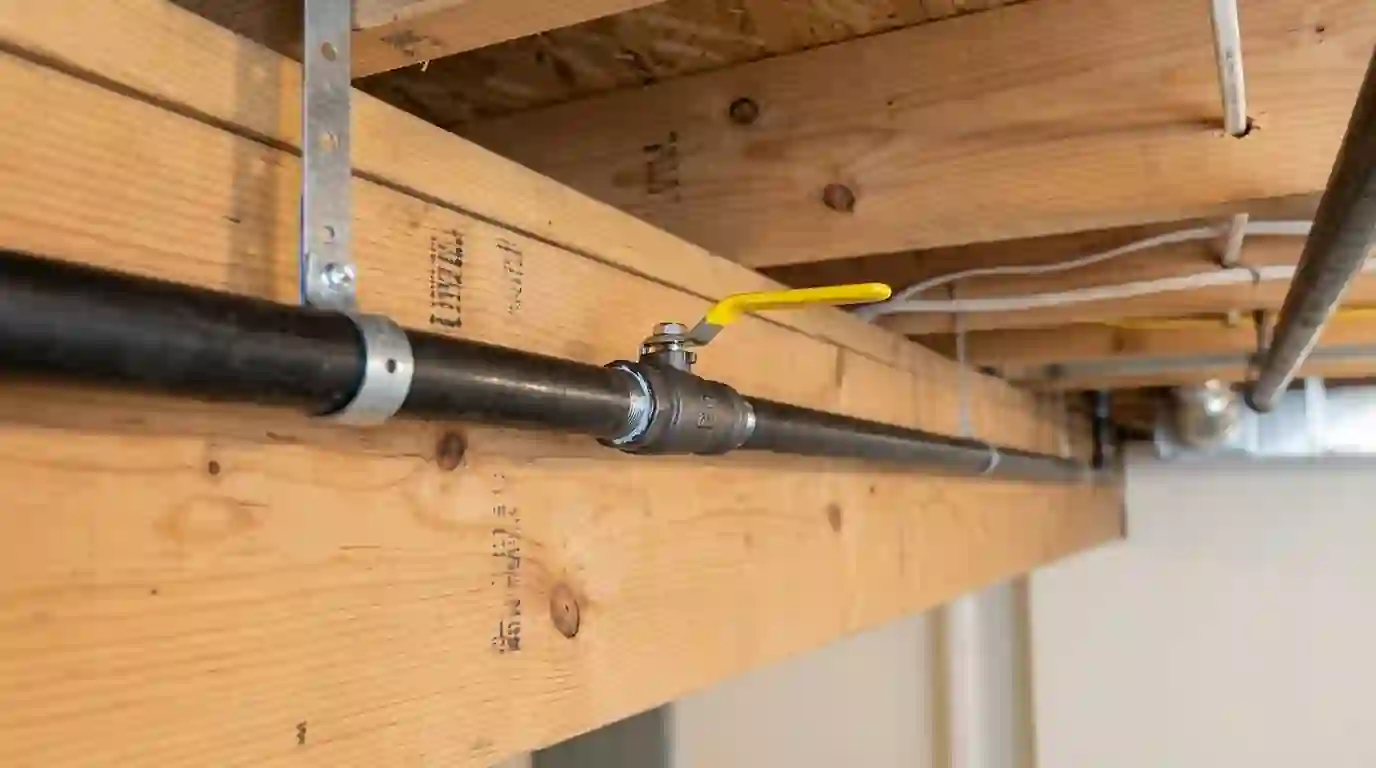
Main shut-off valve replacement in Minneapolis swaps the valve that controls all water entering the house, usually an old gate valve near the basement meter, for a modern full-port ball valve. You need it when the valve is seized, leaks at the stem, or won't stop the flow fully. It's a short job, but it needs the water shut off at the curb stop first.
Gate valves seize, ball valves don't
Most older Minneapolis homes have a gate valve as the main shut-off: a round wheel handle that turns a threaded stem, lowering a brass wedge into the water path. After decades without use, minerals and corrosion lock the stem in place. Even when it turns, the wedge often doesn't seat fully, so water keeps trickling past.
A full-port ball valve works differently. A quarter turn of the lever rotates a ball with a hole through it, and the water stops completely. There's no long threaded stem to seize, and the full-port design means no flow restriction when open. It's the standard for main shut-offs in new work.
Why the curb stop matters for this job
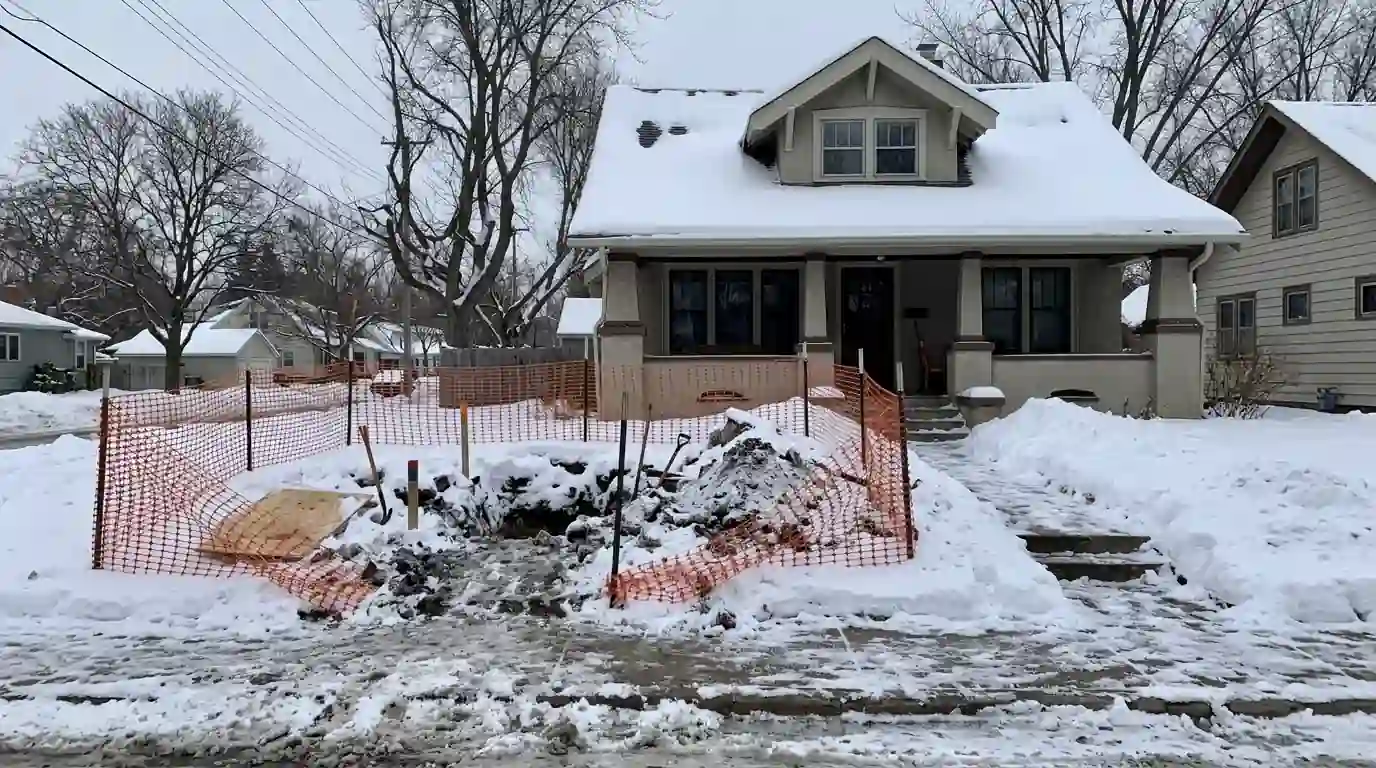
To replace the main valve, the water has to be stopped before it reaches the valve. That means closing the curb stop, the buried valve near the street, usually under a small metal cap in the boulevard or sidewalk. In many cities, only the water utility is allowed to operate it, so the work is scheduled around their visit.
If the curb stop itself is seized or broken, the utility may have to repair it first, or shut the water at the main in the street. When PlumbTek schedules a main valve replacement, the plumber coordinates the curb stop shut-off so the house is only without water for the short time the swap takes.
Adding a few upgrades while the water is off
Since the water is off at the street anyway, it's the right time to look at the meter piping. Many plumbers add a second valve on the house side of the meter, so the meter can be serviced without the curb stop. A pressure reducing valve can go in here if street pressure runs high, and a hose bib nearby makes draining the system easier.
If the pipe from the wall to the meter is lead or rusted galvanized, it's worth replacing that short section at the same time. And a simple tag on the new valve, so anyone in the house knows which one shuts everything off, costs nothing and helps a lot during an emergency.
How to tell your main water valve needs replacing
Test your main valve once a year; these signs mean it's time for a new one.
- Handle won't turnA wheel handle that won't move with firm hand pressure is seized. Forcing it with a wrench risks snapping the stem.
- Water still runs when closedIf faucets keep running after the valve is fully closed, the gate isn't seating and the valve can't do its job.
- Drip at the stemWater weeping around the stem or packing nut means the seal has worn out. Tightening sometimes helps briefly, but not for long.
- Green or white crust on the bodyMineral buildup or corrosion on the valve body points to a slow leak that's been going on for a while.
- Handle spins freelyA handle that turns without resistance has likely separated from the stem inside, so the valve no longer opens or closes.
- Inspector flagged itA Truth in Sale of Housing evaluator or home inspector may flag a seized or leaking main valve before a sale.
How a main shut-off valve gets swapped
Check the valve and meter
The plumber looks at the valve type, pipe material at the wall, and meter setup, then explains the replacement and its price.
Schedule the curb stop
The water utility is contacted to close the curb stop, or the plumber closes it where the city allows.
Drain and remove
With water off at the street, lines are drained and the old valve is cut out or unthreaded from the pipe.
Install the ball valve
A full-port brass ball valve goes in, soldered, pressed or threaded to match the pipe, often with a second valve after the meter.
Restore and test
Water comes back on slowly, the valve is opened and closed several times, and every joint is checked for leaks.
Main shut-off valve replacement prices in the Twin Cities
Most of the cost is the setup, not the valve. Permits and site access can move the total, and the plumber explains it before starting.
| Job | Typical range | What moves the price |
|---|---|---|
| Replace main valve with full-port ball valve | $287 to $593 | Pipe material, joint type, and space around the meter |
| Main valve plus second valve after the meter | $418 to $761 | Added valve, fittings, and meter connection type |
| Main valve plus pressure reducing valve | $674 to $1,193 | Valve size, street pressure, and room to fit it |
| Main valve plus short lead or galvanized section | $543 to $1,128 | Length of old pipe between the wall and the meter |
What changes the number
- A seized or broken curb stop can add a separate repair before the valve can be changed.
- Galvanized and lead pipe at the wall take longer to transition than copper.
- Tight spaces behind furnaces, shelves or finished walls slow the work.
- Some cities charge a fee for the utility to operate the curb stop.
- Adding valves or a pressure reducing valve while the water is off saves a second shut-off later.
Ranges reflect typical Twin Cities jobs in 2026. Your price is explained before work starts. Compare other jobs in the PlumbTek price guide.
Habits that keep your main shut-off ready to use
- Exercise it once a year. Close and reopen the main valve each fall. A valve that's turned regularly keeps moving smoothly, and you'll spot trouble before an emergency.
- Keep the path clear. Don't stack boxes, shelving or storage in front of the meter. In a flood, you want to reach the valve in seconds.
- Label it clearly. Tag the main valve so every adult in the house, and a house sitter, knows which one shuts off the whole water supply.
- Know where the curb stop is. Find the small metal cap in the boulevard or yard. If the main valve fails, the utility needs to get to it fast.
- Don't force a stuck valve. If the handle won't turn by hand, stop. A snapped stem can leave you with a flowing pipe and no way to close it.
Main valves in Minneapolis basements, old and new
Homes across South Minneapolis, Northeast and Saint Paul's Highland Park often still have the original gate valve from when the house was built or when copper replaced the old line. Many have never been closed since. They sit in damp basements, often behind a furnace or under a stairway, quietly seizing until the day someone needs them.
Newer suburban homes in Maple Grove, Shakopee and Woodbury usually have ball valves already, but even those can fail if they were cheap reduced-port models. On wells around Big Lake and Elk River, the main shut-off sits near the pressure tank instead of a meter, and the same valve swap applies.