Water service line replacement in Minneapolis, the short answer
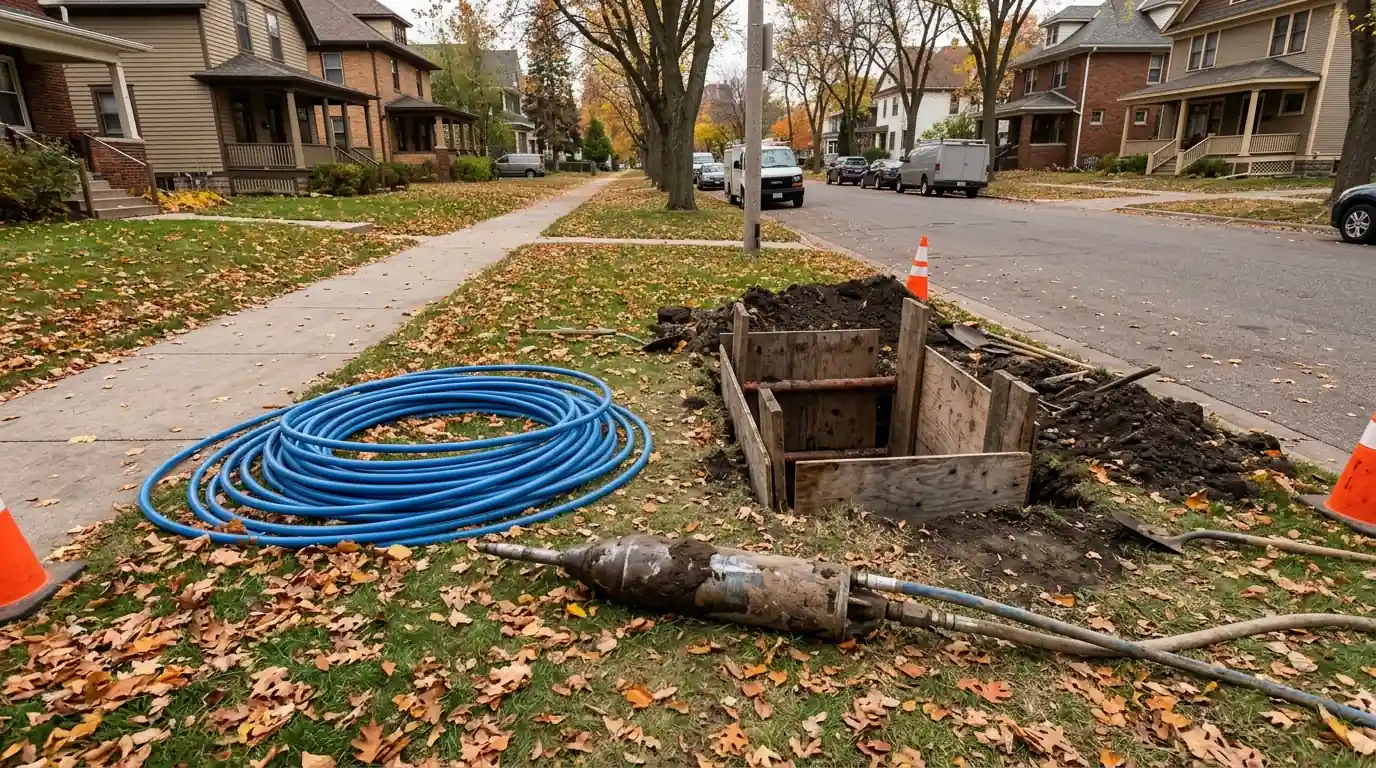
Water service line replacement in Minneapolis installs a brand-new buried pipe from the curb stop at the street to the meter in your basement, replacing old galvanized, undersized or repeatedly leaking pipe. You need it when the existing line is past its life, restricts flow to the house, or can't be trusted after several repairs. Many replacements use trenchless pulling or boring with just two small pits.
Pulling a new line through the ground instead of digging a trench
Open trenching used to be the only way: dig from the street to the foundation, deep enough to stay below the frost, and haul the old pipe out. It still works and sometimes makes sense, but it tears up the whole front yard, the boulevard, and often a sidewalk or driveway.
Trenchless methods need just two pits, one at the curb stop and one at the foundation. With pipe bursting or pulling, a cable is threaded through the old line and the new pipe is pulled in behind it. With directional boring, a tool tunnels a fresh path underground. Either way, the lawn, trees and concrete above mostly stay put.
Going up a pipe size while you're at it
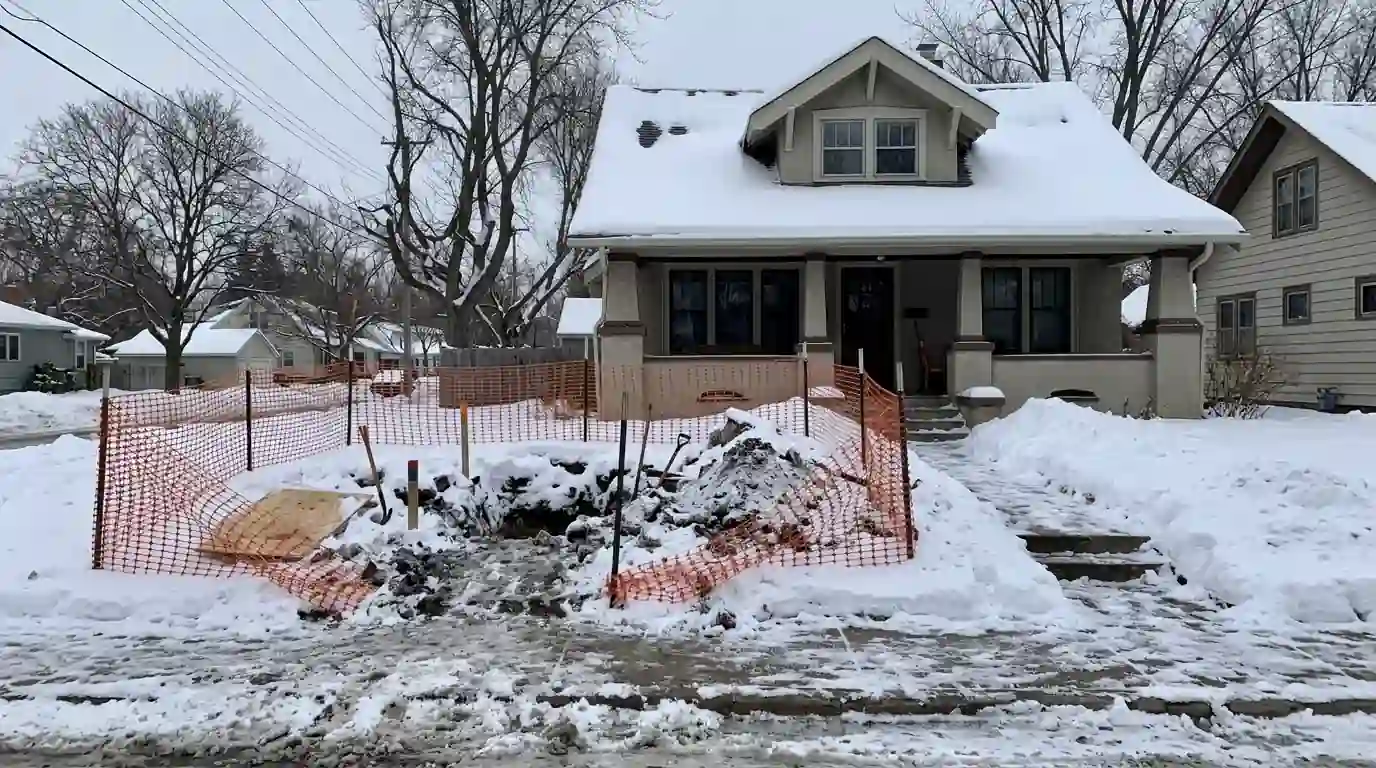
Many older Minneapolis homes were built with a three-quarter-inch service line, sized for one bathroom and a kitchen. Add a second bath, a modern washer, a sprinkler system and a larger water heater, and that line can't keep up, especially if rust has narrowed it further.
Replacing the line is the cheapest moment to upsize to one inch. The difference is noticeable when two showers run at once. A larger service often needs a matching meter and curb stop, which means coordinating with the water utility. When PlumbTek plans a replacement, the plumber works out whether upsizing makes sense for the fixtures you have and plan to add.
Coordinating with the water utility and the city
A service line replacement touches the city's side at the curb stop and sometimes at the main connection. Each city has its own rules on who does the tap, who replaces the curb stop, and when the water can be shut off at the street. Permits are required, and the work is inspected before backfilling.
PlumbTek pulls the permits the job needs and coordinates the shut-off with the utility. The meter is reset or replaced inside, the main shut-off valve is usually replaced at the same time, and the new line is flushed before the house goes back into normal use.
When a water service needs full replacement, not another patch
These conditions make a new line the better long-term choice.
- Galvanized steel service pipeGalvanized lines rust from the inside and outside, shrinking flow and leaking at joints. Most are well past their expected life.
- Second leak in a few yearsOne leak can be bad luck. Two in different places means the pipe itself is failing along its length.
- Weak flow at the meterIf pressure is fine at the street but flow at the basement meter is poor, the service line itself is restricting it.
- Lead pipe at the meterDull gray pipe that scratches shiny and doesn't attract a magnet is lead and should be replaced entirely.
- Remodel adding bathroomsAdding fixtures to a house on a small, old line often leaves the new bathroom with poor pressure.
- Seized curb stopA curb stop that won't turn makes emergency shut-off impossible and is often replaced along with the line.
How a water service replacement is planned and built
Survey the old line
The plumber identifies pipe material at the meter, traces the route, checks the curb stop, and measures pressure and flow at the house.
Choose the method
Trenchless pulling, boring, or open trenching is chosen based on soil, depth, obstacles and the old pipe, with the price explained first.
Permits and locates
Permits are pulled, Gopher State One Call marks utilities, and the street shut-off is scheduled with the water utility.
Install the new line
Pits are dug at both ends, the new copper or approved plastic pipe goes in, and connections are made at the curb stop and foundation.
Inspect, flush and restore
The city inspects, the line is flushed and pressure tested, the meter and main valve are reset, and pits are backfilled.
Water service line replacement prices in the metro
Line length, method and what sits on top of the route drive the cost. Parts, access and labor time decide the final figure, and you approve it before anything is cut or replaced.
| Job | Typical range | What moves the price |
|---|---|---|
| Trenchless service replacement, typical city lot | $4,180 to $7,640 | Line length, soil, and pit depth at each end |
| Open trench replacement | $5,370 to $10,280 | Trench length, depth, and landscape or concrete restoration |
| Upsize from three-quarter to one-inch service | $4,760 to $8,930 | New curb stop, meter fitting, and utility coordination |
| Curb stop replacement only | $1,240 to $2,670 | Depth, boulevard surface, and city requirements |
What changes the number
- Longer setbacks from the street mean more pipe and longer pulls or trenches.
- Rocky ground, tree roots and other buried utilities can rule out trenchless methods.
- Some cities send utility workers to handle the main tap or curb stop, which affects scheduling and cost.
- Winter work needs frost thawing or breaking before excavation.
- Permit and inspection fees vary by city and are included in the explained price.
- Replacing the indoor main shut-off valve at the same time adds a small cost but saves a later visit.
Ranges reflect typical Twin Cities jobs in 2026. Your price is explained before work starts. Compare other jobs in the PlumbTek price guide.
Getting the most out of a new water service
- Replace the main valve too. Swap the old gate valve at the meter for a full-port ball valve while the water is already off. It's a small add-on that makes future shut-offs easy.
- Ask about upsizing. If you have or plan two or more bathrooms, a one-inch line usually pays off in better flow when fixtures run at once.
- Add a pressure reducing valve if needed. A new, larger line can bring higher street pressure into the house. A reducing valve protects fixtures and appliances.
- Keep the paperwork. Save the permit and inspection records. Buyers and Truth in Sale of Housing evaluators look for documented service line work.
- Flush before drinking. Run cold water from the lowest faucet for several minutes after the line goes live to clear debris from installation.
Service lines under Minneapolis boulevards and Saint Paul alleys
Older Minneapolis streets lined with mature elms, lindens and maples present a real challenge. Roots spread under the boulevard, right where the service line runs, and digging there can damage trees the city wants protected. Trenchless pulling is often the better choice on those blocks because it avoids cutting through root zones.
Saint Paul and some inner-ring suburbs have homes where the line runs from an alley or a side street instead of the front. Corner lots, retaining walls and steep front yards near the river bluffs complicate routing. In outer suburbs on wells, the equivalent job is replacing the line from the well head to the house.