Garbage disposal repair in Minneapolis, the short answer
Garbage disposal repair in Minneapolis covers clearing jammed flywheels, resetting tripped motors, fixing leaks at the sink flange, dishwasher inlet or discharge tube, and replacing disposals that have failed. You need it when the unit hums without grinding, won't turn on, leaks, or backs water into the other sink bowl. The plumber tells you plainly whether repair or replacement is the better spend.
A humming disposal is usually jammed, not dead
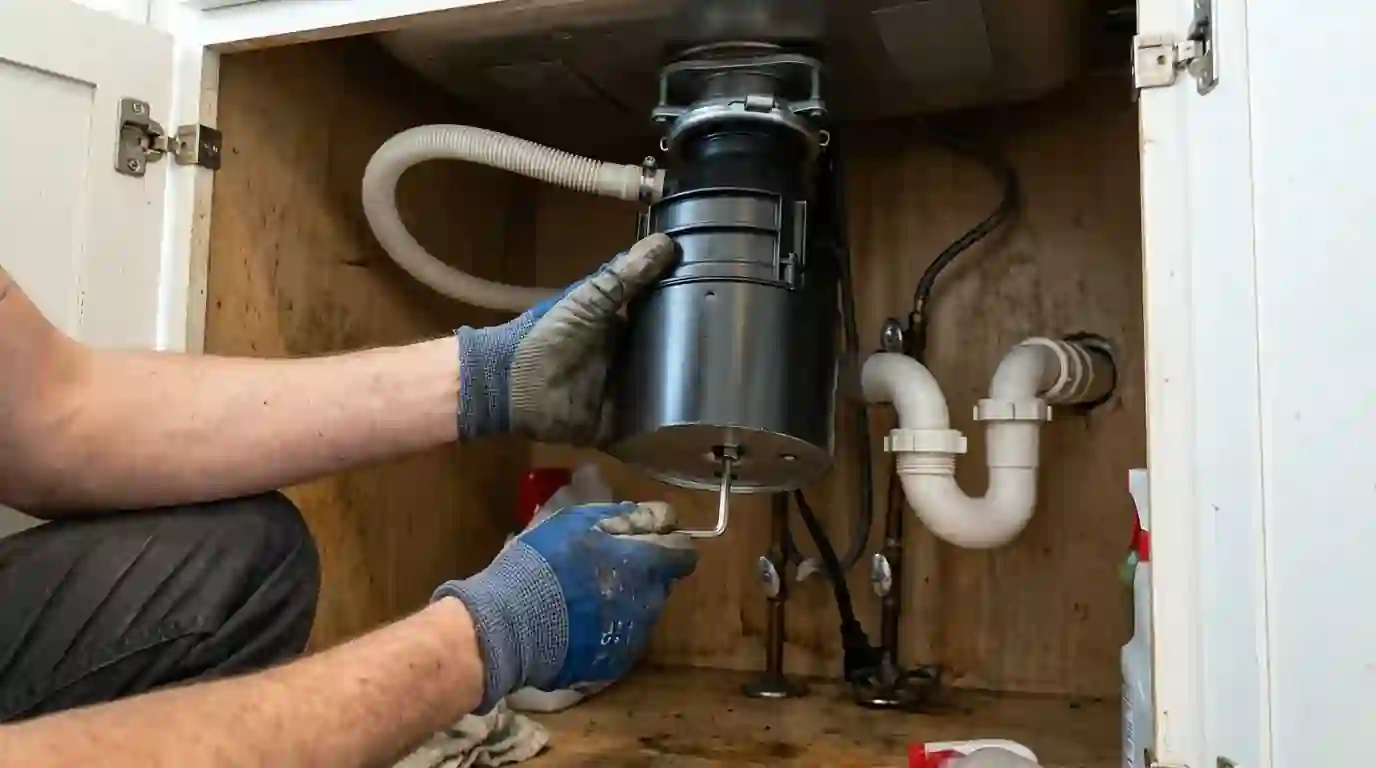
When you hear a hum and nothing turns, the motor is getting power but the flywheel is stuck. A fruit pit, bottle cap, bone fragment or a wad of fibrous peels wedges between the lugs and the grind ring. Leave it humming and the motor overheats and trips the red reset button on the bottom of the unit.
Most disposals have a hex socket in the center of the bottom. With power off at the switch, a quarter-inch hex key turned back and forth frees the flywheel. Then the object can be pulled out from above with tongs, never with fingers. If it frees up but jams again right away, the grind ring or impellers may be damaged.
Where disposals leak and what each leak means
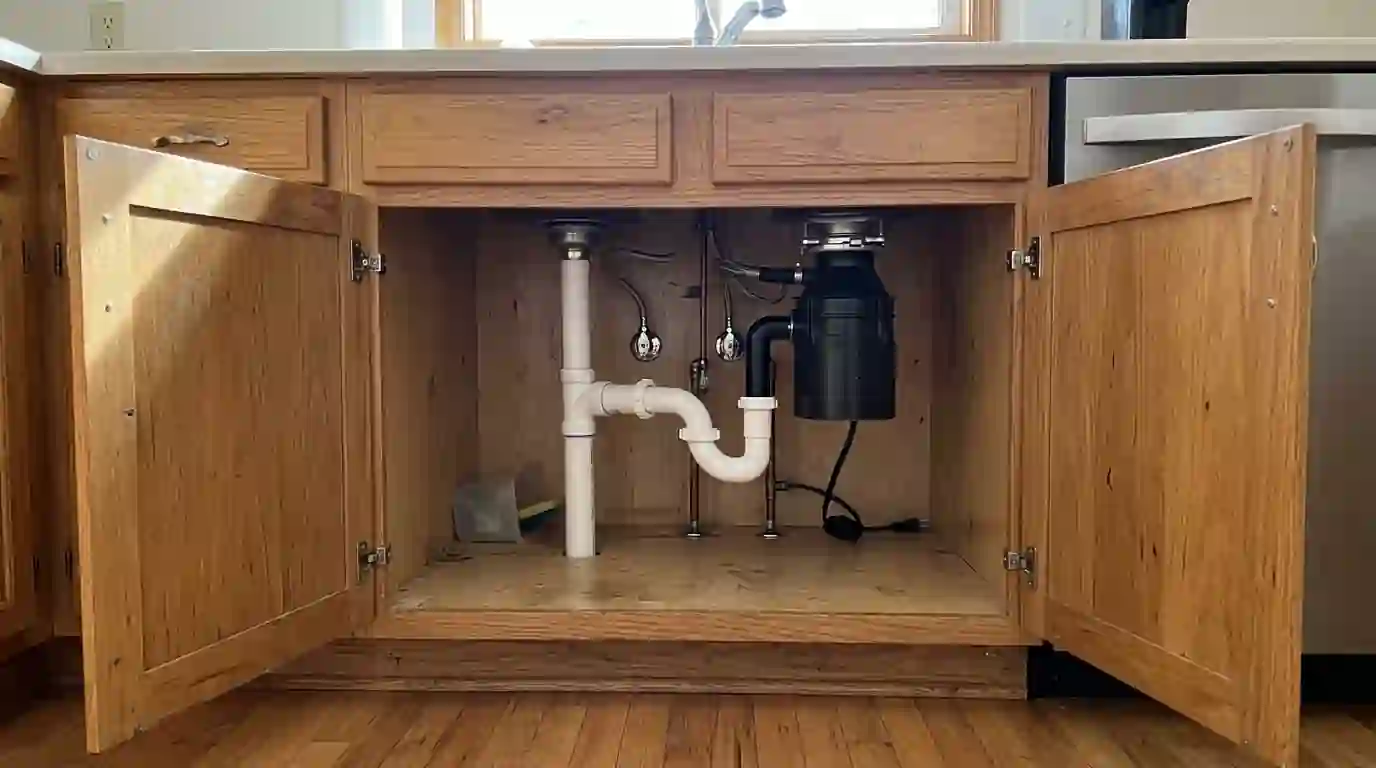
A leak at the top, where the disposal meets the sink, means the sink flange putty has dried out or the mounting ring has loosened. That's repairable. A leak from the dishwasher inlet on the side usually comes from a loose hose clamp. A leak at the discharge tube points to a worn gasket where the elbow bolts to the unit.
A drip from the bottom of the housing is a different story. That means the internal seal has failed and water is reaching the motor. There's no practical repair for that, and the unit needs replacing. PlumbTek dries the unit off and runs water to see exactly which connection is leaking before suggesting anything.
When replacing the disposal is the smarter fix
Disposals don't last forever. Units that leak from the body, hum even after the flywheel turns freely, or have rusted housings are worth replacing. So are bargain models that jam constantly on everyday scraps. A sturdier motor with stainless grind parts handles a busy kitchen with far fewer jams.
Replacement often means changing the mounting assembly, discharge elbow and dishwasher connection too, since brands use different mounts. The plumber matches the new unit to your sink depth so the discharge lines up with the trap. If you have a dishwasher, the knockout plug inside the inlet is removed, which is a step people often miss on DIY swaps.
Signs your disposal needs repair or a new unit
Some of these you can clear yourself, and others mean the unit is near the end.
- Hums but won't spinThe flywheel is jammed by something hard. Freeing it from the bottom socket often works, but repeated jams point to worn parts.
- Reset button keeps trippingThe motor is overheating from jams, overloading, or wear. A unit that trips under light use is close to failing.
- Water under the sinkLeaks come from the sink flange, dishwasher inlet, discharge tube or the housing itself, and each has a different fix.
- Grinding takes foreverDull or broken impellers and a worn grind ring leave food chunks that clog the trap and drain line.
- Water backs into the other bowlA clogged disposal outlet or a blocked trap pushes water into the second sink bowl instead of down the drain.
- Constant bad smellFood packed under the splash guard or in the grind chamber rots there, especially in units that are rarely run.
What the plumber does on a disposal call
Kill power and inspect
The switch is turned off or the unit unplugged, then the plumber checks for jams, looks for leaks and tests the reset.
Clear and test
Jams are freed from the bottom socket and debris removed from the chamber. The trap and outlet are cleared if water is backing up.
Repair or recommend
Loose flanges, clamps and gaskets get fixed. If the housing leaks or the motor is failing, you hear the replacement options and price.
Swap the unit if needed
The old disposal comes off, the mount is replaced to suit the new unit, and the discharge and dishwasher lines are reconnected.
Run water and grind
Water runs through both bowls, the dishwasher drains through the inlet, and every joint is checked dry before the plumber leaves.
Disposal repair and replacement costs in Minneapolis
Typical 2026 ranges for Minneapolis and the suburbs. Your actual price depends on what failed and which unit you choose, and it's explained before work starts.
| Job | Typical range | What moves the price |
|---|---|---|
| Clear a jam and reset | $134 to $221 | Cleared trap or outlet clog adds a little time |
| Flange, gasket or clamp leak repair | $157 to $293 | Resetting the sink flange takes longer |
| Replace with a standard disposal | $387 to $612 | Includes unit, mount and haul away |
| Replace with a heavier-duty disposal | $563 to $938 | Stainless grind parts and quieter housings cost more |
| New disposal where none existed | $598 to $1,147 | A new outlet or switch run adds electrical work |
What changes the number
- A disposal connected to a dishwasher needs the inlet and hose reconnected properly.
- Different brands use different mounts, so the old mounting ring usually has to be replaced.
- A deeper or shallower unit may need trap changes to line up with the drain.
- Clogs in the drain line beyond the trap may need cleaning separately.
- Adding a disposal where there was no power under the sink requires an outlet or wiring.
Ranges reflect typical Twin Cities jobs in 2026. Your price is explained before work starts. Compare other jobs in the PlumbTek price guide.
What not to put down a garbage disposal
Most jams and drain clogs we see start with one of these.
- Grease, oil and bacon fat, which harden in cold drain pipes.
- Potato peels and pasta, which turn to paste and clog the trap.
- Celery, corn husks and onion skins, which wrap around the flywheel.
- Coffee grounds and eggshells, which settle like sand in the drain line.
- Fruit pits and bones larger than small chicken bones.
- Rice, which swells in the pipe after you've stopped running water.
- Anything that isn't food, including bottle caps, twist ties and utensils.
Disposals and old kitchen drains in Minneapolis
Kitchen drains in many older Minneapolis homes run through galvanized or cast iron pipe that has narrowed with grease buildup over decades. A disposal sends ground food into that line, and in a house with a narrow old drain, that food settles and clogs farther down. In those homes, running plenty of cold water while grinding matters a lot.
In homes on private septic systems, more common out toward Big Lake, Elk River and parts of Wright County, disposals add solids to the tank. Many septic owners still use one, but they pump the tank more often and keep peels, coffee grounds and grease out of the sink.