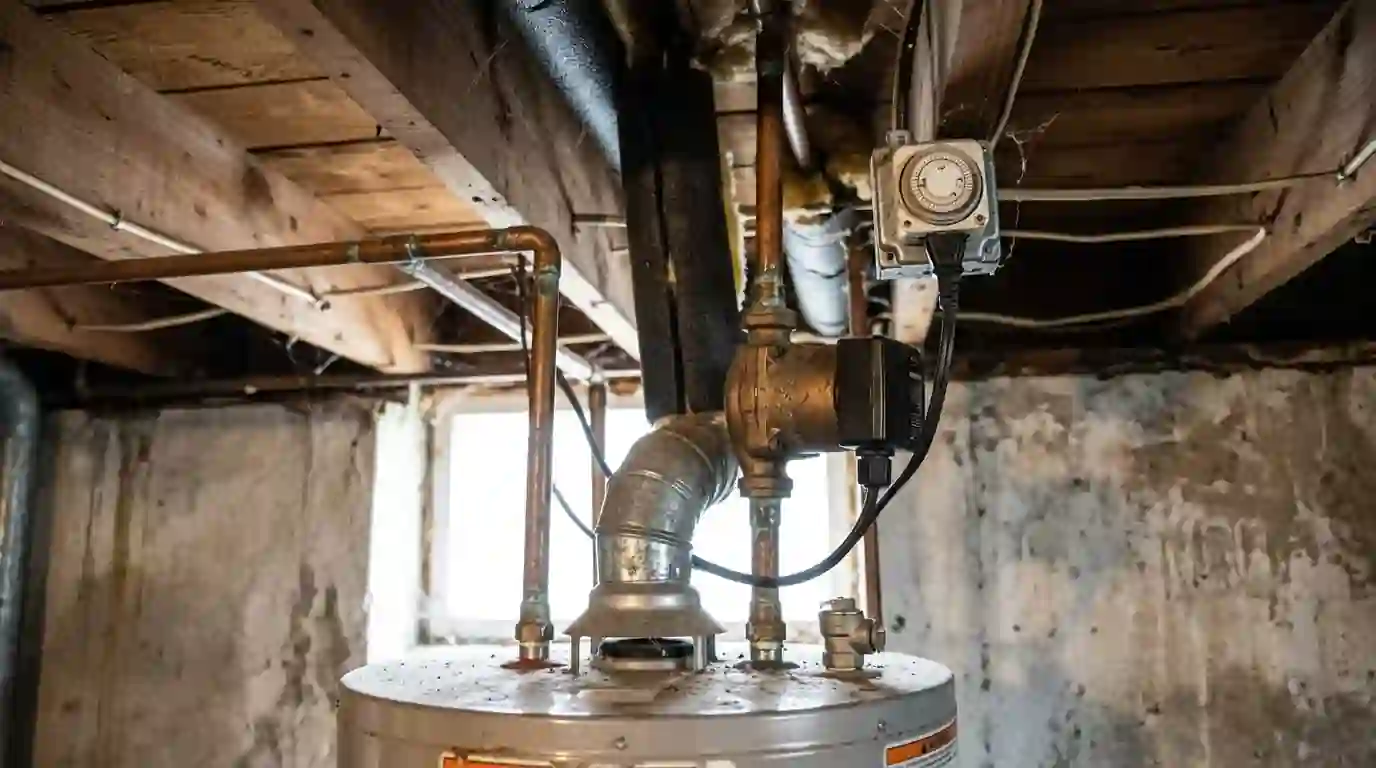
Hot water recirculation pumps in Minneapolis, the short answer
A hot water recirculation pump in Minneapolis homes moves hot water through the supply pipes so it reaches distant faucets in seconds instead of a minute or more. It fits houses where the water heater sits far from the main bathrooms, and works with tank or tankless heaters using a dedicated return line or a crossover valve.
Why the far bathroom takes so long to get hot water
Hot water sitting in the pipes cools down between uses. When you open a tap, all that cooled water has to run out before fresh hot water arrives from the heater. The farther the fixture, and the larger the pipe, the more cold water you drain first. In a two-story house with the heater in a back corner of the basement, that can mean a long wait.
A recirculation pump keeps water moving through that loop so the line stays warm. You still use the same water heater, it just sends hot water toward the fixtures before you need it. That saves water going down the drain, and in a home with many bathrooms it noticeably speeds up mornings.
Dedicated return line or crossover valve: two ways to close the loop
The cleanest setup uses a dedicated return line. A small pipe runs from the farthest fixture back to the water heater, and a pump near the heater pushes water around that loop. This is easy to add in new construction or during a remodel when walls are open, and it delivers the most consistent results.
In finished homes, a crossover valve under the farthest sink is the practical alternative. The pump sits at the water heater, and the valve under the sink lets cooled water cross from the hot line into the cold line until warm water arrives, then closes. No new piping inside walls. The tradeoff is that the cold tap at that sink can run slightly warm for a moment after the pump runs.
Timer, thermostat or on-demand: controlling energy use
A pump that runs around the clock keeps pipes hot all day and night, which wastes heat. Most homeowners are better served by a timer set for busy hours, such as early morning and evening, or a built-in thermostat that shuts the pump off once the return water warms up.
On-demand controls go a step further. A push button, motion sensor or smart switch starts the pump only when someone is about to use hot water, and it stops as soon as the loop is warm. This keeps energy waste low and suits households with unpredictable schedules. PlumbTek sets up the control style that matches your routine.
Signs your home would benefit from recirculation
If more than one of these sounds familiar, a recirculation pump is worth considering.
- Long wait at the far bathroomYou run the shower or sink for a long time before hot water arrives, especially upstairs or at the opposite end of the house.
- Lukewarm water at the kitchen sinkHand washing or rinsing dishes uses mostly cooled pipe water because it never gets hot before you're done.
- New tankless heater feels slowerTankless units add a few seconds of firing time to the trip, which can make a long run feel even longer.
- Large or sprawling floor planRamblers and big two-story homes with long pipe runs are the classic case for a loop.
- Old pump that buzzes or doesn't runAn existing circulator with a failed motor, seized impeller or dead timer needs repair or replacement.
How a recirculation pump gets added to your plumbing
Describe the layout
Call (612) 254-6294 and tell us where the heater sits and which fixtures are slow. We'll talk through return line versus crossover options.
Survey pipe routes
On site we trace the hot line, check the heater type, and pick the farthest fixture for the valve or return connection.
Install the pump and valve
The pump mounts at the heater with isolation valves and a check valve, and the crossover valve or return line is connected.
Set the controls
We wire the timer, thermostat or on-demand switch and set it for your household's busiest hours.
Test hot water arrival
We time hot water at the far fixture before and after, and check that cold taps still run cold after a short draw.
What recirculation pump installs cost in 2026
Price ranges below are typical for Twin Cities homes. Your actual price depends on the system type and pipe access, and is explained before work starts.
| Job | Typical range | What moves the price |
|---|---|---|
| Pump with crossover valve, no new piping | $487 to $863 | Pump model, control type and under-sink access |
| Pump with dedicated return line, open walls | $1,137 to $2,086 | Pipe length and number of floors the loop crosses |
| On-demand system with push buttons | $712 to $1,293 | Number of activation points and wiring needs |
| Replace an existing failed circulator | $318 to $574 | Pump size, flange fit and isolation valve condition |
What changes the number
- Running a return line through finished walls or ceilings adds significant labor.
- Tankless heaters may need a model-compatible pump or built-in recirculation setting.
- Insulating the hot supply and return lines improves results and adds modest cost.
- Electrical outlets near the heater or fixture affect how controls are installed.
- Multiple far-apart bathrooms may need more than one crossover valve.
Ranges reflect typical Twin Cities jobs in 2026. Your price is explained before work starts. Compare other jobs in the PlumbTek price guide.
Getting the most from a recirculation pump
- Insulate the hot lines. Foam pipe insulation on exposed runs keeps the loop warm longer, so the pump runs less and water arrives hotter.
- Use a timer or demand control. Running a pump nonstop wastes heat. Match the schedule to when your household actually uses hot water.
- Check the check valve. A failed check valve can let water flow backward, causing warm cold taps or ghost flow. It's a small, cheap part.
- Mind tankless minimum flow. Some tankless units need a specific pump or built-in mode to fire properly with recirculation. We match the pump to the heater.
- Listen for changes. A pump that starts humming, grinding or cycling oddly may have a worn bearing or air in the loop. Early service keeps it quiet.
Recirculation in Twin Cities homes of different eras
Many older Minneapolis and Saint Paul houses already had hot water loops once, back when gravity systems were common in larger homes. Those old return lines are often galvanized and partly clogged. When PlumbTek finds one, we check whether it's worth reusing with a new pump or should be replaced, because an old line can be a ready-made path.
Newer ramblers and two-story homes in suburbs like Plymouth, Lakeville and Blaine tend to have long PEX runs and a heater tucked in a far corner. Those are prime candidates for a crossover valve setup. Insulating exposed pipes along cold rim joists helps a lot in winter, since uninsulated lines lose heat fast in a cold basement.