Commercial plumbing in Minneapolis, the short answer
Commercial plumbing in Minneapolis covers repair, maintenance and installation for restaurants, offices, retail stores and multifamily buildings. Typical work includes kitchen and main drain cleaning, grease trap service, commercial water heaters, restroom fixtures, backflow testing and gas lines to equipment. You need a commercial plumber when the system is larger, busier or more regulated than a house, and when downtime costs money every hour.
Restaurants: grease, floor sinks and hot water demand
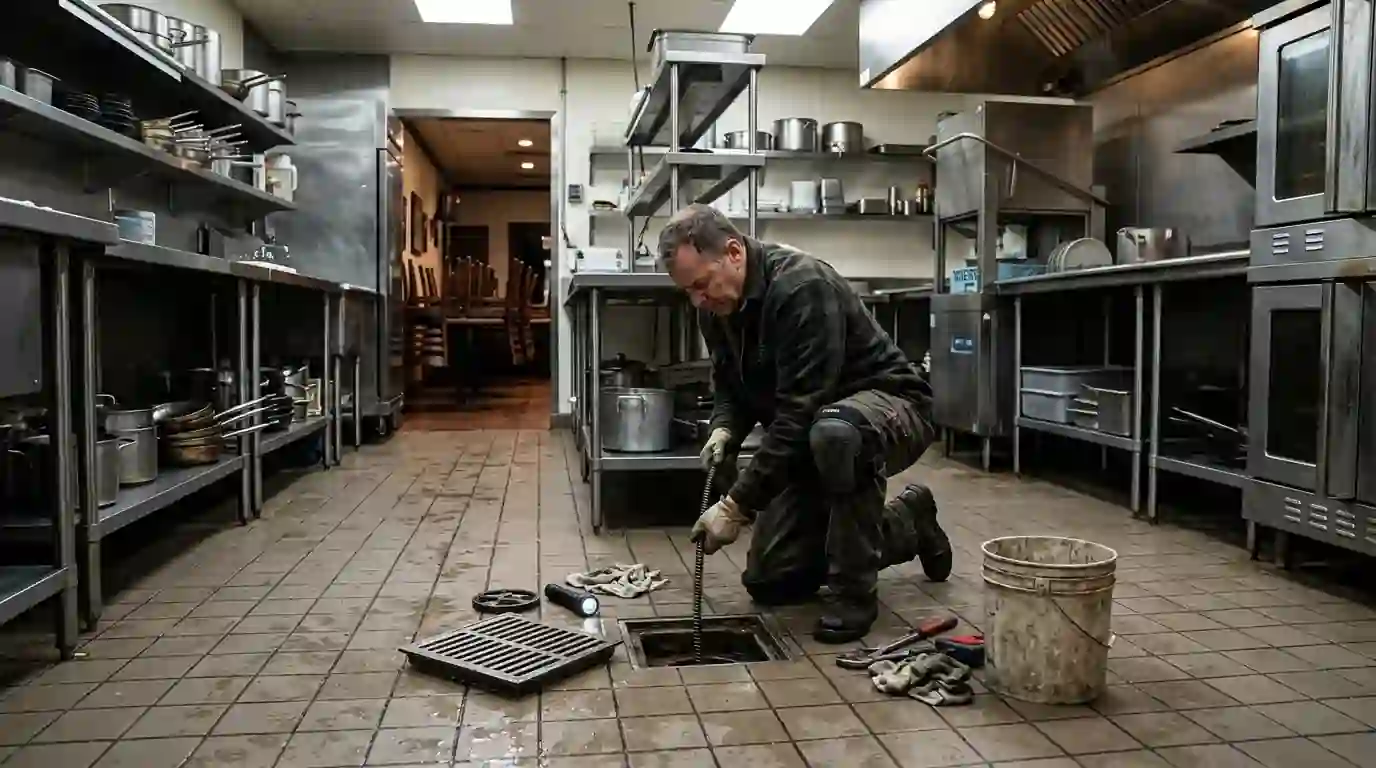
Restaurant plumbing works harder than any other kind. Grease, starch and food solids travel from three-compartment sinks, dish machines and floor sinks into the grease interceptor, and anything that gets past it coats the building drain. Slow floor sinks, a sewer smell near the dish area or water coming up through a floor drain are signs the line needs cleaning or jetting before it stops completely.
Hot water is the other pressure point. A dish machine booster, hand sinks and prep sinks all draw at once during a dinner rush, and a water heater that's undersized or scaled up will run cold by eight o'clock. We look at recovery rate, not just tank size, and sometimes the fix is a second unit or a recirculation pump rather than a bigger tank.
Offices and retail: restrooms, breakrooms and tenant changes
In offices and stores, most calls are restroom fixtures: flushometer valves that run on, sensor faucets that won't shut off, wall-hung toilets loose on their carriers and urinals with slow drains. Breakroom sinks, dishwashers, ice machines and coffee brewers add supply lines and small drains that clog or leak behind cabinets where nobody notices for a while.
Tenant build-outs are the other big piece. A former retail space turning into a salon or cafe needs new fixtures, indirect drains, sometimes a grease interceptor and gas to equipment. PlumbTek pulls the permits the job needs and works with the general contractor or property manager to keep the build-out on schedule.
Multifamily buildings: shared stacks and one bad shut-off
In apartment and condo buildings, one problem affects many units. A clogged kitchen stack backs up into the lowest unit on the line. A failed riser valve means shutting water off to a whole wing instead of one apartment. Boilers or large water heaters feeding every unit can leave the building without hot water if they fail on a January morning.
For property managers, the work often splits into emergency calls and planned upgrades. Planned work includes replacing riser shut-offs so units can be isolated, jetting stacks on a schedule, testing backflow assemblies and replacing aging water heaters before they fail. Notices to residents and access to units are planned with management ahead of time.
Signs your commercial plumbing needs attention now
These problems tend to get worse quickly in a busy building.
- Floor sinks slow or gurglingIn a kitchen, slow floor sinks usually mean grease buildup in the line past the interceptor. Left alone, the next backup tends to happen mid-service.
- Hot water running outIf dish machines or hand sinks lose hot water during peak hours, the water heater may be scaled, failing or too small for current demand.
- Restroom fixtures running constantlyFlushometers and sensor faucets that won't shut off waste water and can raise utility bills quickly in a busy office or store.
- Sewer smell in common areasDry floor drain traps, a cracked vent or a failing stack connection can let sewer gas into hallways, restrooms or the dining room.
- Lowest unit keeps backing upIn multifamily buildings, repeat backups in the bottom unit of a stack point to a blockage or a partial break in the shared line.
- Backflow notice from the utilityThe water utility's annual backflow notice has a due date, and missing it can lead to service shutoff for the building connection.
How commercial service calls are handled
Call and describe the problem
Call any time, day or night. Tell us the business type, what's happening and your operating hours so the visit can be timed to limit disruption.
Diagnose on site
The plumber finds the cause, whether it's a drain line, fixture, water heater or valve, and explains the repair and price before starting.
Repair with minimal downtime
Work is staged to keep as much of the building running as possible, isolating only the affected branch or restroom where the piping allows.
Permits and inspections
For installations and larger repairs, we pull the permits the job needs and coordinate inspections with you or your general contractor.
Report and recommendations
You get a summary of what was found and fixed, plus any recommended maintenance, such as scheduled jetting or riser valve replacement.
Commercial plumbing costs in the Twin Cities
Typical 2026 ranges for common commercial jobs. The real price comes from seeing the job in person, and you approve it before anything is cut or replaced.
| Job | Typical range | What moves the price |
|---|---|---|
| Restaurant kitchen drain jetting | $487 to $1,135 | Line length, grease buildup and access through cleanouts or floor sinks |
| Flushometer or sensor faucet repair | $167 to $389 | Valve brand, parts needed and number of fixtures serviced |
| Commercial water heater replacement | $4,285 to $11,640 | Capacity, gas or electric, venting and removal of the old unit |
| Multifamily riser shut-off replacement | $612 to $1,478 | Pipe size, wall or ceiling access and resident water shutoff planning |
What changes the number
- After-hours and weekend work to avoid closing a business may carry a higher labor rate.
- Larger pipe sizes and commercial-grade parts cost more than residential equivalents.
- Access through finished ceilings, tenant spaces or occupied units adds time.
- Permit and inspection fees for installations are included in the price we explain up front.
- Scheduled maintenance, like regular kitchen line jetting, is usually priced lower than emergency calls.
Ranges reflect typical Twin Cities jobs in 2026. Your price is explained before work starts. Compare other jobs in the PlumbTek price guide.
Maintenance that keeps a commercial building open
- Schedule kitchen line jetting. Restaurants that jet their kitchen drain lines on a regular schedule have far fewer mid-service backups than those that wait for a clog.
- Prime floor drain traps. Pour water into rarely used floor drains every few weeks, or add trap primers, so dry traps don't let sewer gas into the building.
- Label every shut-off valve. Tagging main, riser and branch shut-offs with what they control saves time and water damage when something breaks at night.
- Flush water heaters yearly. Draining sediment from commercial tanks, especially in hard-water suburbs, keeps recovery rates up and extends heater life.
- Track backflow due dates. Keep a list of every backflow assembly and its test due date so utility notices never turn into shutoff warnings.
Commercial buildings across Minneapolis and the suburbs
Downtown Minneapolis, the North Loop, Uptown and Lake Street have a lot of older commercial buildings with newer uses: warehouses turned into offices, storefronts turned into restaurants, upper floors turned into apartments. That mix means cast iron stacks from one era serving fixtures from another, and drain lines that were never sized for a commercial kitchen. When PlumbTek works in these buildings, the first step is often mapping what's actually behind the walls.
In suburban strip centers and office parks in Bloomington, Eden Prairie, Roseville and Maple Grove, buildings are newer but the challenges are similar: grease in restaurant lines, flushometers in busy restrooms and water heaters sized for a former tenant. Out toward Elk River and Big Lake, more commercial properties are on private wells and septic, which adds pumps, softeners and filtration to the list.