Backflow testing in Minneapolis, the short answer
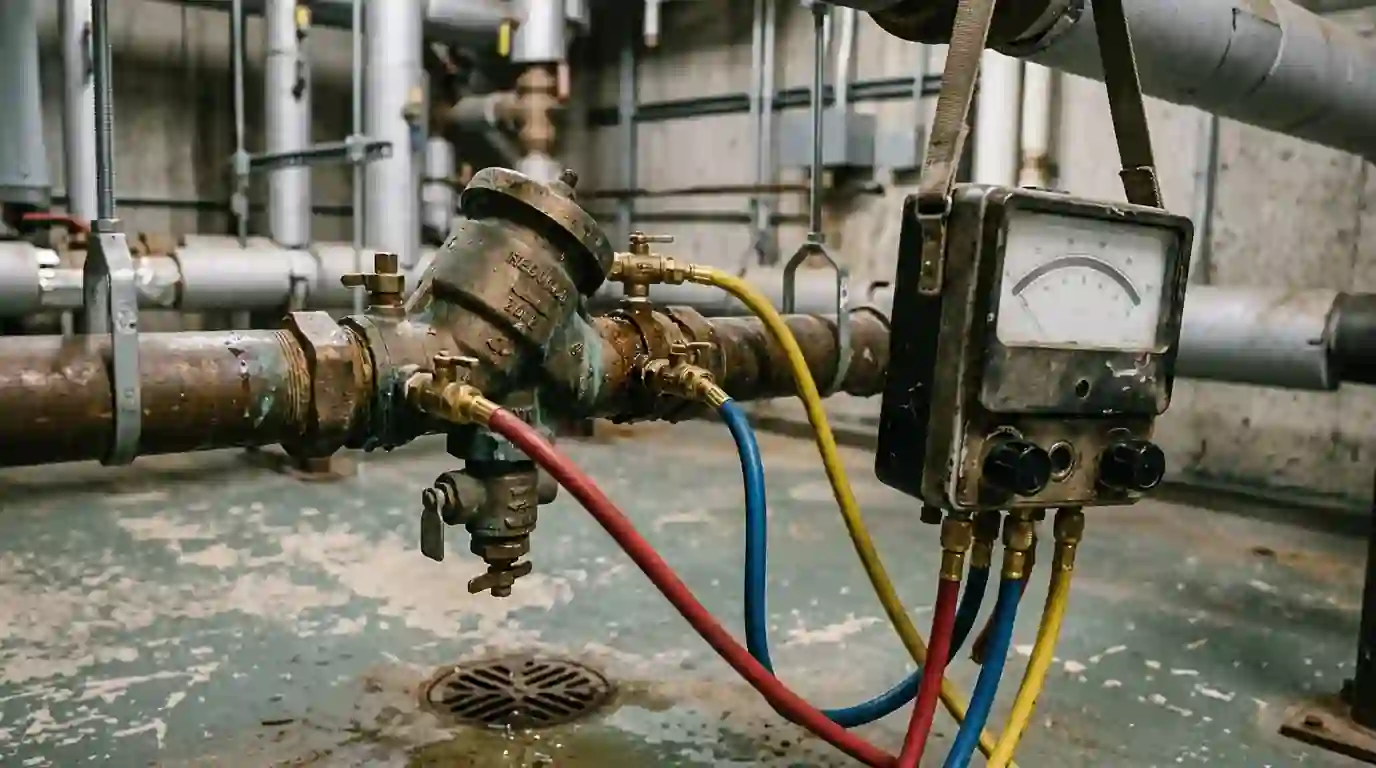
Backflow testing in Minneapolis is the yearly check of the backflow prevention assemblies that keep water from a building, irrigation system or boiler from flowing back into the public supply. Commercial buildings, multifamily properties and homes with lawn irrigation usually need it. A tester measures the check valves and relief valve with a differential gauge, and the passing report is filed with the water utility before its deadline.
Why does the water utility want a backflow test every year?
A backflow assembly is a set of spring-loaded check valves, and sometimes a relief valve, that only lets water move one way. Springs weaken, rubber seats harden and debris lodges in the valve. None of that shows from the outside. A unit that looks fine can still let water from a boiler loop, fire sprinkler line or irrigation system siphon back toward the city main during a pressure drop.
Pressure drops happen more than you'd think: a water main break down the block, firefighters opening a hydrant, or heavy demand on a hot summer evening. The annual test is how the utility confirms every assembly in its service area still closes the way it should. Without a passing report on file, the utility can send repeat notices and, eventually, shut off service to that connection.
What the tester actually measures
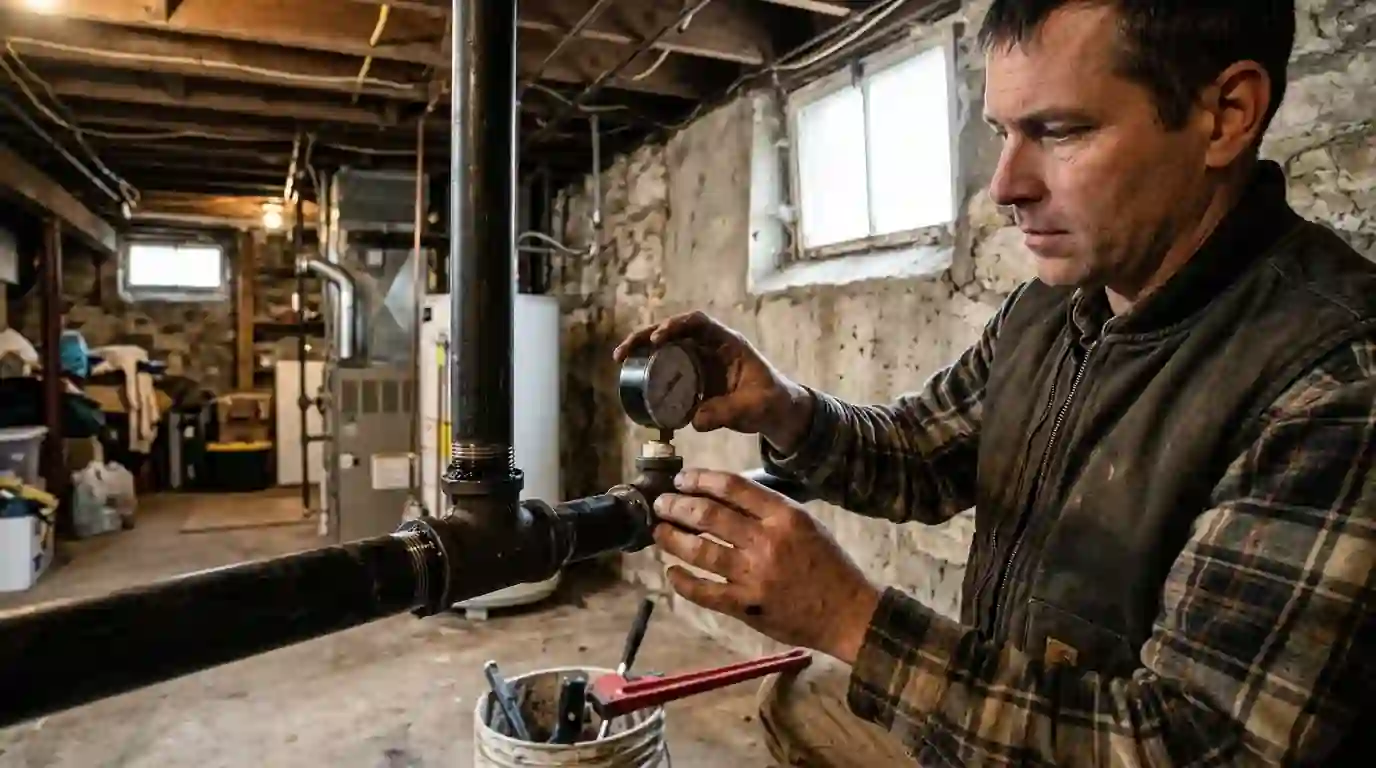
The test uses a differential pressure gauge connected to small test cocks on the assembly. On a double check valve assembly, the tester confirms each check valve holds a minimum pressure difference with water trying to flow backward. On a reduced pressure zone (RPZ) assembly, the tester also checks the relief valve opens at the right point, since that valve dumps water to drain if both checks fail.
Readings are written down valve by valve, along with the make, model, size and serial number of the assembly. Shut-off valves on either side are checked to confirm they close fully, because a leaking shut-off can throw off the test. If everything reads within range, the assembly passes and the report goes to the utility. If it fails, you get the specific reading that failed and what part usually causes it.
Getting the report filed with the water utility on time
Minneapolis, Saint Paul Regional Water Services and most suburban utilities track backflow assemblies by address and send notices with a due date. Each utility has its own reporting method and form. PlumbTek files the test report with the utility after the test, so you're not chasing paperwork, and you keep a copy for your own records.
If an assembly fails, the report can't show a pass until it's repaired and retested. Many failures are fixed the same visit with a rubber kit or a spring. When a larger repair or full replacement is needed, the price is explained first, and the retest is done right after the work so the passing report still makes the deadline.
Signs a backflow test is due or overdue
Most owners hear from the utility, but watch for these clues too.
- Annual notice from utilityThe water utility mails or emails a notice listing the assembly and the due date. That date matters, not the anniversary of the last test.
- New irrigation system installedA new lawn sprinkler system in the suburbs usually includes a backflow assembly that needs testing once it's put in service and every year after that.
- Water dumping from relief valveAn RPZ that spits or runs water from its relief port is telling you a check valve isn't sealing. It should be tested and repaired soon.
- New tenant or change of useA restaurant moving into a former retail space, or a new boiler or soda system, can change what backflow protection the utility requires.
- Second or final notice letterRepeat notices mean the report hasn't been received. Service shutoff comes next, so get the test done right away.
- Building sale or refinanceBuyers and lenders on commercial and multifamily property often ask for current backflow test records as part of due diligence.
What happens during a backflow test visit
Find and identify the assembly
The tester locates each assembly, records make, model, size and serial number, and matches it to the utility notice so the report lands on the right account.
Brief water shutoff
Water to that line is shut off for a short time during the test. For businesses, we plan the visit around opening hours or slow periods.
Gauge test each valve
The differential gauge is attached to the test cocks and each check valve and relief valve is tested in order, with every reading written down.
Repair if it fails
A failed assembly is often rebuilt on the spot with new rubber parts or springs, then retested. Larger repairs are priced before any work starts.
File the report
The passing test report is filed with the water utility using its required method, and you get a copy for your files.
Backflow test pricing around Minneapolis
Typical 2026 Twin Cities ranges. The final price depends on access and the condition of the pipe, and you hear it before any work starts.
| Job | Typical range | What moves the price |
|---|---|---|
| Residential irrigation assembly test | $89 to $147 | Assembly type, access in the yard or basement, and report filing |
| Commercial double check or RPZ test | $118 to $196 | Assembly size, location in the building and number of units |
| Each additional assembly, same visit | $67 to $124 | Same building, similar size and easy access between units |
| Rubber kit rebuild after a failed test | $187 to $468 | Assembly size and which check valve or relief valve failed |
What changes the number
- Larger assemblies, such as fire line and building main units, take more time to test and rebuild.
- Assemblies in tight ceilings, pits or locked mechanical rooms take longer to reach.
- Testing several assemblies at one property in one visit keeps the per-unit price down.
- A failed test adds repair parts and a retest, both explained before the work is done.
- After-hours visits to avoid shutting off water during business hours can carry a higher labor rate.
Ranges reflect typical Twin Cities jobs in 2026. Your price is explained before work starts. Compare other jobs in the PlumbTek price guide.
Double check assembly versus RPZ assembly
| Point | Double check valve assembly | Reduced pressure zone (RPZ) |
|---|---|---|
| Protects against | Lower hazard backflow, such as irrigation and fire lines | High hazard backflow, such as boilers and chemical feeds |
| Relief valve | None | Yes, dumps water to drain if checks fail |
| Where it can go | Indoors or below grade in some cases | Above grade with a drain or air gap below |
| Test steps | Two check valves tested | Two checks plus relief valve opening point |
| Typical sign of trouble | Usually none visible until tested | Water running from the relief port |
Backflow rules for Twin Cities properties
In Minneapolis and Saint Paul, most backflow testing is on commercial buildings: restaurants with soda and coffee equipment, offices with boiler makeup water, apartment buildings with fire sprinkler connections and anything with a commercial dishwasher or chemical feed. The utilities keep their own lists of assemblies and send notices on their own schedule, so two buildings on the same block may be due in different months.
In the suburbs, residential lawn irrigation is a big part of the work. Homes in Woodbury, Maple Grove, Eden Prairie, Lakeville and Blaine often have an irrigation backflow assembly in the basement near the water meter, or outside by the foundation. Outdoor units need to be drained or removed before the first hard freeze, and a cracked body from a missed fall shutdown is one of the most common spring repairs.