Water line repair in Minneapolis, the short answer
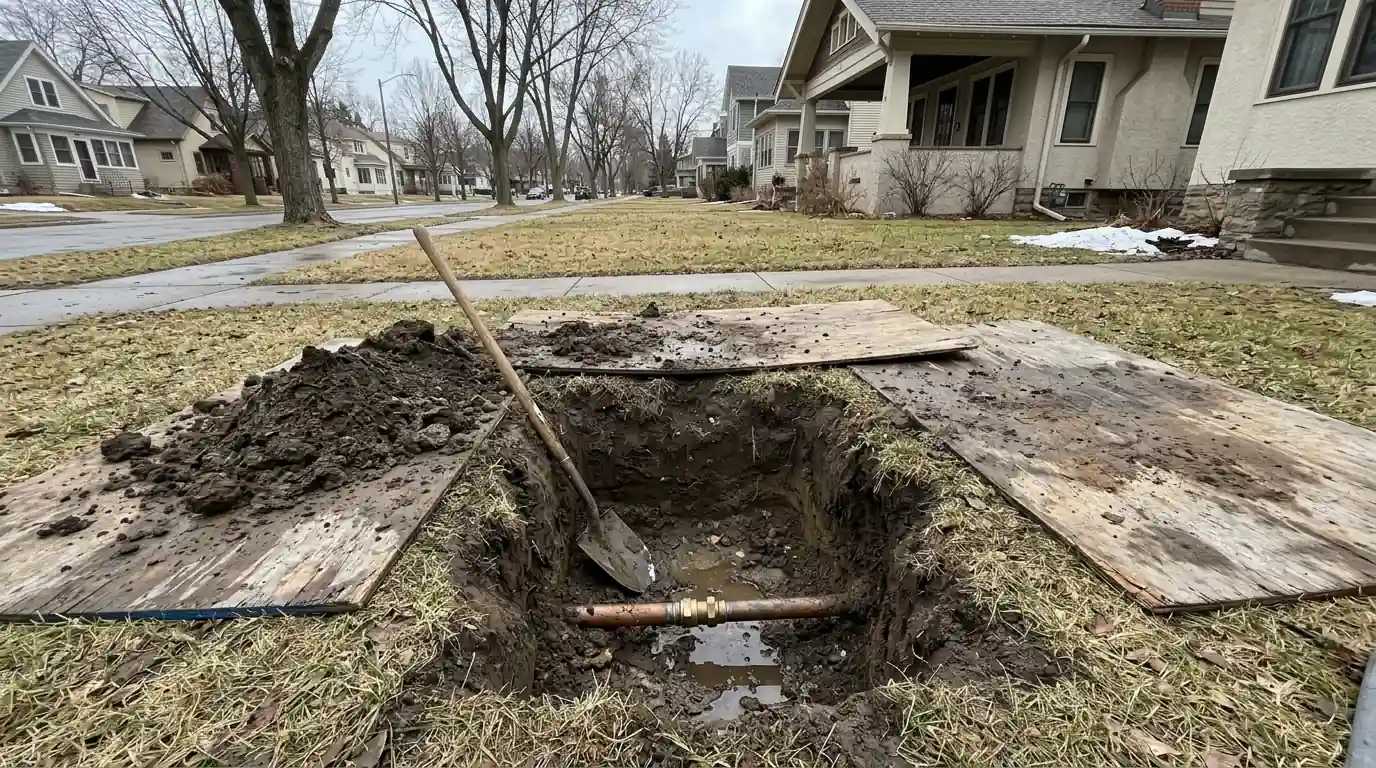
Water line repair in Minneapolis fixes a leak or break in the buried pipe that carries city water from the curb stop near the street into your basement. You need it when you see a wet spot or sinkhole in the yard, water entering at the foundation, a sudden pressure drop at every faucet, or water pooling near the curb stop. Most repairs open one excavation at the break.
Which part of the water line is yours?
In Minneapolis and Saint Paul, the city owns the water main under the street. The service line runs from that main to a curb stop valve, usually near the boulevard or sidewalk, then on to the meter in your basement. Responsibility for the stretch between the curb stop and your house generally falls on the property owner, so that's where most private repairs happen.
Rules vary a little between cities and suburbs, so a call to the water utility settles it for your address. If the leak is on the city side, they handle it. If it's between the curb stop and the foundation, or inside the basement before the meter, that's a job for your plumber.
What breaks a buried service line
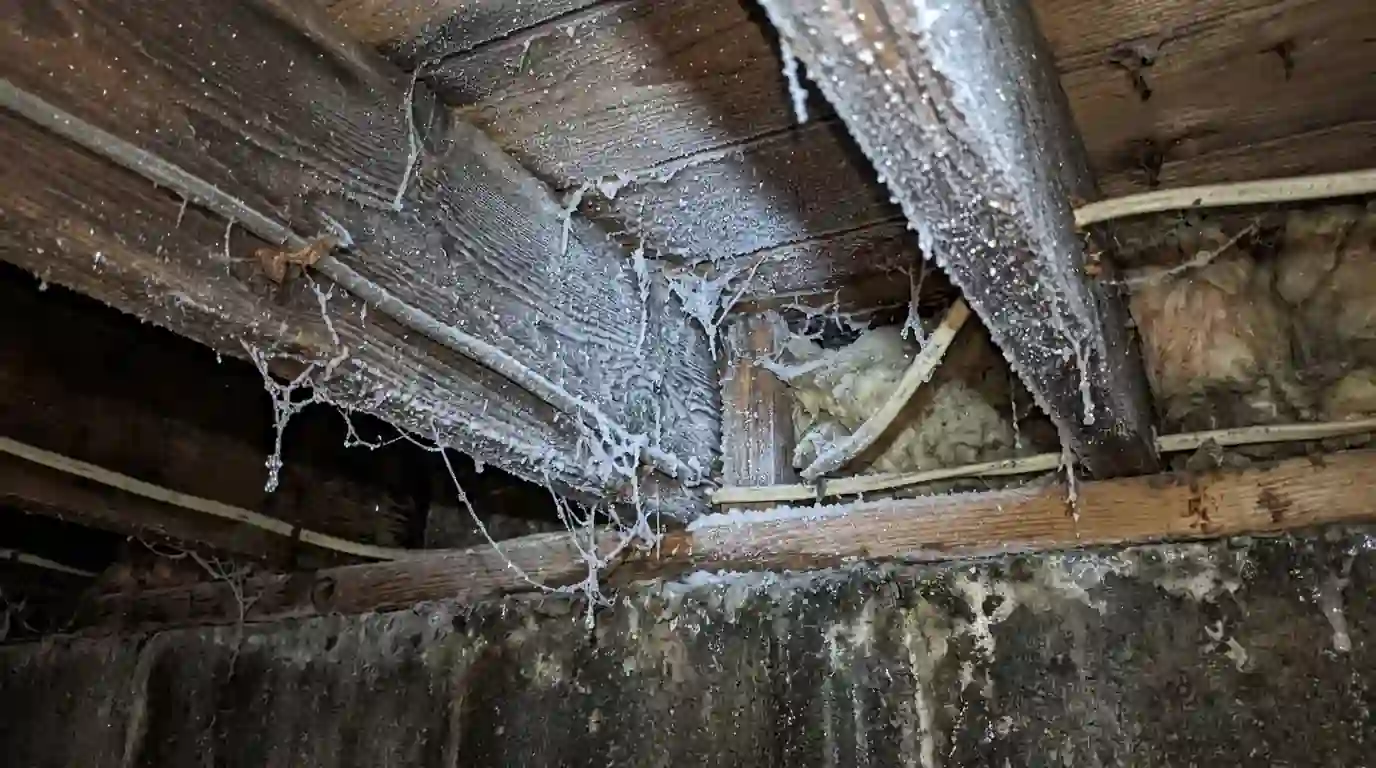
Most older Minneapolis service lines are copper, galvanized steel, or in pre-1950 houses, lead. Copper lasts a long time but can crack at compression fittings or develop pinholes where rocks pressed against it. Galvanized lines rust through from both sides, especially in wet clay soil. Ground movement from freeze and thaw cycles stresses every joint.
Other causes are more sudden. A fence post auger, an irrigation install, or a utility crew can nick or break a shallow section. Frost heave under a driveway can pull a joint apart. And where the line passes through the basement wall, a corroded sleeve or a settled foundation can crack the pipe right at the entry point.
Repair the break or replace the line?
A single break in a copper line that's otherwise in good shape gets a spot repair: dig at the leak, cut out the damaged length, and join new type K copper with approved couplings. That's quicker and much cheaper than replacing the whole run, and the rest of the line can last for decades.
If the line is galvanized or lead, or if this is the second leak in a few years, a spot repair is buying time. When PlumbTek repairs a service line, the plumber looks at the condition of the exposed pipe and tells you plainly whether replacing the full run makes more sense. Lead lines should always be replaced, not patched.
Warning signs of a leaking water service line
A buried leak often shows up outside before it shows up inside.
- Wet spot in a dry lawnA patch of grass that stays soggy or greener than the rest in dry weather often sits directly over a leaking service line.
- Water at the foundation entryWater seeping in where the service line comes through the basement wall can mean a crack right at the wall sleeve.
- Sudden drop in pressureA noticeable loss of pressure at every fixture at once often means a significant leak somewhere between the curb stop and the meter.
- Wet yard, quiet meterWith the meter in the basement, a leak before it won't spin the dial. Wet ground on the line route with a still meter points underground.
- Sinkhole or settling soilA small depression forming over the line path means water has been washing soil away beneath the surface.
- Sound of running water outsideOn a quiet night, you might hear water hissing near the curb stop or the foundation where the line enters.
From locating the break to backfilling the hole
Confirm it's the service line
The plumber checks pressure, the meter and the foundation entry. With the meter indoors, a buried leak often shows outside long before anything registers inside.
Locate the line and the leak
Gopher State One Call marks utilities, then line tracing and acoustic listening pinpoint the break along the service route.
Excavate at the break
A targeted hole is dug at the leak point, by hand near other utilities, with the lawn and soil set aside on tarps or plywood.
Cut in new pipe
The damaged section is removed and new copper or approved pipe is joined with couplings rated for buried service.
Test, backfill and restore
The repair is tested under pressure, the hole backfilled and compacted, and the surface rough-graded or sodded as agreed.
Water line repair costs around the Twin Cities
Depth, surface and how far the leak sits from the house drive most of the cost. Permits and site access can move the total, and you approve it before anything is cut or replaced.
| Job | Typical range | What moves the price |
|---|---|---|
| Leak repair inside the basement before the meter | $287 to $612 | Pipe material and access at the foundation wall |
| Spot repair in the yard, one excavation | $1,340 to $2,870 | Depth of the line, soil type, and lawn restoration |
| Repair under a driveway or sidewalk | $2,180 to $4,460 | Concrete cutting, removal and patching on top of the repair |
| Foundation entry repair and wall sleeve seal | $847 to $1,926 | Wall type, interior access, and exterior excavation depth |
What changes the number
- Service lines here are buried deep to stay below frost, so excavations are larger than in warmer states.
- Frozen ground in winter adds time and equipment for digging.
- Concrete, pavers or landscaping above the leak add removal and replacement costs.
- Pipe material matters: copper repairs are straightforward, galvanized and lead often need replacement instead.
- Some cities need a permit or utility notice for service line work, which PlumbTek handles.
Ranges reflect typical Twin Cities jobs in 2026. Your price is explained before work starts. Compare other jobs in the PlumbTek price guide.
What to do when you suspect a buried water line leak
These steps help confirm the leak and protect your basement until the repair.
- Note whether pressure dropped at every faucet at the same time
- Look at the boulevard near the curb stop for pooling water
- Walk the line route from the street to the house looking for wet ground
- Check where the line enters the basement wall for seepage
- Keep cars off any soft or sunken spot in the driveway
- Call your water utility to ask whether the leak is on their side
- Do not dig yourself until utilities have been marked
Service line trouble in Twin Cities neighborhoods
In older parts of Minneapolis and Saint Paul, mature boulevard trees, retaining walls and decades of sidewalk replacement sit on top of service lines. Roots wrap around lines, and old galvanized pipe in heavy clay soil corrodes faster than in sandy ground. Homes along the river bluffs and in hilly areas also see more ground movement.
In suburbs like Plymouth and Apple Valley, newer copper and plastic lines fail less, but landscaping work, fence installs and irrigation trenching cause many breaks. Out in Big Lake and Elk River, homes on private wells have a different buried line, from the well to the house, which fails in similar ways and is repaired the same way.