Well pump repair in Minneapolis, the short answer
Well pump repair for homes outside Minneapolis covers private well systems that lose water, short cycle, or deliver weak or surging pressure. Most problems trace to the pressure switch, a waterlogged pressure tank, a failed check valve, the control box or capacitor, or the submersible pump itself. It applies to wells in Sherburne and Wright counties, Big Lake, Elk River and parts of Minnetonka.
Start at the pressure switch before blaming the pump
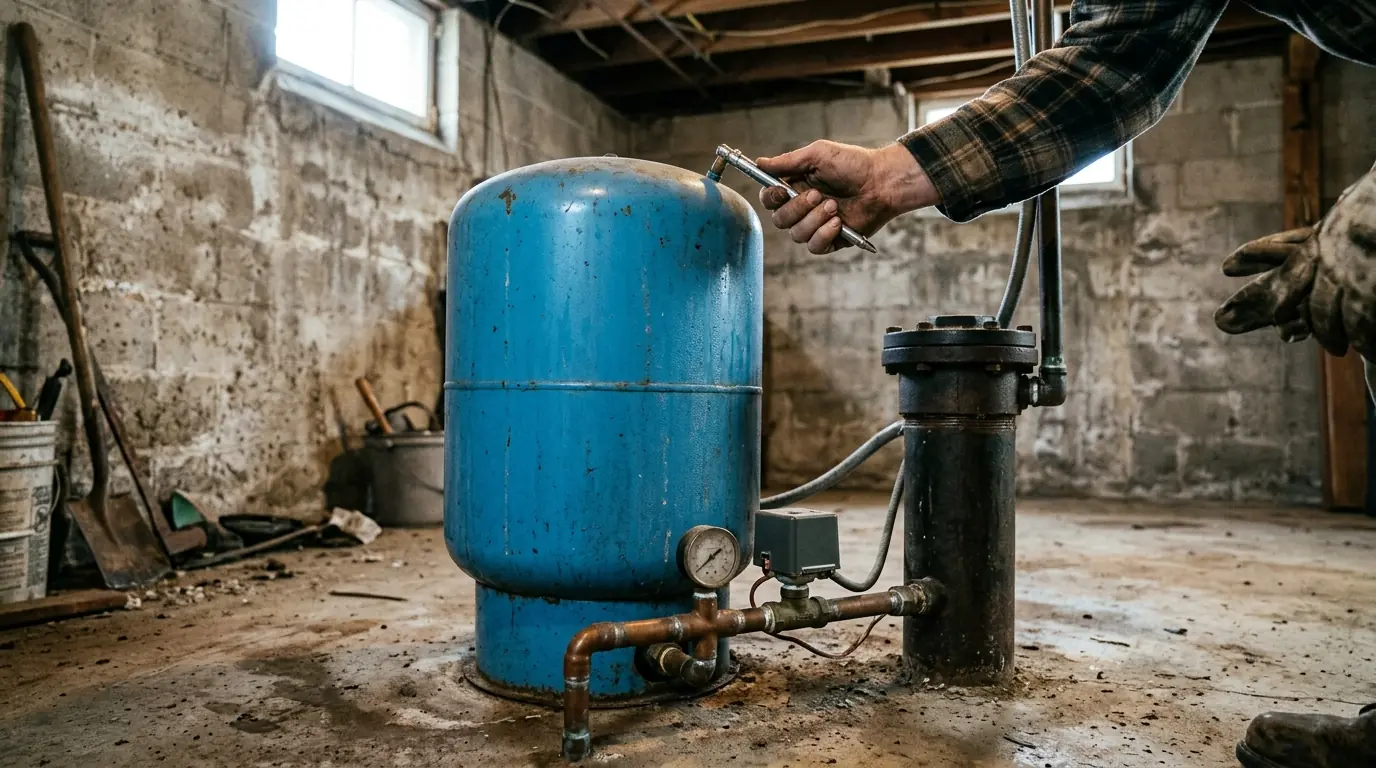
When the water stops, most people assume the pump in the well has died. Often it hasn't. The pressure switch, a small gray box on the pipe near the pressure tank, tells the pump when to start and stop. Its contacts burn and pit over years of clicking, and a tiny tube underneath can clog with sediment or iron so the switch can't read pressure.
The plumber checks voltage at the switch, inspects the contacts, and clears or replaces the pressure sensing tube. A worn switch is an inexpensive fix. If the switch is fine and power reaches the pump circuit but no water comes, the investigation moves down to the control box and the pump itself.
Waterlogged pressure tanks and short cycling
The pressure tank stores water under pressure so the pump doesn't start every time you open a faucet. Inside is an air charge separated from the water by a bladder or diaphragm. When that bladder fails or the air charge leaks out, the tank fills with water and loses its cushion. The pump then starts and stops every few seconds, which is called short cycling.
Short cycling wears out pumps, switches and capacitors quickly. We check the tank air charge with a gauge after draining it, and tap the tank to feel for water where there should be air. A tank that's waterlogged from a failed bladder needs replacing, sized so the pump gets reasonable run times.
Pump, check valve and control box problems down the well
Submersible pumps sit deep in the well casing. Three-wire pumps use a control box upstairs with a start capacitor and relay that can fail and stop the pump from starting. Two-wire pumps keep those parts down in the well. Testing amperage and resistance from the surface tells us whether the motor is drawing current normally.
A failed check valve lets water drain back down the pipe after each cycle, so the pump starts more often and pressure takes longer to build. When the pump or a buried check valve truly has failed, the pump has to be pulled, which may involve a pump hoist. PlumbTek explains what the readings show before any pulling starts.
Warning signs from a private well system
These symptoms point to specific parts and help us arrive ready.
- No water at any faucetCheck the breaker first. Then the pressure switch, control box, or pump itself may have failed.
- Pump clicks on and off rapidlyShort cycling, usually from a waterlogged pressure tank or a lost air charge. It wears out the pump fast.
- Pressure surges and dropsA failing pressure tank, a clogged switch tube, or a check valve letting water drain back.
- Sputtering faucets and air in linesLow water level in the well, a leak in the drop pipe, or a failed check valve.
- Pump runs but pressure won't buildA worn pump, a leak in the drop pipe, or a pressure switch set wrong.
- Sand or grit in the waterA worn pump pulling sediment, or a well screen issue. Can damage fixtures and appliances.
How we work through a well system problem
Call with what you're seeing
Ring (612) 254-6294. No water at all is treated as urgent, and we'll ask about breakers and the pressure gauge reading.
Check power and the pressure switch
We test voltage, look at switch contacts, and clear or replace the pressure sensing tube.
Test the pressure tank
The tank is drained and its air charge checked with a gauge. A waterlogged tank is identified quickly.
Measure the pump circuit
Amperage and resistance readings at the control box or wiring tell us whether the pump motor is sound.
Repair or pull the pump
Surface parts are replaced on the spot. If the pump or a buried check valve has failed, we explain the pull and replacement before starting.
Well pump repair prices in Sherburne and Wright counties for 2026
Surface repairs are much less than pump replacement. Your actual price depends on the job and well depth, and is explained before work starts.
| Job | Typical range | What moves the price |
|---|---|---|
| Pressure switch replacement | $187 to $312 | Switch type and condition of fittings |
| Pressure tank replacement | $893 to $1,637 | Tank size and piping changes |
| Control box or capacitor repair | $263 to $518 | Three-wire pump type and part availability |
| Submersible pump replacement | $2,186 to $4,763 | Well depth, pump horsepower and drop pipe condition |
What changes the number
- Well depth strongly affects pump replacement cost because of pipe, wire and pulling labor.
- Galvanized drop pipe in older wells often needs replacing along with the pump.
- Winter access to wellheads in snowy yards slows the job.
- Iron and sediment in the water can shorten switch and pump life.
- After-hours calls for no water may cost more than daytime visits.
Ranges reflect typical Twin Cities jobs in 2026. Your price is explained before work starts. Compare other jobs in the PlumbTek price guide.
First checks when your well stops delivering water
These steps are safe and help us diagnose faster.
- Check the breaker for the well pump and reset it once if tripped.
- Look at the pressure gauge near the tank and note the reading.
- Listen near the pressure switch for clicking when a faucet runs.
- Look for water around the pressure tank or the well piping.
- Don't tap or adjust the pressure switch while power is on.
- Avoid running the pump continuously if you hear it cycling rapidly.
- Keep a few jugs of water on hand while waiting for service.
Private wells around Big Lake, Elk River and the west metro
Private wells are common across Sherburne and Wright counties, in Big Lake, Elk River, Zimmerman, Monticello and Buffalo, and in parts of Minnetonka and other west metro areas that never connected to city water. Many of these wells deliver hard, iron-bearing water that clogs pressure switch tubes and coats check valves, which is a frequent cause of trouble.
PlumbTek's main office sits in Big Lake, so well calls in that area are routine work for us. Winter adds challenges: wellheads in deep snow and pitless adapters that need to be dug out. In older rural homes, the pressure tank may also be undersized for a larger household that has grown since the system went in.