Tankless water heater installation in Minneapolis, the short answer
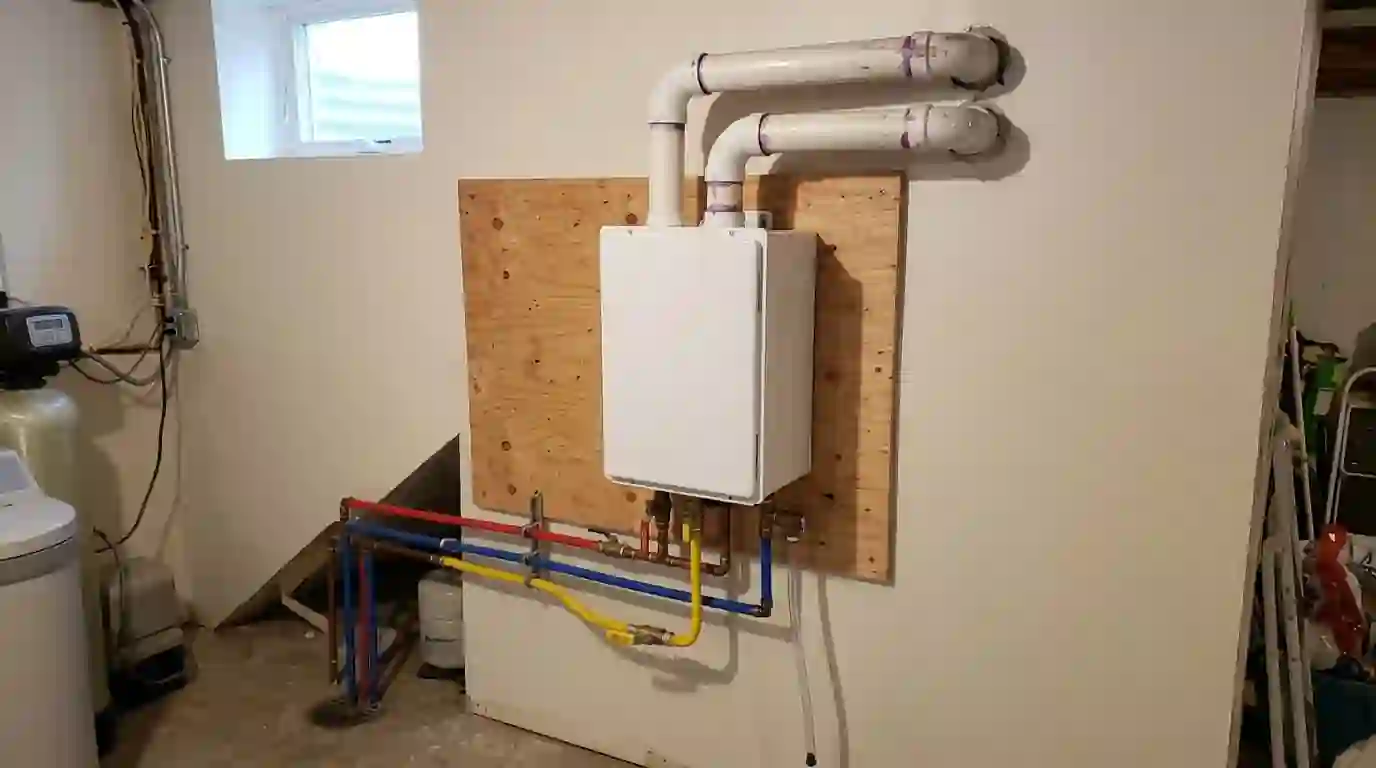
Tankless water heater installation in Minneapolis replaces a storage tank with a wall-mounted unit that heats water only as it flows. It suits homes that run out of hot water, want floor space back, or plan to stay long enough to recover the higher upfront cost. Sizing must account for very cold winter inlet water.
How cold inlet water changes tankless sizing in Minnesota
A tankless heater is rated by how many gallons per minute it can raise by a given temperature. In a warm state, incoming water might only need a modest bump. Here, January water from the main can arrive cold enough that the heater has to lift it far more. That same unit delivers noticeably fewer gallons per minute in our winter than its brochure suggests.
So we size for the worst month, not the average. Two showers plus a running dishwasher in February is the test. For most Twin Cities families that means a high-input condensing unit around 180,000 to 199,000 BTU. Undersize it and you'll get lukewarm showers whenever two fixtures run together.
Gas supply and venting: the parts of the install that matter most
A whole-house tankless unit burns several times more gas at full fire than a standard tank. The half-inch line that fed your old heater usually can't carry that load, especially at the end of a long run past the furnace and range. We calculate the pipe size from the meter and often run a new three-quarter or one-inch line to the unit.
Condensing tankless heaters vent through PVC or polypropylene pipe out a side wall, with a separate intake. Termination clearances from windows, doors, dryer vents and grade all matter, and in Minnesota the termination has to stay above typical snow depth. The unit also produces acidic condensate, so a neutralizer cartridge goes on the drain line before it reaches the floor drain.
Is tankless the right call for your house?
Tankless pays off when you use a lot of hot water, plan to stay put for years, and have a reasonable path for gas and venting. It also frees floor space, which matters in tight basements being finished. The tradeoffs are a higher upfront cost and the need for regular descaling, especially on hard water.
If your household is small and rarely runs out of hot water, a good tank may still be the better value. PlumbTek prices both options when you call so you can compare installed cost, not just the sticker on the unit. If a basement bathroom or a big soaking tub is in your plans, mention it, because that changes the sizing.
Situations where homeowners usually go tankless
These are the most common reasons people call about switching.
- Running out of hot water dailyA household that drains a 50 gallon tank every morning gets continuous hot water from a properly sized tankless unit.
- Finishing the basementA wall-hung unit frees up floor space that a tank and its clearances would otherwise take in a new utility room or bathroom.
- Old tank needs replacing anywayIf the tank is failing, the replacement moment is the cheapest time to change systems, since you're paying for removal either way.
- Large tub or multiple showersFilling a deep soaking tub or running two showers at once overwhelms many tanks but suits a high-input tankless unit.
- Chimney venting has become a problemWhen a furnace moves to side-wall venting, the water heater can be left alone in an oversized flue. Tankless sidesteps the chimney.
From sizing call to first hot shower
Talk through your usage
Phone (612) 254-6294 and tell us how many bathrooms, showers and big tubs you have. We'll give a starting size and discuss gas and venting.
Gas and vent survey
On site we measure the gas run from the meter, check meter capacity, and choose a vent path that meets clearances and stays above snow.
Remove the old heater
The existing tank is drained and removed, and old flue connections are capped or adjusted so the furnace still vents correctly.
Mount, pipe and vent
The unit is mounted, isolation valves are fitted for future descaling, gas and water are connected, and PVC venting runs through the wall.
Commission and inspect
We check gas pressure at full fire, set temperature, confirm flow at several taps, install the condensate neutralizer and schedule inspection.
2026 installed tankless prices in the Twin Cities
Tankless installs vary more than tanks because the gas line and vent path differ from house to house. Your actual price depends on those conditions and is explained before work starts.
| Job | Typical range | What moves the price |
|---|---|---|
| Condensing tankless, existing gas line adequate | $3,876 to $4,937 | Unit size, vent length and mounting location |
| Condensing tankless with new gas line | $4,618 to $6,283 | Pipe size and length from the meter |
| Tankless with built-in recirculation | $4,983 to $6,714 | Dedicated return line or crossover valve setup |
| Electric point-of-use tankless | $687 to $1,438 | Breaker space and wire run to a single fixture |
What changes the number
- Gas line upsizing is the biggest swing in cost, especially when the unit is far from the meter.
- Long vent runs or awkward wall penetrations through stone or brick add labor.
- Hard water may call for a scale-reduction filter ahead of the unit.
- Utility meter capacity sometimes needs an upgrade from the gas utility.
- Utility rebates for high-efficiency condensing units can reduce the net cost.
Ranges reflect typical Twin Cities jobs in 2026. Your price is explained before work starts. Compare other jobs in the PlumbTek price guide.
Tankless versus a standard tank in daily use
| Point | Tankless | Storage tank |
|---|---|---|
| Hot water supply | Continuous, limited by flow rate | Limited to tank size and recovery |
| Floor space | Hangs on a wall | Needs floor area and clearances |
| Winter performance | Lower flow when inlet water is coldest | Shorter supply as burner works harder |
| Upkeep | Annual descaling flush | Periodic sediment flush and anode check |
| Upfront cost | Higher, often with gas line work | Lower for a like-for-like swap |
Tankless in older Minneapolis houses versus newer suburbs
In a 1920s Minneapolis house with stone or brick foundation walls, the vent path takes some planning. Core drilling through a thick foundation is possible but slower, and a rim joist above grade is often a cleaner route. Older homes also tend to have small-diameter gas lines feeding several appliances, so a dedicated new line to the tankless unit is common.
In a 1990s or 2000s suburban house in Plymouth, Eagan or Woodbury, the gas meter is often closer and the mechanical room roomier. Those installs tend to come together faster. Wherever you are, PlumbTek leaves the isolation valves accessible, because descaling them once a year is part of owning tankless.