Grease trap service in Minneapolis, the short answer
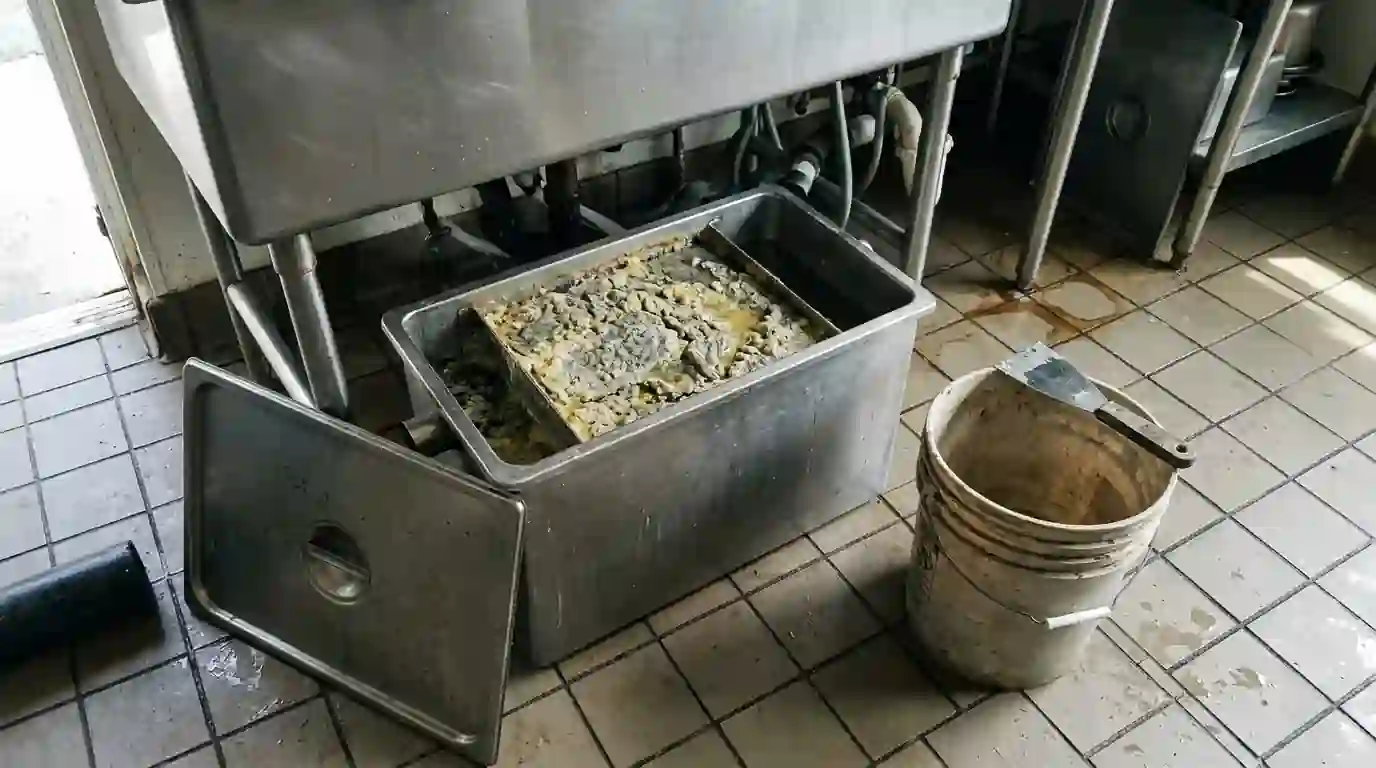
Grease trap service in Minneapolis is the cleaning and inspection of the grease interceptor that catches fats, oils and grease from restaurant and commercial kitchen drains before they reach the city sewer. You need it on a regular schedule set by your kitchen volume, and right away if sinks drain slowly, the trap smells, or grease shows up in floor drains. Service includes pumping, scraping, inspecting parts and documenting the visit.
What happens inside a working grease trap
Warm wastewater from three-compartment sinks, prep sinks and dishwashers carries fats, oils and grease, along with food solids. In the trap, a flow control fitting slows the water down. Grease floats to the top, solids sink, and baffles force the cleaner middle layer out to the sewer while holding the grease and solids back.
That only works while there's room. As the grease cap thickens and solids build at the bottom, the open space in the middle shrinks. Water moves through faster, carrying grease straight into your building drain and on to the city main. The trap still looks fine from the outside, which is why regular service matters more than appearance.
Under-sink traps versus in-ground interceptors
Smaller kitchens, coffee shops and bars often use a compact grease trap under or beside the sink. These fill quickly and need cleaning often, sometimes every week or two in a busy kitchen. Service is hands-on: lid off, grease scraped and bagged, solids removed, baffles cleaned, gasket checked.
Larger restaurants and food plants use in-ground interceptors with manhole-style covers outside or under the kitchen floor. These hold much more and are typically pumped by vacuum truck on a longer interval. We handle the plumbing side of both: lines into and out of the trap, broken baffles, cracked tees, failing lids and the building drain downstream.
Keeping the city and your health inspector satisfied
Minneapolis, Saint Paul and most suburban utilities have rules on fats, oils and grease from food service, and inspectors may ask to see your maintenance records. Grease that reaches the public main causes blockages and overflows the city has to clear, and repeat problems traced to one building can bring follow-up enforcement.
PlumbTek leaves a dated service record after every visit, noting trap condition, grease and solids depth, and any repairs made. Keep these together on site. When an inspector visits or a backup happens, the record shows your kitchen has kept up with maintenance and wasn't the source.
Warning signs in the kitchen that the trap needs attention
Kitchen staff usually notice these before anyone checks the trap itself.
- Sinks draining slowly during servicePrep and pot sinks that hold water during the dinner rush point to a trap full of grease or a clogged line downstream.
- Rancid smell near the trapA sour, rotten odor in the kitchen or dish area means grease and food solids are breaking down in an overdue trap.
- Grease in the floor drainGrease or murky water coming up through a kitchen floor drain means wastewater is bypassing a full trap or the line is blocked.
- Water leaking at the lidWater seeping around an under-sink trap lid shows it's overfull or the gasket has failed, and grease is close behind.
- Dishwasher drain backing upIf the commercial dishwasher drain backs into the sink or onto the floor, the shared line through the trap is restricted.
What a scheduled grease trap service covers
Set up off-hours
We schedule around service, often early morning or after close, and protect the floor and nearby prep surfaces before opening anything.
Measure grease and solids
We measure the grease cap and solids layer so you know how full the trap was and whether the interval needs adjusting.
Pump and scrape clean
Grease and solids are removed, walls and baffles are scraped, and waste is contained for proper disposal according to local rules.
Inspect parts and lines
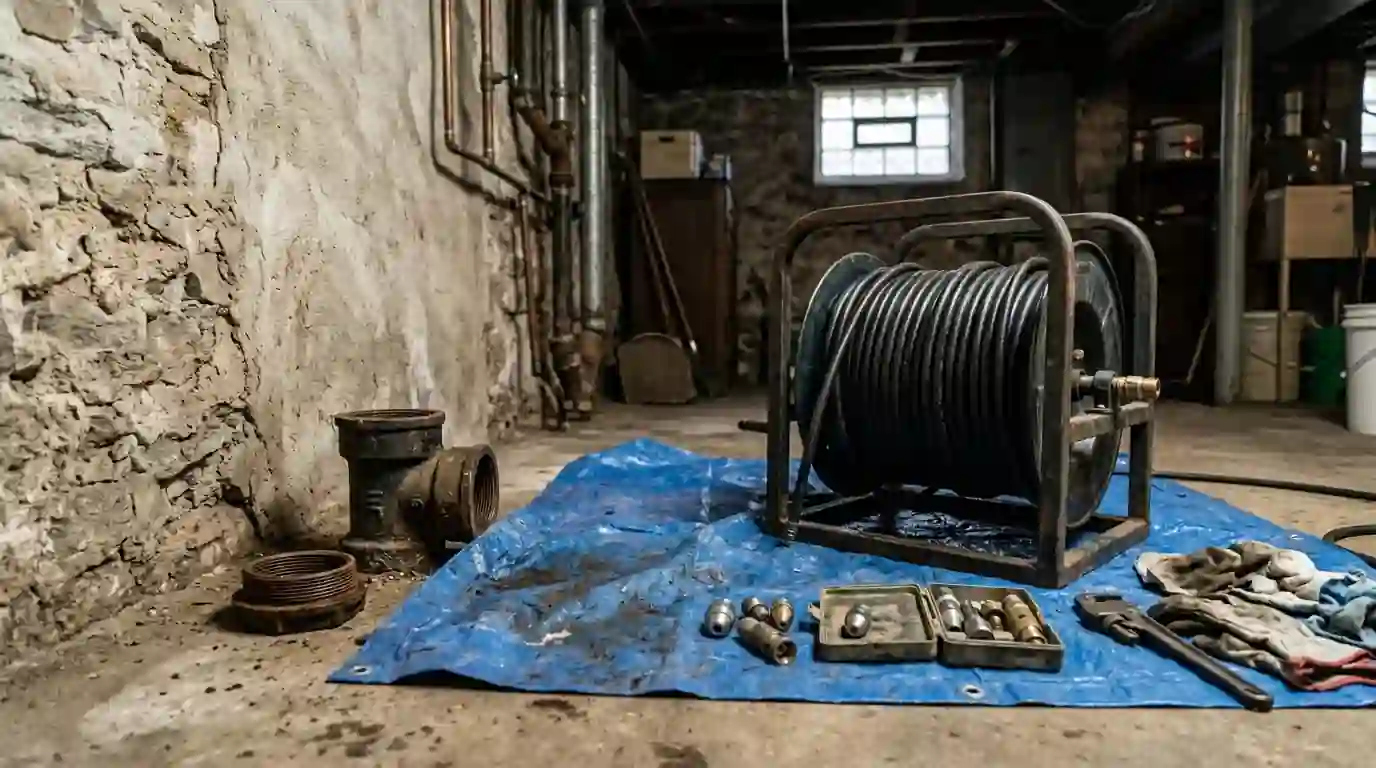
We check baffles, flow control, inlet and outlet tees, gaskets and lid, and run a cable or jet into the lines if they're slow.
Refill and document
The trap is refilled with clean water so it works on restart, and you get a dated record of findings and service.
Grease trap service pricing for Twin Cities kitchens
Price depends on trap size, how full it is and how often it's serviced. Your price depends on what the plumber finds on site, and you approve it before anything is cut or replaced.
| Job | Typical range | What moves the price |
|---|---|---|
| Under-sink grease trap cleaning | $167 to $348 | Trap size, grease depth and time since the last service |
| Small in-ground interceptor pumping | $387 to $746 | Tank volume, access and disposal fees |
| Grease line jetting from kitchen to main | $468 to $932 | Line length, grease load and access points |
| Baffle, tee or lid repair | $238 to $867 | Trap type, part availability and labor to reach it |
| After-hours grease backup call | $436 to $889 | Time of call and how far the backup has spread |
What changes the number
- Trap or interceptor size and how full it is at service.
- How often it's serviced, since overdue traps take longer to clean.
- Access, such as a trap tucked under equipment or an interceptor under a floor.
- Disposal fees for the grease and solids removed.
- Repairs found during the visit, such as broken baffles or failed gaskets.
- Whether service happens during regular hours or after close.
Ranges reflect typical Twin Cities jobs in 2026. Your price is explained before work starts. Compare other jobs in the PlumbTek price guide.
Daily kitchen habits that stretch grease trap intervals
Simple staff habits cut grease load and keep the trap working longer between services.
- Scrape plates and pans into the trash or compost before washing.
- Collect fryer oil and pan grease in a rendering container, never the sink.
- Use sink strainers in every prep and pot sink and empty them often.
- Keep food waste out of floor drains, and use drain covers where possible.
- Don't pour boiling water down to flush grease. It only moves the grease downstream.
- Avoid enzyme or chemical products that only shift grease into the sewer.
- Keep service records in one place where managers and inspectors can find them.
- Train new staff on these habits during their first week.
Grease trap work across Minneapolis food corridors
Restaurants along Eat Street, Lake Street and Northeast's Central Avenue often occupy older commercial buildings with cast iron drains and long runs to the street main. Many kitchens were fit into spaces that were once storefronts, so traps get squeezed under sinks or behind equipment. Those older lines also collect grease faster than modern PVC.
Breweries, food halls and ghost kitchens around the North Loop and Saint Paul's Lowertown add heavy loads with high-volume sinks and dishwashers. Suburban strip-mall restaurants in Bloomington, Burnsville and Maple Grove tend to have newer interceptors but still need regular pumping as volume grows.