Sump pump installation in Minneapolis, the short answer
Sump pump installation in Minneapolis homes means setting a pump in a lined pit below the basement floor, connected to drain tile, with a check valve and a discharge line that carries groundwater away from the foundation. You need it if your basement takes on water during spring thaw or storms, or if an aging pump is due for replacement.
Choosing pump size and type for your basement
Sump pumps are rated by horsepower and by how many gallons per hour they move at a given lift height. A basement that takes in a trickle during spring thaw does fine with a third horsepower pump. A home with a high water table, a long discharge run, or a pit that fills fast in storms may need a half horsepower pump or more.
Submersible pumps sit in the pit and run quieter. Pedestal pumps sit above the water on a column, which keeps the motor dry and easy to service, but they're louder and take up more space. For most Twin Cities basements, a cast iron submersible pump with a vertical float switch is a durable choice.
Adding a new pit where there wasn't one
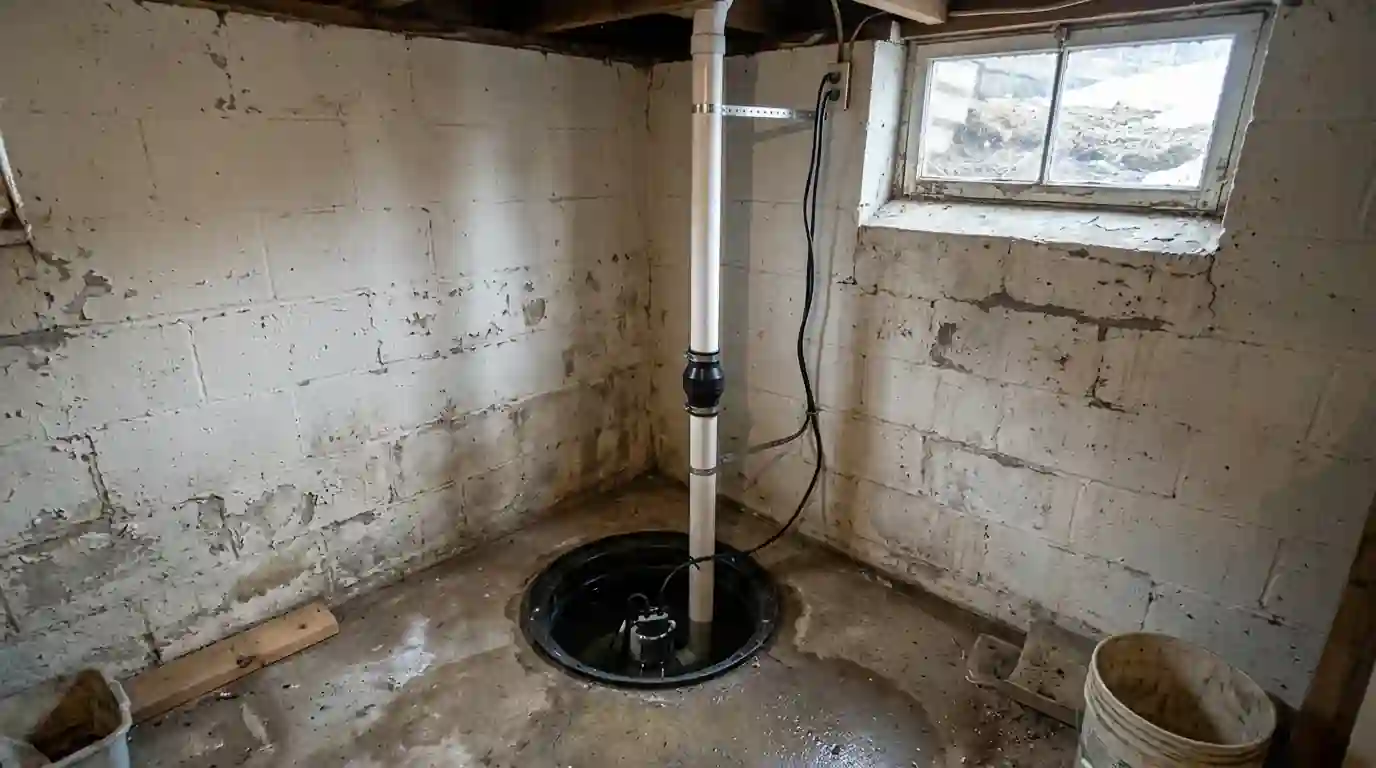
Some older Minneapolis and Saint Paul homes were built without sump pits. When water starts showing up along the floor edges or through cracks, adding a pit connected to interior drain tile can help. That means cutting the floor, excavating a hole for the basin, setting it in gravel, and connecting any perimeter drain tile so groundwater has a path.
The pit location matters. It should sit at a low spot where water collects, away from finished walls where possible, and near a route for the discharge line to exit the house. PlumbTek plans the pit, basin and discharge route together so the system works as a whole.
Discharge routing and backup power
Where the water goes after it leaves the pit matters as much as the pump. The discharge line should carry water well away from the foundation so it doesn't soak back in. In Minneapolis and most metro cities, sump discharge must not be connected to the sanitary sewer. A freeze-relief fitting near the house protects against frozen lines in winter.
Battery backup pumps sit in the same pit and run when power fails or the main pump can't keep up. The storms that knock out power are often the same ones that fill pits, so a backup is worth considering. Water-powered backups are another option on city water, since they need no battery.
When it's time for a new sump pump or pit
These situations call for installation rather than repair.
- Water seeping in with no pitDamp floors, efflorescence along walls, or puddles after rain in a basement without a sump system.
- Pump is ten years or olderEven working pumps wear out. Replacing an old pump on your own schedule beats a failure during a storm.
- Pit fills faster than the pump drains itAn undersized pump struggles during heavy rain. A larger pump or a second pump may be needed.
- No backup during outagesIf the power has gone out during storms and the pit nearly overflowed, a battery backup is a practical addition.
- Finishing the basementBefore finishing walls and floors, a reliable sump system protects the investment from water damage.
Steps for a sump pump install from start to finish
Call and describe the water
Ring (612) 254-6294 and tell us when and where water shows up. Photos of the basement floor and any existing pit help.
Site assessment
We look for the low spot, check for existing drain tile, plan the discharge route, and explain the price.
Pit and basin work
For new pits, the floor is cut, the hole excavated, and a perforated basin set in gravel with drain tile connected.
Pump, valve and discharge
The pump goes in with a check valve, and the discharge runs out of the house to a spot that drains away from the foundation.
Test and backup setup
We fill the pit to test a full cycle and set up the battery backup or alarm if included.
What sump pump installation costs around Minneapolis in 2026
New pits cost more than pump replacements. Parts, access and labor time decide the final figure, and you hear it before any work starts.
| Job | Typical range | What moves the price |
|---|---|---|
| Replacement pump in an existing pit | $487 to $893 | Pump type, horsepower and discharge changes |
| New pit, basin and pump with drain tile tie-in | $2,137 to $3,846 | Floor cutting, excavation depth and drain tile length |
| Battery backup pump added | $687 to $1,263 | Battery size and pit space |
| Exterior discharge line rerouting | $313 to $872 | Line length, burial and freeze protection |
What changes the number
- Cutting through thick or reinforced concrete floors takes more time.
- Connecting to interior drain tile along walls adds labor and materials.
- Finished basements need more care around flooring and walls.
- Exterior discharge runs that must avoid neighbors or sidewalks can get longer.
- Water-powered backups require a nearby water supply and backflow protection.
Ranges reflect typical Twin Cities jobs in 2026. Your price is explained before work starts. Compare other jobs in the PlumbTek price guide.
Submersible pump or pedestal pump?
| Point | Submersible | Pedestal |
|---|---|---|
| Location | Sits in the pit under water | Motor sits above the pit on a column |
| Noise | Quieter, water muffles the motor | Louder, motor is exposed |
| Pit size | Fits standard and deeper pits | Good for narrow or shallow pits |
| Service access | Pump comes out of the pit for service | Motor is easy to reach |
| Lifespan | Long with cast iron housing | Long, motor stays dry |
Sump systems in Minneapolis basements, old and new
Many houses built after the 1970s in the metro came with sump pits and drain tile. Older Minneapolis and Saint Paul homes often didn't, and their basements rely on a floor drain that ties into the sanitary sewer. When groundwater becomes a problem in those homes, adding a sump system is often the long-term fix, along with checking grading and downspouts.
Suburbs with high water tables and clay soils see heavy sump use every spring. PlumbTek also works through Anoka, Sherburne and Wright counties, where some newer homes sit on lower ground and pumps cycle often. In those cases a heavier-duty pump and a battery backup are usually the right call.