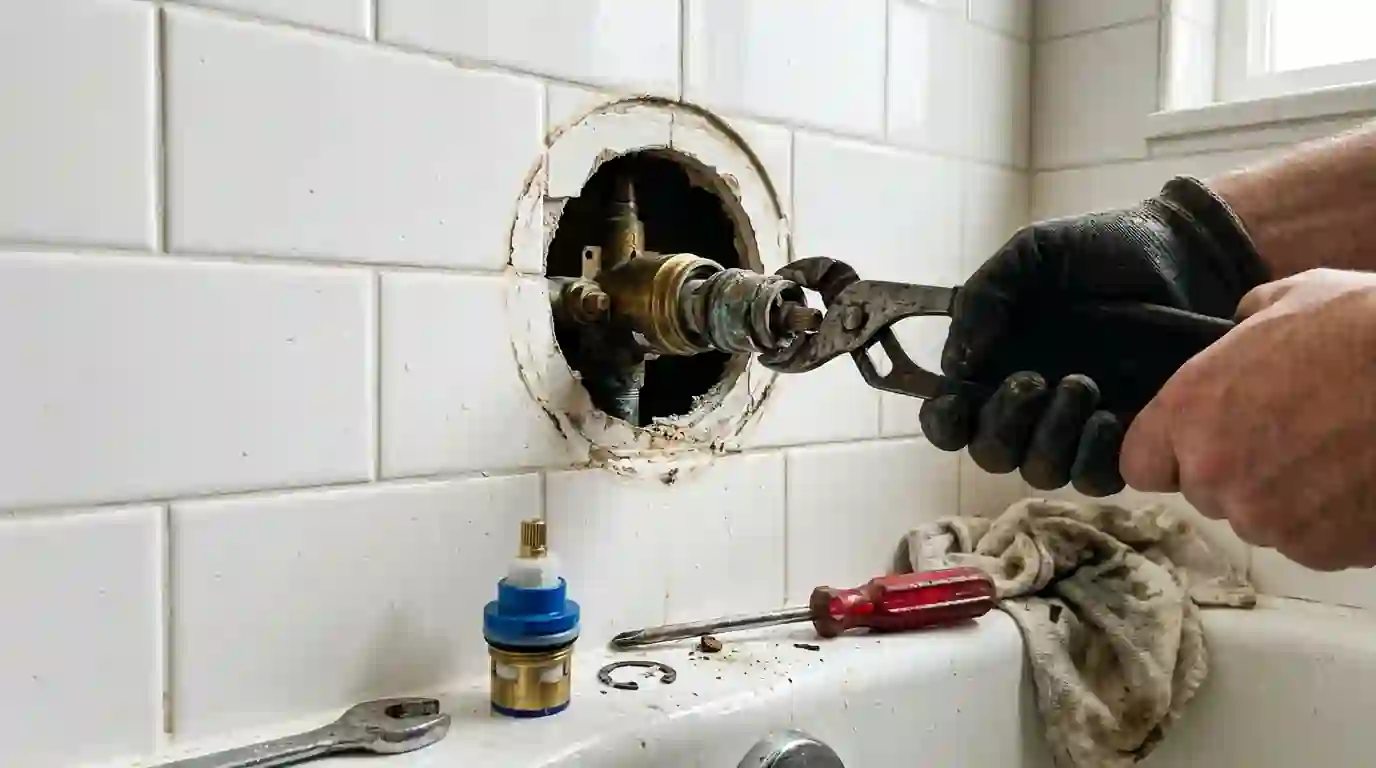
Sewer root removal in Minneapolis, the short answer
Sewer root removal in Minneapolis is the work of cutting tree roots out of a home's sewer lateral, usually a clay tile line, and clearing the root mass that traps waste. You need it when the main line clogs repeatedly, especially in late summer and fall. A plumber uses a cable machine with a root-cutting blade or a jetting nozzle, then a camera to confirm the joints are clear.
How roots find their way into a sewer pipe
Roots don't break into solid pipe. They follow moisture and warmth, and a sewer lateral gives off both. Clay tile laterals from the early 1900s were laid in short sections with joints packed with mortar or oakum. Over decades those joints crack and shrink, and a hair-thin root slips through the gap toward the water inside.
Once inside, a root has steady water and nutrients, so it grows fast. It branches into a fine mat that catches toilet paper and waste. Each clog adds more food, and the mass can fill the pipe completely. Even PVC lines can get roots at a poorly glued fitting or where they connect to an old clay stub.
Cutting roots versus killing them
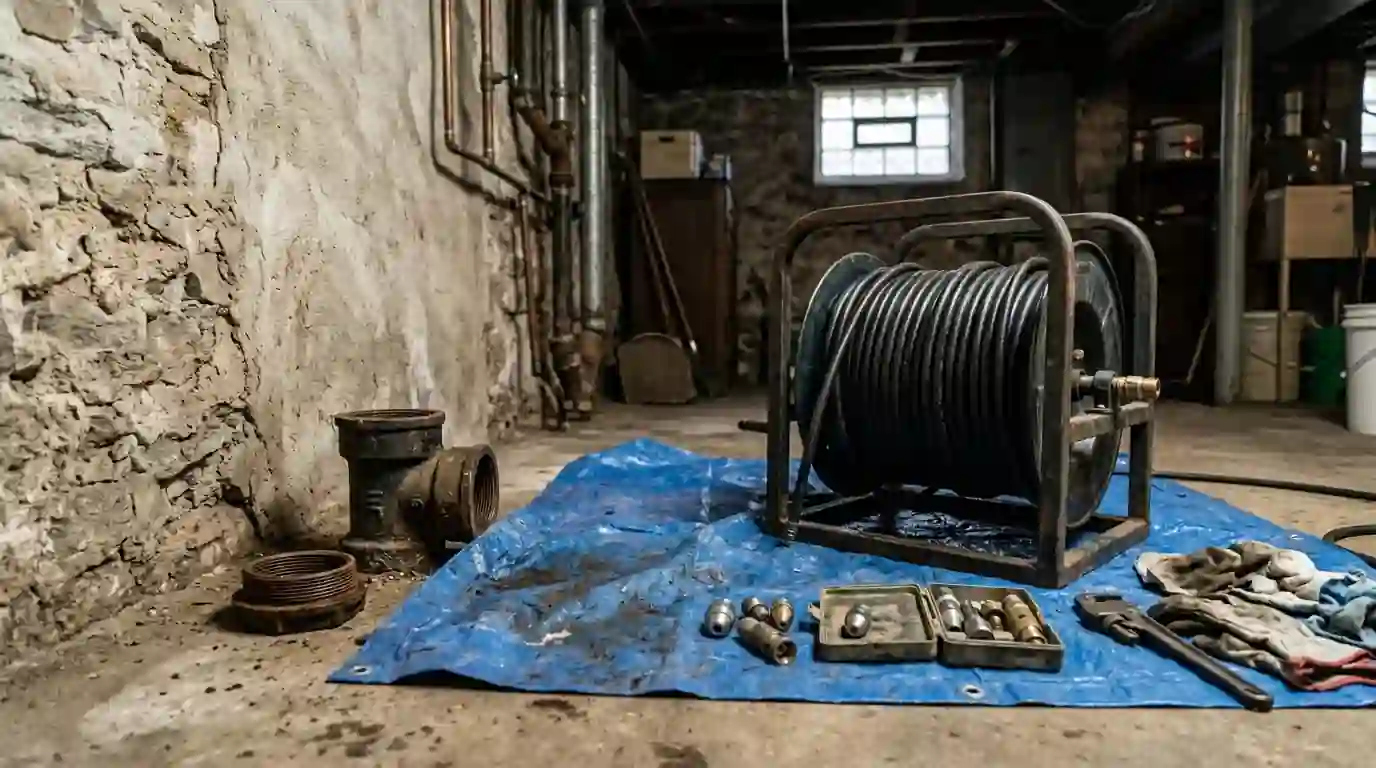
Mechanical removal is the main tool. A cable machine drives a sharp-toothed blade sized near the pipe diameter, slicing roots flush with the pipe wall. Jetting can strip the finer root hair that a blade leaves behind, which can stretch the time before regrowth. Either way, the root still has its entry point in the joint.
Root-control foaming products applied by a plumber can slow regrowth in the pipe after cutting. They don't fix the open joint, and they need repeat treatment. Copper sulfate crystals poured down a toilet are an old trick, but they mostly settle in the trap and do little in the lateral. Sealing the joint is the only permanent answer.
When cleaning stops making financial sense
If roots come back in one or two spots, regular cutting can be the cheapest path for years. When the camera shows roots at nearly every joint, or the cutter keeps bringing back shards of clay, the pipe is breaking down. At that point each cleaning risks dislodging more of the wall.
A useful habit is to add up what you've spent on root cutting over the last few years and compare it with spot repairs or a liner. For many Minneapolis homeowners with an aging clay lateral, that math tips toward lining the pipe once yearly root cutting has gone on for a few seasons.
Clues that roots are what's blocking your sewer
Root clogs leave a pattern that differs from a one-time blockage.
- Backups every late summerTrees drive roots hardest for water in late summer and fall, so a lateral that clogs in the same season each year is a strong root signal.
- Slow drains that clear and returnRoots let water through slowly, then catch more paper until flow nearly stops, so drains go from sluggish to blocked and back.
- Big trees near the sewer pathMature boulevard elms, maples, silver maples and willows within reach of the lateral are frequent sources of root intrusion.
- Roots on the cleaning cableIf a past cleaning brought back fibrous root strands, roots are already established and will regrow without further work.
- Gurgling from the floor drainA gurgling basement floor drain when upstairs fixtures run can mean a root mass is narrowing the line and trapping air.
What a root removal visit looks like
Access through the cleanout
We open the main cleanout and let any standing water drain, choosing a blade size that matches the pipe material and diameter.
Cut roots to the main
The machine runs the root cutter the full length of the lateral, making several slower passes wherever roots are heavy or the cable binds.
Pull and show the roots
We pull back the root mass so you can see how much was removed and whether clay fragments came out with it.
Camera the cleared line
A camera run confirms the joints are open, shows how many roots entered the pipe, and marks where each one came in.
Plan the next step
PlumbTek lays out the choices plainly: scheduled cutting, a foaming treatment, a spot repair at the worst joint, or lining the whole lateral.
Root cutting and jetting price ranges
These ranges cover most single-family laterals around the metro. Parts, access and labor time decide the final figure, and you get the figure ahead of the work.
| Job | Typical range | What moves the price |
|---|---|---|
| Root cutting through the main cleanout | $289 to $537 | Root density and distance to the city main |
| Root cutting plus camera confirmation | $468 to $787 | Recording and locating root entry joints |
| Hydro jetting a heavy root mat | $612 to $1,148 | Lateral length, pipe condition and number of passes |
| Root control foam after cutting | $238 to $419 | Lateral length and amount of product applied |
What changes the number
- How thick the root mass is and how many joints it spans.
- Whether the pipe is clay, cast iron, Orangeburg or PVC.
- Whether there is a usable cleanout or access through a toilet.
- Adding camera inspection and locating on the same visit.
- Whether jetting is needed to remove fine root hair after cutting.
Ranges reflect typical Twin Cities jobs in 2026. Your price is explained before work starts. Compare other jobs in the PlumbTek price guide.
Ways to slow root regrowth in your lateral
- Time cleanings before the fall rush. If your line needs yearly root cutting, scheduling it in mid summer keeps you ahead of the fall growth surge and holiday water use.
- Choose trees carefully near the line. When planting near the sewer path, pick smaller, less aggressive species and keep them well away from the lateral route.
- Keep wipes out of the toilet. Wipes labeled flushable snag on roots and turn a partial blockage into a full backup much faster than paper alone.
- Seal the worst joint first. If the camera shows one joint feeding most of the roots, a spot repair there can cut cleaning frequency a lot.
- Know where the lateral runs. Have the line located and marked so future landscaping, fences or tree planting stay clear of the sewer path.
Root trouble under Twin Cities boulevards
Minneapolis and Saint Paul planted boulevard trees along most residential streets, and many sewer laterals run right under them. After Dutch elm disease, many blocks were replanted with maples, lindens and ash, and some of those are now large trees. In Kenny, Fulton and Saint Paul's Highland Park, mature trees and old clay laterals make root removal a regular job.
Ash removals tied to emerald ash borer have changed things on some blocks. When a large tree comes down, its roots in the sewer die and rot but can still hold debris for a while. A new tree planted nearby will start reaching for the same joints within a few years.