Leak detection in Minneapolis, the short answer
Leak detection in Minneapolis is the process of finding a water leak you can't see, inside walls, under floors, beneath a basement slab, or along the buried service line. You need it when the water bill rises without explanation, the meter moves with every fixture off, or stains and musty smells keep returning. A plumber isolates the leak by test, then pinpoints it with listening and imaging tools.
Is the leak on the supply side or the drain side?
That's the first question, and it splits the search in two. Supply pipes are always under pressure, so a supply leak drips or sprays around the clock and moves the water meter even when nothing is running. Drain leaks only happen while water flows through them, during a shower, a flush or a washer cycle, then stop.
So the plumber starts at the meter. With every faucet, toilet and appliance off, the small leak indicator dial should sit still. If it creeps, the leak is on the supply side. If it doesn't, but the ceiling stain grows after showers, the plumber looks at drains, tub overflows, shower pans and toilet wax rings instead.
The tools that find leaks without tearing out walls
Acoustic listening gear picks up the hiss of pressurized water escaping a pipe, even through drywall, plaster or concrete. The plumber moves a ground microphone along the suspected run and listens for the spot where the sound peaks. It works best on supply leaks and is the main tool for leaks under a slab or along a buried service line.
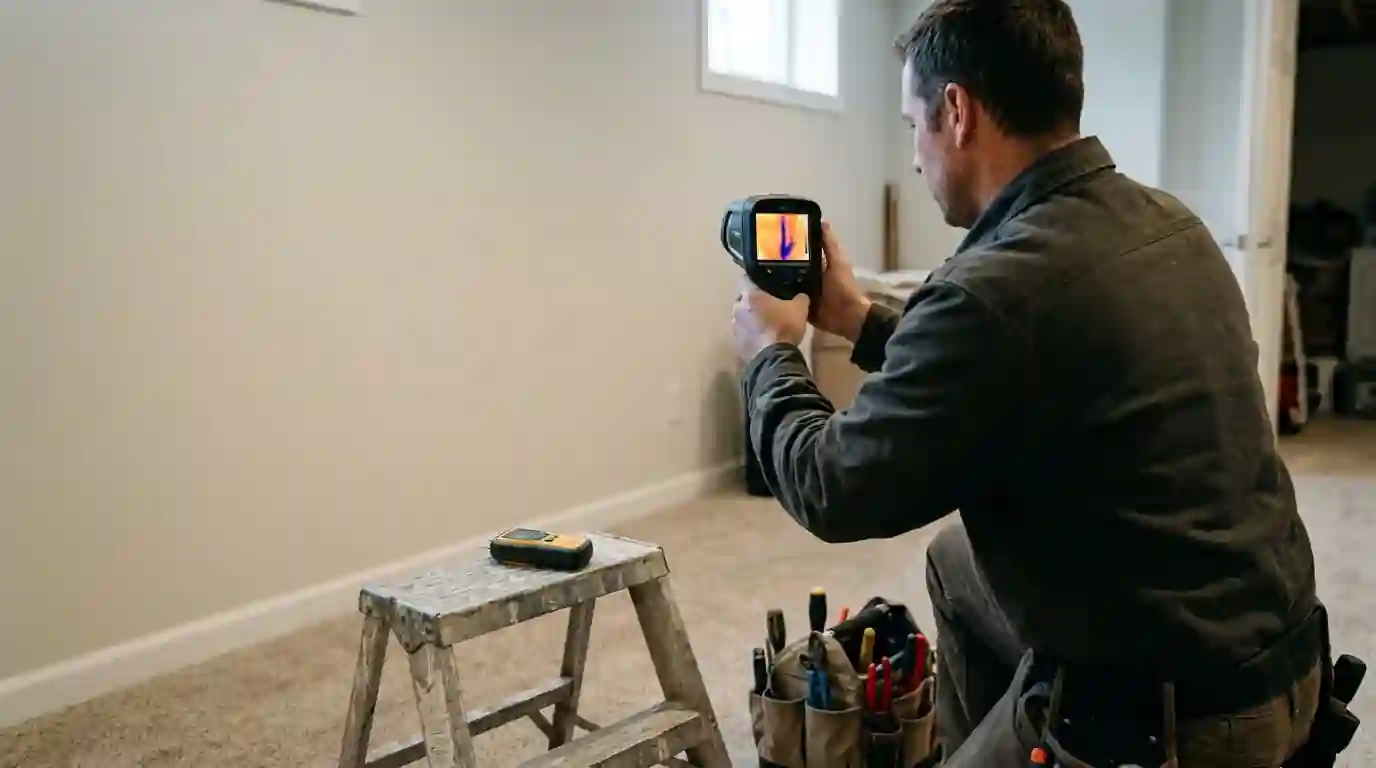
Thermal cameras show temperature differences across a surface, so a hot water leak lights up warm and a cold leak shows as a cool, spreading patch. Moisture meters confirm what the camera suggests. Isolation testing does the rest: shutting branch valves one at a time, or capping lines and pressure-testing them, narrows the search to a single run.
Leaks that hide in plain sight
Not every leak is buried. A toilet flapper that seeps into the bowl can waste more water than a pinhole in the wall, and you'd never see a drop on the floor. A softener stuck in regeneration or a water heater relief valve that drips into a floor drain can run for weeks without anyone noticing the cost.
When PlumbTek runs a leak search, the plumber checks these simple culprits before bringing out the listening gear. A few drops of food coloring in the toilet tank, a look at the softener cycle, and a glance at the relief valve outlet take minutes and solve a surprising share of high-bill calls.
Signs of a leak you haven't found yet
Hidden leaks rarely announce themselves, so these quieter clues matter.
- Water bill climbing for no reasonIf your use hasn't changed but the bill keeps rising from one quarter to the next, water is going somewhere you aren't seeing.
- Leak dial moving with taps offThe small triangle or star on the meter face turns with even tiny flow. Movement with everything off confirms a supply leak.
- Musty smell in one roomA damp, earthy odor that stays in one closet, cabinet or corner often comes from water soaking into hidden framing or carpet pad.
- Warm spot on a floorA patch of floor that feels warm underfoot, especially over a slab, can mean a hot water line is leaking beneath it.
- Stains that come backPainting over a ceiling stain only to watch it return means water is still reaching it from above.
- Water heater running constantlyIf the burner or elements cycle far more than usual, a hot water leak may be draining the tank and forcing it to reheat.
How a leak search is run, step by step
Meter and fixture check
Every fixture is shut off and the meter watched. The plumber also checks toilets, the softener and the relief valve for simple, visible losses.
Isolate by zones
Branch valves are closed one at a time, or lines capped and pressure tested, to narrow the leak to a single run or area.
Pinpoint with tools
Acoustic listening, thermal imaging and moisture readings trace the suspected run to the exact spot where water is escaping.
Confirm with a small opening
A small inspection hole confirms the leak before larger access is cut, so repairs start in the right place.
Repair or plan the fix
Small leaks are often fixed on the same visit. For bigger work, you get the options and the price explained before anything starts.
Leak detection pricing in the Twin Cities
Detection is priced on time and tools, separate from the repair. The real price comes from seeing the job in person, and you get the figure ahead of the work.
| Job | Typical range | What moves the price |
|---|---|---|
| Basic leak check with meter and fixture tests | $163 to $298 | House size and number of fixtures and appliances checked |
| Electronic leak location in walls or ceilings | $342 to $617 | Acoustic and thermal time, plus isolation testing |
| Slab or underground leak location | $487 to $893 | Depth, floor coverings, and length of the suspect run |
| Water service line leak trace | $413 to $786 | Line length, yard surface, and access at both ends |
What changes the number
- Leaks on pressurized supply lines are faster to locate than intermittent drain leaks.
- Tile, hardwood and finished ceilings slow access and raise the confirmation cost.
- Older homes with mixed galvanized and copper piping may have more than one leak.
- Some drain leaks need a camera run or a dye test, adding a separate step.
- Repair cost is separate and depends on what the search finds.
Ranges reflect typical Twin Cities jobs in 2026. Your price is explained before work starts. Compare other jobs in the PlumbTek price guide.
Acoustic listening or thermal imaging: which finds your leak?
| Point | Acoustic listening | Thermal imaging |
|---|---|---|
| Best for | Pressurized supply leaks, slab and buried lines | Hot water leaks and wet patches in walls and ceilings |
| Works through | Drywall, plaster, concrete and soil | Surface temperature only, not deep inside |
| Drain leaks | Weak, since drains are not pressurized | Good if water has spread into a surface |
| Background noise | Needs a quiet house, appliances off | Not affected by noise |
| Typical result | A point on the floor or wall | A map of where water has spread |
Where leaks hide in Minneapolis and Saint Paul houses
In older homes, the usual suspects are galvanized pipe rusting from inside at threaded joints, cast iron drain sections with cracked hubs behind basement walls, and second-floor tub drains in plaster ceilings. A leak in a 1920s Tangletown house often shows up far from its source, because water runs along joists before it stains anything.
Newer suburban homes built on slabs or with finished basements in Lakeville, Blaine and Woodbury bring different leaks: a crimp ring that let go in a PEX manifold, a dishwasher supply under a cabinet, or a pinhole in a copper line buried under a basement floor. Those get found mostly by listening and thermal imaging.