Backwater valve installation in Minneapolis, the short answer
Backwater valve installation in Minneapolis means fitting a one-way valve into a home's sewer line, or the basement floor drain line, so sewage can flow out but not back in. You need one if your basement has flooded from the floor drain during heavy rain, or if your home sits low relative to the street. The valve closes automatically when the city main backs up toward your house.
How a backwater valve stops sewage from coming home
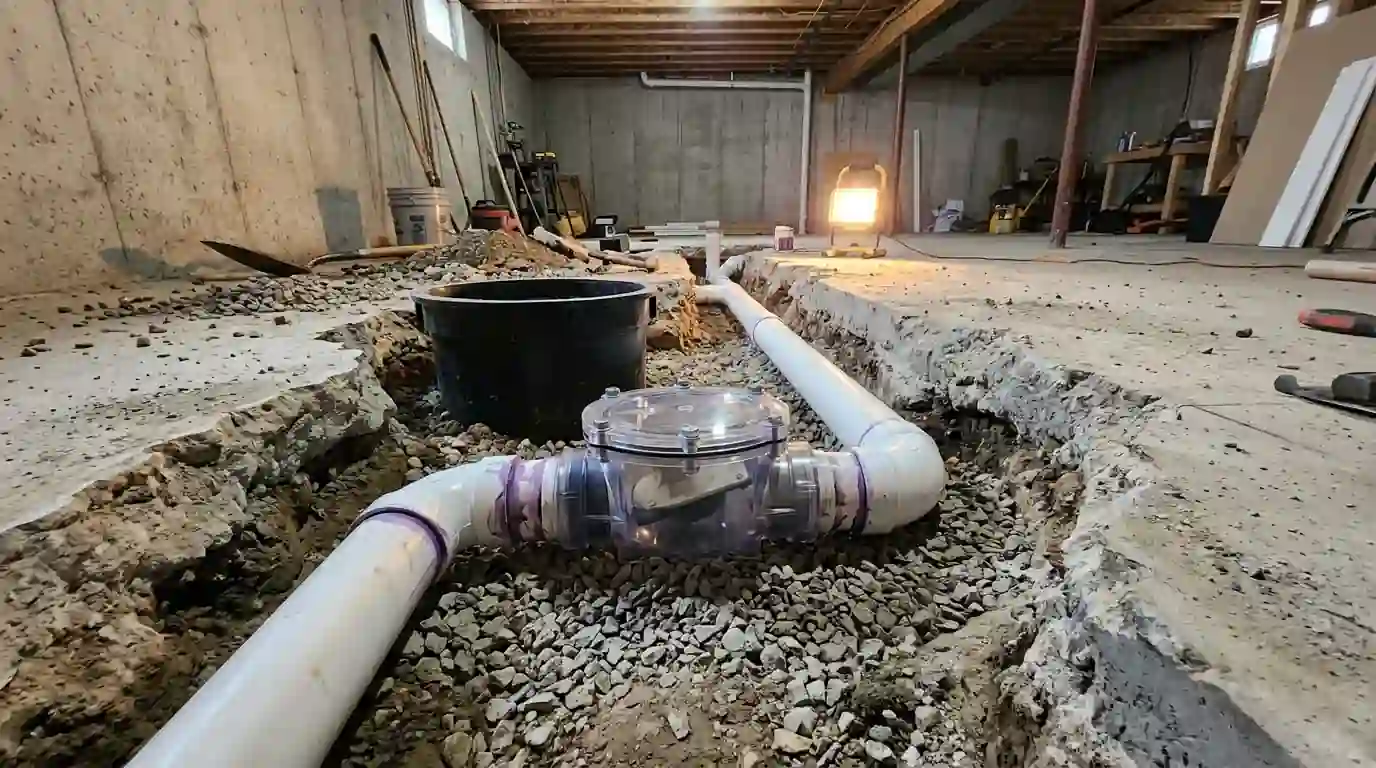
Inside a standard backwater valve is a hinged flap, sometimes with a float, sitting in a housing on the sewer line. Under normal flow, waste pushes the flap open and passes out to the street. When the city main fills during a heavy storm and water starts moving back toward your house, the reverse flow pushes the flap shut.
With the flap closed, sewage from the main stays out of your basement floor drain, basement toilet and laundry tub. The valve also keeps your own wastewater from leaving, so during a backup you should limit water use until the main drains. Once the main recedes, the flap drops open and normal flow resumes.
Full-line or floor drain only: choosing where it goes
A full-line valve goes on the main building sewer, downstream of every fixture. It protects the whole house, but it also blocks all your drains when it closes. That's the most common choice when a basement has several fixtures, such as a bathroom, laundry and kitchenette.
In some older homes, the only opening below street level is the basement floor drain. A valve on just that drain line can protect the basement while upstairs fixtures keep draining freely during a surcharge. We look at your drain layout, where the cleanouts sit and what's in your basement before recommending one approach or the other.
Access matters as much as the valve
A backwater valve that can't be reached can't be cleaned, and a stuck flap is worse than no valve. Debris, grease or a wad of paper can hold the flap partly open or shut. The valve needs a removable cover and enough space around it for a hand and a flashlight. In a finished basement, that means planning the access panel into the floor.
PlumbTek sets the valve level and at the right slope so the flap seats correctly, and installs it with an access riser or cover at floor height. We show you how to open it and what a clean flap looks like, so a quick yearly check takes only a few minutes.
Homes that benefit most from a backwater valve
If your house fits one or more of these, a valve is worth a serious look.
- Past floor drain backup in stormsIf sewage or dirty water has come up through the basement floor drain during heavy rain, the main has surcharged before and likely will again.
- Basement sits below street levelHomes where the basement floor is well below the street and the city main are most exposed when that main fills.
- Finished basement with fixturesA basement bathroom, laundry or bar means more openings for backflow and more to lose if sewage comes in.
- Older combined sewer area nearbyNeighborhoods with older sewer systems or past street flooding have mains that surcharge more often in big storms.
- Neighbors have had backupsWhen several homes on your block report floor drain backups, the shared main is the likely cause, and each house needs its own protection.
What installation involves, from layout to final test
Camera and plan location
We camera the line, confirm pipe size and condition, and choose a spot on the main or floor drain line with room for access.
Pull permit and protect
We pull the plumbing permit, lay down floor protection and set up dust control before any saw touches the basement slab.
Cut slab and expose pipe
A section of concrete is saw-cut and removed, and soil is dug out to expose the sewer pipe at the right depth.
Set the valve level
The old pipe is cut, and the valve is installed level with new PVC and couplings, bedded solidly so it can't shift.
Add access and pour
An access riser or cover is set at floor height, the hole is backfilled and compacted, and the slab is patched with new concrete.
Inspect and test
The city inspects the installation, and we run water through and test the flap so you see how it opens and closes.
Where the money goes on a backwater valve job
Most of the cost is concrete and excavation, not the valve itself. The age of your plumbing and how easy it is to reach set the final number, and it is explained up front.
| Job | Typical range | What moves the price |
|---|---|---|
| Full-line valve in an unfinished basement | $1,876 to $3,412 | Slab thickness, pipe depth and access riser type |
| Floor drain line valve only | $1,137 to $2,268 | Drain location and amount of slab cut out |
| Valve in a finished basement floor | $2,438 to $4,617 | Removing and restoring flooring around the access panel |
| Valve added during sewer replacement | $687 to $1,489 | Line already exposed, so excavation is shared |
What changes the number
- How deep the sewer sits below the basement floor.
- Slab thickness and whether rebar or mesh is present.
- Finished flooring that has to be removed and restored.
- Whether the valve goes on the full main or only the floor drain line.
- Pipe material and couplings needed to join cast iron or clay to PVC.
- Permit and inspection fees in your city.
Ranges reflect typical Twin Cities jobs in 2026. Your price is explained before work starts. Compare other jobs in the PlumbTek price guide.
Backwater valve or standpipe plug: which protection fits?
| Point | Backwater valve | Floor drain standpipe or plug |
|---|---|---|
| How it works | Automatic flap closes when flow reverses | Manual plug or pipe raises the drain opening |
| Needs you at home | No, it works on its own during storms | Yes, someone must install it before the storm |
| Protects other fixtures | Full-line valve covers every basement fixture | Covers only the floor drain it sits in |
| Upfront cost | Higher, needs slab cut and permit | Low, a part dropped into the drain |
| Maintenance | Yearly check and cleaning of the flap | Remove, clean and store between uses |
Why Twin Cities basements see storm backups
Summer thunderstorms across the metro can drop a lot of rain in a short time. In older parts of Minneapolis and Saint Paul, sewer mains were built a century ago, and clear water from cracked laterals, old foundation drains and roof drains can still find its way in. When the mains fill, water looks for the lowest outlet, often a basement floor drain.
Homes in lower-lying areas, such as blocks near Minnehaha Creek, Bassett Creek or along the river flats, can be more exposed. Suburban homes in places like Golden Valley or Shoreview see backups too when storms overwhelm the system. A valve won't stop groundwater seepage, but it closes the door on sewer backflow.