The short version
- Pipes in exterior walls, rim joists, crawl spaces and garages freeze first.
- Shut off and drain hose bibs before the first hard freeze.
- Keep heat at 55 degrees or higher, even when you travel.
- A faucet with no flow in a cold snap means call before it thaws.
Where pipes actually freeze in Twin Cities homes
Water service lines in Minneapolis are buried well below the frost line, so the pipe from the street rarely freezes. The trouble is inside the house, wherever a pipe runs close to cold outside air. Rim joists, the band of framing that sits on top of the foundation wall, are the most common spot. Wind finds every gap in the sill, and a supply line strapped tight against that framing can freeze in a single cold night.
Other repeat offenders: kitchen sinks on exterior walls, upstairs bathrooms over an unheated porch, three-season porches with a wet bar or laundry, attached garages with a utility sink, crawl spaces under additions, and hose bib lines that run through the rim joist. In older homes in Longfellow, Seward and Saint Paul's North End, plumbing added during past remodels often ended up in the coldest wall of the house.
Fall jobs to finish before the first hard freeze
Most freeze damage is set up in October and November, long before the first subzero night. A couple of hours of prep in the fall covers most of the risk.
- Disconnect garden hoses and close the indoor shut-off for every outside faucet, then open the outdoor faucet to drain the line.
- Have the irrigation system blown out, and drain or remove any outdoor backflow assembly.
- Seal gaps in the rim joist and sill with caulk or spray foam, keeping foam away from gas lines and vents.
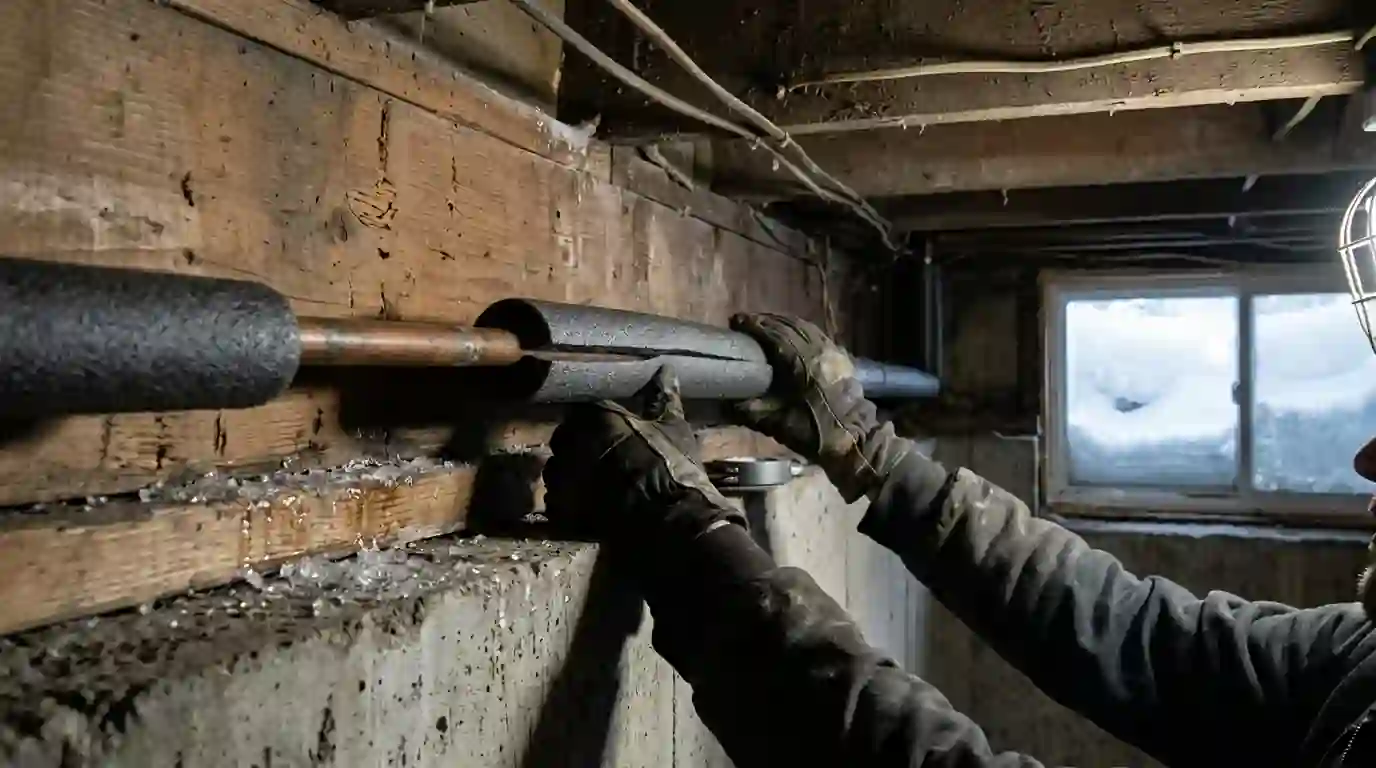
- Wrap exposed supply pipes near exterior walls with foam pipe insulation, paying attention to elbows and valves.
- Find your main water shut-off, turn it to make sure it works, and tag it so anyone in the house can find it.
- Shut off and drain plumbing in unheated porches, cabins and seasonal spaces.
What to do during a subzero cold snap
When the forecast drops below zero for several days, a few small habits make a big difference. Open the cabinet doors under kitchen and bathroom sinks on exterior walls so warm room air reaches the pipes. Let a vulnerable faucet drip a thin, steady stream of both hot and cold water overnight, since moving water is much harder to freeze and a drip relieves pressure if ice does form.
Keep the thermostat steady day and night instead of turning it down. Close the garage door, especially if the water heater or a utility sink lives there. Don't use a space heater pointed at pipes in a crawl space unless it's a model rated for that use and kept well away from anything that can burn. If a room is consistently cold, that's a sign the pipes in its walls need insulation or rerouting.
Heat tape, insulation and rerouting: which fix lasts
Foam pipe sleeves are cheap and help on pipes in a cold basement, but they only slow heat loss. They can't keep water above freezing in a truly unheated space. Self-regulating heat cable, plugged into a GFCI outlet and wrapped under insulation, does add heat and works well on short runs in crawl spaces or garages. Old constant-wattage heat tape from decades ago should be replaced, because it can overheat.
The permanent fix is getting the pipe out of the cold. Moving a supply line from the outside wall to an interior chase, insulating a rim joist properly, or adding heat to a crawl space ends the problem for good. When PlumbTek reroutes a line that has frozen more than once, the goal is that it never needs heat cable again.
- Foam sleeves: low cost, slows freezing, suited to semi-heated basements
- Self-regulating heat cable: adds heat, good for short exposed runs
- Frost-free hose bibs: keep the valve seat inside the heated wall
- Rerouting or air sealing: the permanent fix for repeat freezes
Leaving home for a week in January
A trip to warmer weather is when frozen pipes cause the most damage, because a burst line can run for days before anyone sees it. Set the thermostat no lower than 55 degrees, open cabinet doors on exterior walls and ask someone to check the house every day or two, including the basement.
For longer trips, consider shutting off the main water valve and opening a faucet on the lowest floor to relieve pressure. If your water heater is on gas, leave it on its vacation setting rather than off. Homes with a boiler need the boiler and its water supply left on, so check before closing the main. A smart water sensor near the water heater and floor drain can alert your phone if a leak starts.
How to tell a pipe is frozen before it bursts
The first clue is usually a faucet that gives a trickle or nothing at all on a cold morning while the rest of the house works fine. Frost on an exposed pipe, a bulge in copper, or a toilet that won't refill are other warnings. A frozen pipe often hasn't split yet. The split happens because ice builds pressure between the blockage and a closed faucet, and the water escapes when the ice melts.
If you think a line is frozen, open the faucet it feeds so pressure can escape, and know where the main shut-off is before you do anything else. Gentle heat from a hair dryer on an exposed pipe is fine. Never use an open flame or a torch. For a line inside a wall or ceiling, call PlumbTek at (612) 254-6294. We answer 24/7, and frozen pipe calls are prioritized during cold snaps.
Reader questions
At what outdoor temperature do Minneapolis pipes start to freeze?
There's no single number, because it depends on how exposed the pipe is and how long the cold lasts. Pipes in a drafty rim joist or a garage can freeze after one night well below zero, while protected interior lines may never freeze. Prolonged cold below about 20 degrees, especially with wind, is when the vulnerable spots start to show.
Should I drip every faucet in the house during a subzero cold snap?
No. Drip only the faucets fed by pipes on exterior walls, over unheated spaces or in rooms that have frozen before. A thin steady stream of both hot and cold is enough. Dripping every faucet wastes water without adding much protection to the lines that are already inside warm walls.
Are frost-free outdoor faucets enough to stop hose bib freezing in Minnesota?
Usually, if they're installed with a slight downward slope and the hose is disconnected every fall. A frost-free hose bib keeps the valve seat inside the heated wall, so water drains out of the exposed section. Leaving a hose attached traps water in the barrel, which can freeze and split it even on a frost-free model.