The short version
- Snaking cuts a path through a clog; jetting scours the full inside wall of the pipe.
- Jetting usually keeps grease and scale buildup away longer.
- Old clay or badly cracked pipe needs a camera check before high-pressure jetting.
- Roots come back either way unless the damaged pipe is repaired.
What is the actual difference between snaking and jetting?
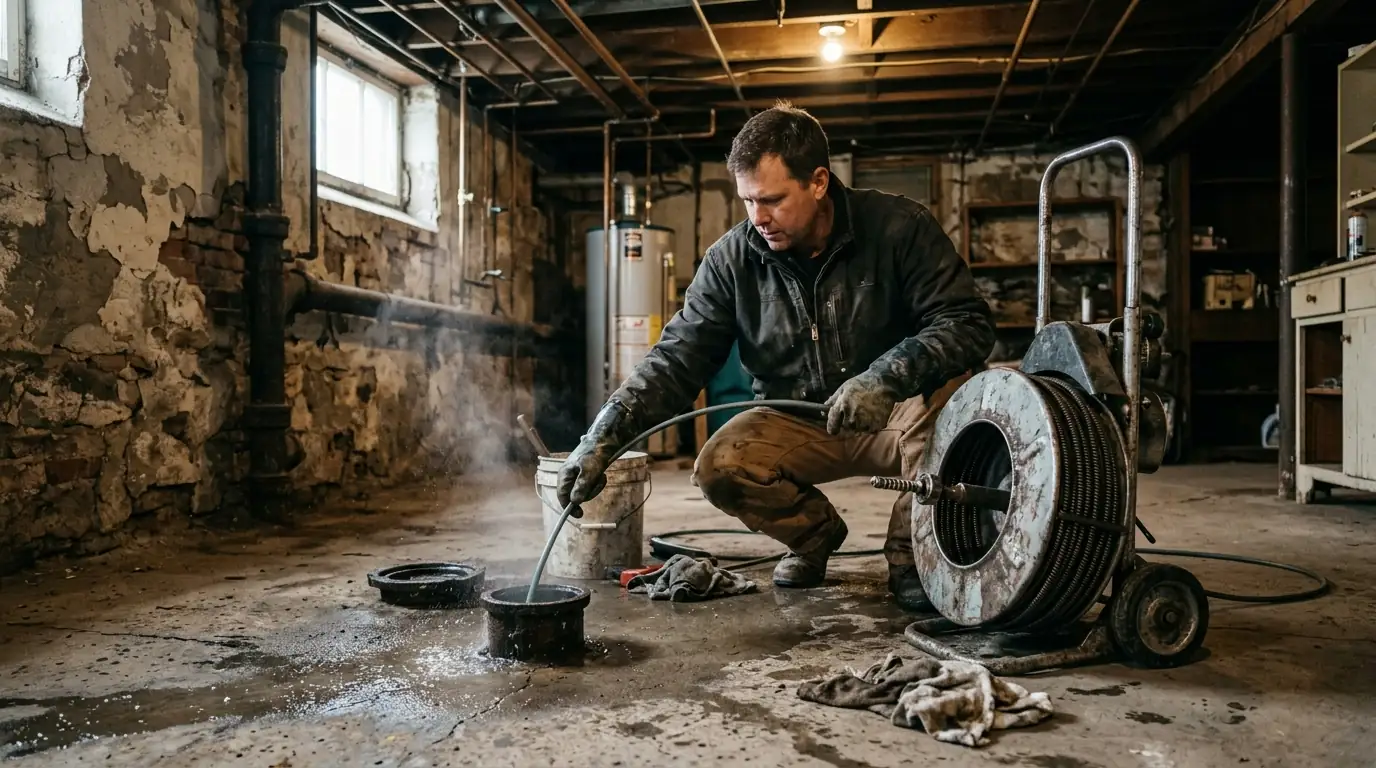
Snaking, also called rodding or cabling, uses a motorized machine to spin a steel cable down the drain. The cable carries a cutting head that bores through the clog, chops up roots and hooks debris. It opens a channel so water can flow again. It's fast, it's familiar, and for a simple blockage it's often all that's needed.
Hydro jetting sends water through a hose at very high pressure. A nozzle at the end fires jets forward to break up the clog and backward to pull the hose along and scrub the pipe walls. Rather than opening a single channel, it cleans the pipe close to its full diameter and flushes the loosened material down to the main.
When is snaking the right tool?
For a single blocked sink, tub or toilet, snaking is usually the sensible first step. A small hand or drum machine clears hair, soap and the occasional toy without the setup a jetter needs. In older Twin Cities homes with fragile cast iron branch lines or clay laterals, a cable is also gentler on pipe that might not handle high pressure well.
Snaking is also useful for diagnosis. When the cable hits something solid, the plumber can feel the difference between a soft grease clog, a root mass and a collapsed section. Pulling the cable back often brings up evidence, such as roots, wipes or scale, that tells you what's actually going on in the line.
- One-off clogs in sinks, tubs and toilets
- Fragile or badly corroded pipe that may not tolerate pressure
- Quick relief before a camera inspection
- Lines without an accessible cleanout for a jetter hose
When does hydro jetting earn its higher price?
Jetting shines when a drain keeps clogging. Kitchen lines in older Minneapolis duplexes and restaurant drains build thick grease layers that a cable only punctures. Main sewer lines with heavy scale, sludge or fine roots also respond better to jetting, because it clears the whole pipe wall instead of leaving most of the buildup behind.
It's also the standard choice before a trenchless liner is installed, since the liner needs a clean pipe to bond to. For a commercial kitchen with a grease trap, routine jetting keeps the line from narrowing between pump-outs. The tradeoff is cost and setup, since a jetter is a bigger machine and usually needs a cleanout to work from.
Jetting also handles the long horizontal runs common under Plymouth and Maple Grove homes with basement bathrooms, where soap and lint settle in low spots. Because the nozzle pulls itself forward, it reaches farther with less fuss than a heavy cable, and it rinses the debris downstream rather than leaving it in the line.
Why does a camera inspection come first in older homes?
In a house built before 1950, the sewer lateral is often clay tile with joints that roots have already pushed apart. High-pressure water can blow through a cracked section and wash soil into the pipe, making things worse. A camera run tells the plumber whether the pipe is sound enough for jetting, or whether a cable is the safer option.
The camera also shows what's causing the clog in the first place. If it's grease or scale in a healthy pipe, jetting is a solid long-term choice. If it's roots entering through a broken joint, any cleaning method will only buy time until the roots grow back. In that case, repairing or lining the damaged section is what finally ends the repeat calls.
- Clear enough of the line with a cable to get water moving.
- Run a camera from the cleanout to the city main.
- Note the pipe material, joints, roots, sags and any cracks.
- Choose jetting for sound pipe with grease, scale or fine roots.
- Plan a repair or liner where the pipe is broken or offset.
What do snaking and jetting cost in 2026?
In the Twin Cities in 2026, snaking a single household drain usually runs about $167 to $343. Cabling a main sewer line from a basement cleanout typically falls between $237 and $612, depending on access and how far the clog sits. Hydro jetting a residential sewer lateral commonly runs $487 to $1,136, and commercial grease lines can cost more.
Adding a camera inspection to either service is usually $217 to $438. What you pay depends on access, length and what the line holds, and that figure is explained before the machine starts. When PlumbTek recommends jetting over cabling, the reason is shown on the camera screen, so you can see the buildup that would otherwise be left behind.
Which method keeps a drain clear longer?
For grease, soap scum and scale in sound pipe, jetting generally keeps the line clear much longer, because it removes the coating that new debris clings to. A snaked line can look fine on day one and clog again within months, since most of the buildup is still on the walls. For a one-time hair clog, snaking is perfectly adequate.
For roots, neither method is a permanent fix. Both remove what's inside the pipe, but roots return through the same cracked joints. Lasting relief comes from repairing those joints. If you're calling for the same drain every year or two, call PlumbTek at (612) 254-6294 and ask about a camera run to find out why.
Reader questions
Can hydro jetting damage old cast iron drain pipes?
It can if the pipe is badly corroded, scaled thin or already cracked. That's why a camera inspection is the first step in older homes. Sound cast iron usually handles jetting well, and many plumbers adjust pressure and nozzles for older pipe. If the camera shows severe deterioration, cabling or pipe repair is the safer route.
How often should a restaurant drain be hydro jetted?
It depends on the menu and volume, but many busy kitchens benefit from jetting on a regular schedule, often every few months. Heavy frying and grease-heavy dishes build up faster. Pairing routine jetting with regular grease trap service keeps the line from narrowing and helps avoid backups during a dinner rush.
Is a drain snake enough for tree roots in a sewer line?
A cable with a root-cutting head clears roots well enough to restore flow, and many homeowners run it every year or two. It doesn't stop roots from regrowing through the same joints, though. A camera inspection shows where they're entering, so you can weigh ongoing cleaning against a spot repair or liner.